Sponsored
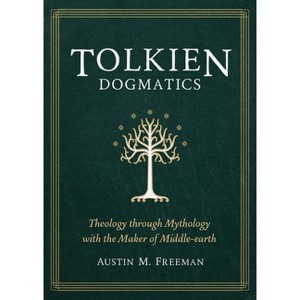
Tolkien Dogmatics - by Austin M Freeman (Paperback)
In Stock
Sponsored
About this item
Highlights
- "Tolkien Dogmatics overflows with insights and is a must-read for serious students of Tolkien.
- About the Author: Austin M. Freeman (PhD, Trinity Evangelical Divinity School) is a lecturer at Houston Baptist University and a classical school teacher.
- 432 Pages
- Religion + Beliefs, Christian Theology
Description
About the Book
"In Tolkien Dogmatics, Austin M. Freeman inspects Tolkien's entire corpus-The Hobbit, The Lord of the Rings, and beyond-as a window into his theology. In his stories, lectures, and letters, Tolkien creatively and carefully engaged with his Christian faith. Tolkien Dogmatics is a comprehensive manual of Tolkien's theological thought arranged in traditional systematic theology categories, with sections on God, revelation, creation, evil, Christ and salvation, the church, and last things. Through Tolkien's imagination, we reencounter our faith"--Book Synopsis
"Tolkien Dogmatics overflows with insights and is a must-read for serious students of Tolkien." --The Gospel Coalition
Theology through mythology
J. R. R. Tolkien was many things: English Catholic, father and husband, survivor of two world wars, Oxford professor, and author. But he was also a theologian. Tolkien's writings exhibit a coherent theology of God and his works, but Tolkien did not present his views with systematic arguments. Rather, he expressed theology through story.
In Tolkien Dogmatics, Austin M. Freeman inspects Tolkien's entire corpus--The Hobbit, The Lord of the Rings, and beyond--as a window into his theology. In his stories, lectures, and letters, Tolkien creatively and carefully engaged with his Christian faith. Tolkien Dogmatics is a comprehensive manual of Tolkien's theological thought arranged in traditional systematic theology categories, with sections on God, revelation, creation, evil, Christ and salvation, the church, and last things. Through Tolkien's imagination, we reencounter our faith.
From the Back Cover
"Tolkien Dogmatics overflows with insights and is a must-read for serious students of Tolkien."--The Gospel CoalitionTheology through mythology
J. R. R. Tolkien was many things: English Catholic, father and husband, survivor of two world wars, Oxford professor, and author. But he was also a theologian. Tolkien's writings exhibit a coherent theology of God and his works, but Tolkien did not present his views with systematic arguments. Rather, he expressed theology through story.
In Tolkien Dogmatics, Austin M. Freeman inspects Tolkien's entire corpus--The Hobbit, The Lord of the Rings, and beyond--as a window into his theology. In his stories, lectures, and letters, Tolkien creatively and carefully engaged with his Christian faith. Tolkien Dogmatics is a comprehensive manual of Tolkien's theological thought arranged in traditional systematic theology categories, with sections on God, revelation, creation, evil, Christ and salvation, the church, and last things. Through Tolkien's imagination, we reencounter our faith.
Review Quotes
Austin Freeman has given a gift to Tolkien scholars and aficionados alike in a work I didn't think could be written. [...] Tolkien Dogmatics overflows with insights and is a must-read for serious students of Tolkien.
--The Gospel Coalition
The reader of [Tolkien] Dogmatics does truly gain a new grasp on the contours of Tolkien's Catholic faith, and especially how thoughtful and reflective he was as a devout member of the Catholic church, and how this formation shaped his output as a writer.
--Joel Wentz, Englewood Review of Books
This is a well-researched, one-of-a-kind work that will appeal especially to those who have gone out the front door to engage in the dangerous business of walking the Way of Christ, pursuing their own adventures as inhabitants of the twenty-first-century, demystified Middle-West.
--Kevin J. Vanhoozer, research professor of systematic theology, Trinity Evangelical Divinity School
Tolkien Dogmatics is likely to become a standard text for interested laypeople and literary critics as well as professional theologians when discussing the theology of the maker of Middle‐earth.
--Thomas Honegger, Friedrich‐Schiller‐University, Jena, Germany
About the Author
Austin M. Freeman (PhD, Trinity Evangelical Divinity School) is a lecturer at Houston Baptist University and a classical school teacher.