Sponsored
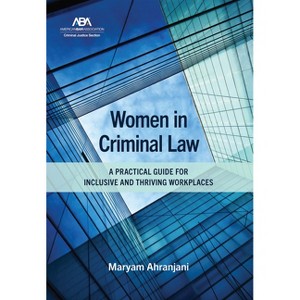
Women in Criminal Law - by Maryam Ahranjani (Paperback)
Pre-order
Sponsored
About this item
Highlights
- At an ABA Women in Criminal Justice Task Force listening session in 2019, Federal Defender Andrea George likened practicing criminal law as a woman to "playing football in a dress.
- Author(s): Maryam Ahranjani
- 344 Pages
- Freedom + Security / Law Enforcement, Criminal Law
Description
Book Synopsis
At an ABA Women in Criminal Justice Task Force listening session in 2019, Federal Defender Andrea George likened practicing criminal law as a woman to "playing football in a dress." Women in Criminal Law aims to describe persistent and pernicious barriers to gender equity for criminal lawyers, unpack best practices, and provide exciting examples of trailblazers who have operationalized some systemic changes. Anyone who cares about a more just criminal legal system will want to read this book. But anyone who has experienced or witnessed unequal treatment or outcomes based on gender or any personal characteristics will relate to the universality of themes presented and be inspired by the stories of perseverance.
Building on the success of ABA Resolution 501: Ten Steps to Achieve Gender Equity in the Criminal Legal Profession, which was adopted unanimously by the ABA House of Delegates in 2023, the book builds on the editor's role as Reporter of the ABA Criminal Justice Section Women in Criminal Justice Task Force (2019-2023) and Co-Chair of the ABA Criminal Justice Section Women in Criminal Justice Committee (2022-2024). Chapter contributors and authors include diverse criminal lawyers and judges from around the United States who are actively pursuing justice for communities and clients while simultaneously managing their personal lives. The book describes challenges in the courtroom and behind the scenes, including being disrespected by colleagues, judges, clients, and court staff. Contributors' lived experiences as women with other diverse identities lead to rich insights about what is wrong and how to get it right.
The book presents the most recent research regarding gender equity in the legal profession; provides the perspectives of prosecutors, public defenders, and other women criminal lawyers; describes each of the Ten Principles, sharing related success stories that can serve as models and pitfalls; highlights the wisdom of well-respected judges; explains how women and people who are non-binary can advocate for themselves; and provides all the published work related to the Task Force.
Women in Criminal Law will alert future and current law students to gender-related challenges and creative solutions proposed by criminal justice leaders, serve as a desk reference for criminal and other legal employers on how to approach gender inclusivity, and promote solidarity among criminal lawyers.
Review Quotes
"Women in Criminal Law: A Practical Guide for Inclusive and Thriving Workplaces is nothing short of groundbreaking. With sensitivity and deep respect for scholarship, Professor Maryam Ahranjani describes the work and findings of the ABA's Women in Criminal Justice Task Force. The collection of chapters by leaders in the field vividly describes the triumphs and challenges of women as we navigate the field of criminal justice. This will surely be a blueprint for criminal justice professionals for years to come."--Elizabeth Kelley, criminal defense attorney and author of Representing People with Dementia: A Practical Guide for Criminal Defense Lawyers
"As an exoneree, attorney, and ally, I see gender equity in criminal law as a cornerstone of a more fair and humane justice system. I'm deeply grateful to the women whose strength and support have uplifted me and so many others. This book offers vital guidance for building the kind of profession and world we all deserve."--Dieter Tejada, founding president, National Justice Impact Bar Association
"Women in Criminal Law offers rich, diverse, and insightful perspectives, inspiring my own scholarly research and, more importantly, promoting critical changes to the criminal legal system."--Alisa Smith, JD, PhD, professor of legal studies, University of Central Florida
Shipping details
Return details
Trending Non-Fiction






Discover more options