Handheld label printers cover a range from very narrow ID/heat‑shrink sizes up to wider industrial tapes. Many models support widths from about 3.5 mm up to 24 mm, while smaller/home units commonly use M‑series tapes in 9 mm and 12 mm widths.
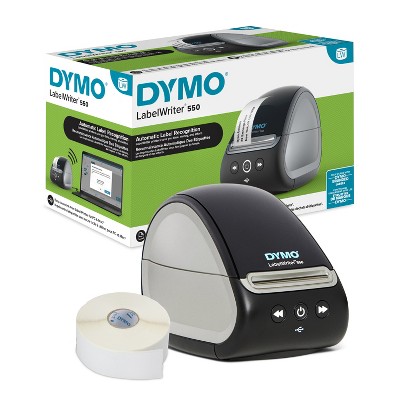
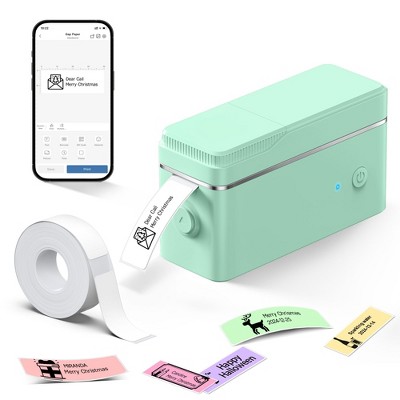
Most handheld labelers connect wirelessly via Bluetooth and also offer USB‑C for charging and wired printing from a PC. Manufacturers typically provide companion mobile apps and desktop label‑editing software to design and send labels.
Power options vary by model. Industrial and professional kits often include a rechargeable Li‑ion battery pack, while some consumer models list replaceable disposable cells such as 9‑volt or AAA batteries.
Handheld printers can produce laminated labels, heat‑shrink tubing, and flexible ID tape for mid‑size to large projects. Home‑oriented machines focus more on decorative and general‑purpose labels using M‑series tapes.
Kits often include a hard carrying case, a patch‑panel ruler, a wrist or hand strap, a USB‑C cable, and—in industrial kits—a rechargeable Li‑ion battery. Some bundles also include starter label tapes.
Size depends on the model: compact home labelers are roughly 3" × 2" × 4" (small handheld size), while mid‑size industrial handhelds are taller and slimmer—for example, around 9.3–9.6 inches high with widths near 2–3.15 inches and depths about 4–5.31 inches.
Entry‑level/home machines typically include an on‑unit QWERTY keyboard and simple label templates for on‑device creation. Professional handhelds rely more on mobile apps and PC software so you can design labels on a phone or computer and print via Bluetooth or USB‑C.
Many models can generate QR codes and linear barcodes directly and offer serialization features to automate repetitive barcode or QR printing.