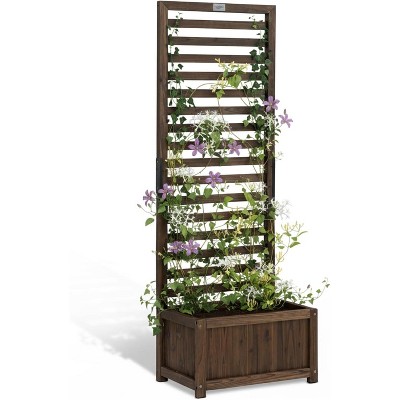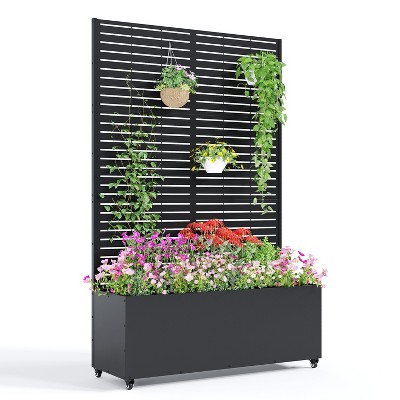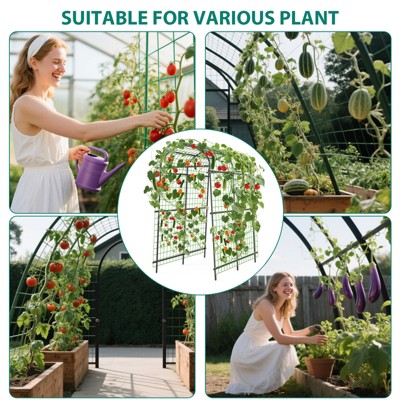
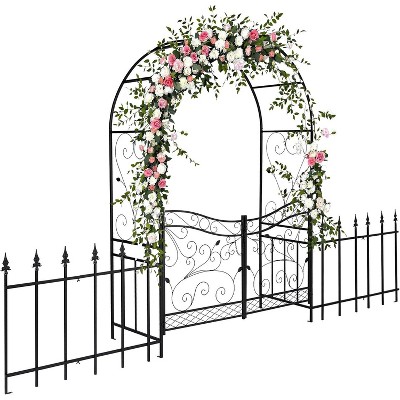
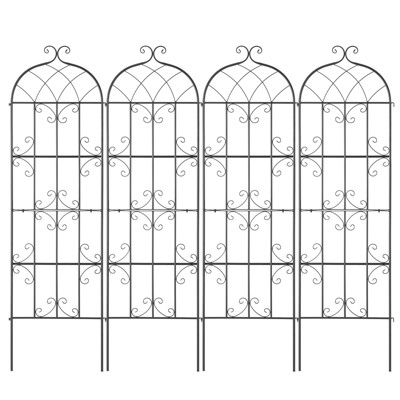
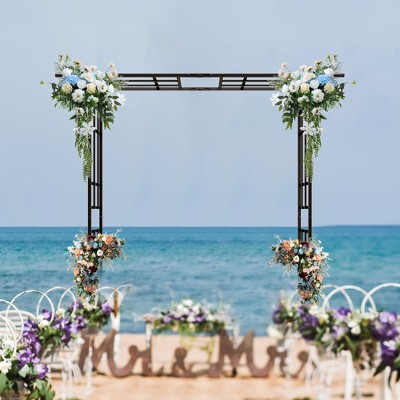
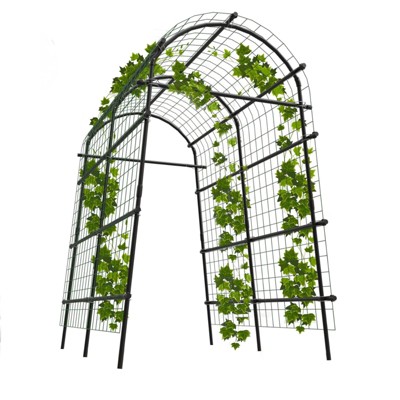
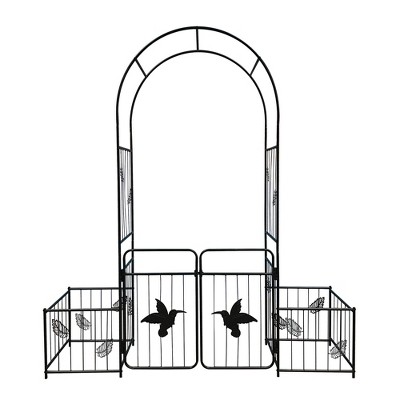
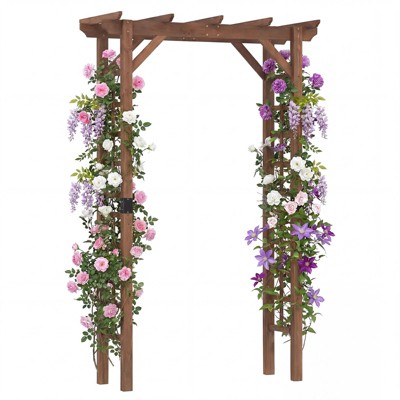
Common trellis types for peas include obelisk-style towers, arch frames, metal panel trellises, and cage-style supports. Each guides vines upward to save ground space and improve air circulation and harvest access.
Some trellises integrate planter boxes or cages at the base so the support and planting area function together. These designs often include features like self-watering reservoirs and drainage holes to simplify vertical pea growing.
Planter-style trellises commonly include self-watering or self-priming reservoirs plus drainage holes or dual-drainage systems. Those features help prevent waterlogging while keeping roots aerated and reducing watering frequency.
Look for ground stakes or sharp-end caps for soil anchoring, reinforced connectors or sure-clips to secure poles and rings, and thicker support rings or reinforced brackets. These features increase resistance to wind and heavy plant loads.
Common protective finishes include powder coating, galvanization, and PE coatings on metal parts. These treatments provide rust resistance and improved weatherproofing to extend outdoor life.
Included netting, sure-clips, plant clips, and ties secure vines to the trellis, guide upward growth, and keep pods close to the support. That makes plants easier to manage and harvest while reducing breakage.