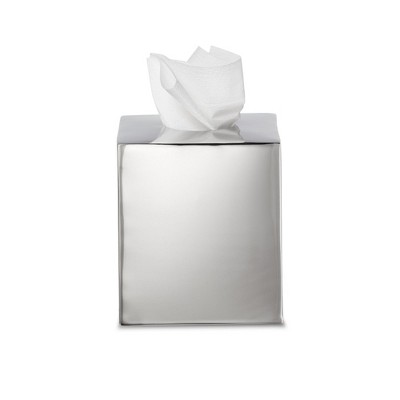
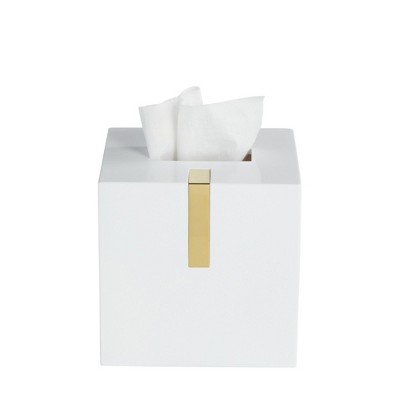
Available covers run roughly: heights about 5.4 to 7.28 inches, widths about 5 to 6.35 inches, and depths about 3.74 to 7.3 inches. Because sizes vary by model, check the specific product dimensions on the listing to ensure a proper fit.
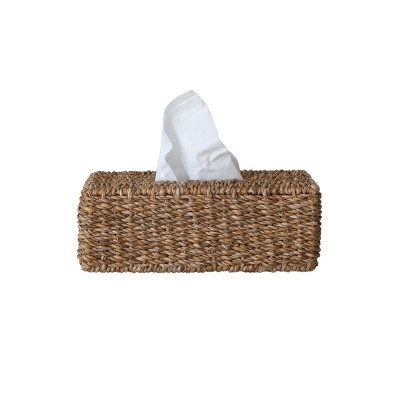
Listings show a variety of materials, including resin, plastic, steel or steel alloy (listed as metal), ceramic combined with steel, and fabric blends (one listing notes 10% recycled polyester). Check the item description for the exact material used.
Some covers are sized for standard square (cube) tissue boxes. Example listing dimensions include an interior size of 5.5 × 5.5 × 5.25 inches and an ideal outer measure of about 5.75 × 5.75 × 5.5 inches. Since sizing varies, measure your tissue box (including the opening) and compare it to the product dimensions before purchasing.
Most listings advise routine cleaning by wiping with a damp or water-dampened soft cloth. Check the item description for any additional care notes specific to the material.
Covers stay put by a combination of factors: sufficient material weight or heavier trims, a non-skid or sturdy base on some models, and solid construction that adds heft. Check the listing for details like a non-slip base or heavier materials if slippage is a concern.
Durability depends on material: plastic sleeves are described as durable, lightweight, waterproof, and resistant to deformation, while metal or galvanized steel covers are presented as sturdy and long-lasting. Refer to the product description for specific durability claims.
Listings recommend using vintage tissue box covers throughout the home—bathroom, bedroom, living room, kitchen, or office. Common placements include end tables, nightstands, countertops, vanities, and desks.