Sponsored
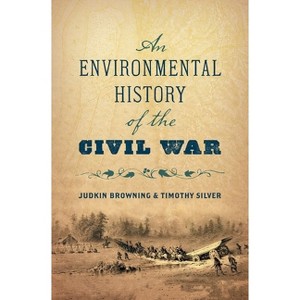
An Environmental History of the Civil War - (Civil War America) by Judkin Browning & Timothy Silver (Hardcover)
In Stock
Sponsored
About this item
Highlights
- This sweeping new history recognizes that the Civil War was not just a military conflict but also a moment of profound transformation in Americans' relationship to the natural world.
- About the Author: Judkin Browning is professor of military history at Appalachian State University and author of Shifting Loyalties: The Union Occupation of Eastern North Carolina.
- 272 Pages
- History, United States
- Series Name: Civil War America
Description
About the Book
"This sweeping history recognizes that the Civil War was not just a military conflict but also a moment of profound transformation in Americans' relationship to the natural world. To be sure, environmental factors such as topography and weather powerfully shaped the outcomes of battles and campaigns, and the war could not have been fought without the horses, cattle, and other animals that were essential to both armies. But here Judkin Browning and Timothy Silver weave a far richer story, combining military and environmental history to forge a comprehensive new narrative of the war's significance and impact. As they reveal, the conflict created a new disease environment by fostering the spread of microbes among vulnerable soldiers, civilians, and animals; led to large-scale modifications of the landscape across several states; sparked new thinking about the human relationship to the natural world; and demanded a reckoning with disability and death on an ecological scale. And as the guns fell silent, the change continued; Browning and Silver show how the war influenced the future of weather forecasting, veterinary medicine, the birth of the conservation movement, and the establishment of the first national parks"--Book Synopsis
This sweeping new history recognizes that the Civil War was not just a military conflict but also a moment of profound transformation in Americans' relationship to the natural world. To be sure, environmental factors such as topography and weather powerfully shaped the outcomes of battles and campaigns, and the war could not have been fought without the horses, cattle, and other animals that were essential to both armies. But here Judkin Browning and Timothy Silver weave a far richer story, combining military and environmental history to forge a comprehensive new narrative of the war's significance and impact. As they reveal, the conflict created a new disease environment by fostering the spread of microbes among vulnerable soldiers, civilians, and animals; led to large-scale modifications of the landscape across several states; sparked new thinking about the human relationship to the natural world; and demanded a reckoning with disability and death on an ecological scale. And as the guns fell silent, the change continued; Browning and Silver show how the war influenced the future of weather forecasting, veterinary medicine, the birth of the conservation movement, and the establishment of the first national parks.
In considering human efforts to find military and political advantage by reshaping the natural world, Browning and Silver show not only that the environment influenced the Civil War's outcome but also that the war was a watershed event in the history of the environment itself.
Review Quotes
"A compact, smartly illustrated narrative."--Americas Civil War
"A most excellent study of aspects of the war ignored in many accounts of the conflict."--Michigan War Studies Review
"Browning and Silver have authored a book that will find its way into countless classrooms and should influence research papers, doctoral dissertations, and other books for at least the coming generation. . . . One of the most original and anticipated [books] of the past decade. . . . Readers will finish it with a newfound appreciation toward an old subject."--Georgia Historical Quarterly
"Browning and Silver have produced a long-needed study. . . . They strike a nice balance between synthesis and originality, weaving together the scholarship of others with their own research. . . . It is an added bonus that the book is so well written, with a deft feel for storytelling and a unified voice that belies its dual authorship. It will almost certainly find wide adoption in college courses on the Civil War and environmental history."--Louisiana History
"Browning and Silver provide a comprehensive interpretation of the Civil War as they present the conflict as a watershed event in environmental history. . . . It is a well-argued book that succeeds in providing 'a more holistic way of thinking about the Civil War' . . . The book's length, readability, and fresh perspective would make it a great addition to any Civil War or environmental history course."--Journal of Southern History
"For scholars of the Civil War, this book adds a fresh perspective, illustrating how ecology, nature, and weather had a striking and unpredictable effect upon military preparedness and the waging of war."--Library Journal
"In a briskly written text of fewer than 200 pages, [Browning and Silver] highlight the themes Civil War environmental historians have the unique ability to explore and make more relevant to our broader understanding of the conflict. . . . What they do accomplish is to enrich our understanding of the agency of microbes, animals, and landscape on the military history of the war."--The Annals of Iowa
"It is hard for this book review to do this book justice. Readers will not study or look at the battles of any war [again] without wanting to know more about the environmental impacts. The book is exceptionally well written."--Military Review
"Just when you think the history of the Civil War has been done to death, some enterprising writer turns over a new line of inquiry into this singular American tragedy. In this case, it was Judkin Browning and Timothy Silver, Appalachian State University professors of military and environmental history, respectively, who joined forces to break new ground...Despite their keen eye on the science, the authors don't skimp on narrative, telling insightful, intriguing stories about how the environment's most basic elements could prove vexing for war planners."--WNC Magazine
"Sweeping in breadth yet remarkably accessible, An Environmental History of the Civil War offers new insight into the intricate relationship between Civil War soldiers and their environment."--Journal of the Civil War Era
About the Author
Judkin Browning is professor of military history at Appalachian State University and author of Shifting Loyalties: The Union Occupation of Eastern North Carolina. Timothy Silver is professor of environmental history at Appalachian State University and author of Mount Mitchell and the Black Mountains: An Environmental History of the Highest Peaks in Eastern America.
Shipping details
Return details
Frequently bought together

Guests also viewed
Discover more options