Sponsored
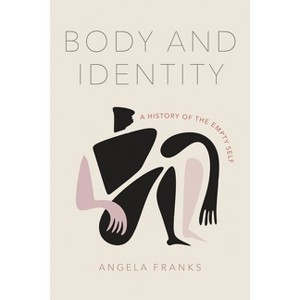
Body and Identity - by Angela Franks (Hardcover)
In Stock
Sponsored
About this item
Highlights
- Angela Franks provides a sweeping intellectual history of identity, particularly in terms of how identity relates to the body, with an emphasis on the importance of Christianity to this understanding.Modern questions about our bodies and how we see ourselves are often complex and problematic.
- About the Author: Angela Franks is an associate professor of theology at the Catholic University of America.
- 414 Pages
- Philosophy, Ethics & Moral Philosophy
Description
Book Synopsis
Angela Franks provides a sweeping intellectual history of identity, particularly in terms of how identity relates to the body, with an emphasis on the importance of Christianity to this understanding.
Modern questions about our bodies and how we see ourselves are often complex and problematic. To better answer these contemporary questions and navigate "identity politics," Angela Franks seeks to provide a better understanding of identity. She begins by giving three basic meanings of the term: identity through time, the "true" or authentic self, and our awareness of ourselves. She engages with thinkers from antiquity to present day and investigates the decisive developments that Christianity provided. Within Christianity came a new awareness of the distinctive individuality of each person--the "true self"--called by God in a way that often breaks away from the "solid" or fixed structures of identity formation, such as family, class, and nation. This more "liquid" idea of identity continues to evolve in modern times, though without its theistic emphasis on God's call. The result is a purely liquid self that consists of consciousness and activity, but without a grounded self that is either the object or the subject of consciousness. This is the empty self we have today, one that is given much more to do and less to be.
A comprehensive history of identity, Body and Identity brings the theological history of the self to the forefront in order to address the empty self and how identity is defined today.
Review Quotes
"Gratifyingly ambitious: essentially Charles Taylor's Sources of the Self but more Catholic in its priors, less turgid in its prose, with post-structuralism and the missing bit between Augustine and Descartes added back in. . . . She is remarkably erudite, a lucid writer, and comfortable toggling back and forth between metaphysical and postmodern vantage-points, meaning she can draw intellectual flexibility from the latter, without ever sacrificing the former's commitment to truth. . . . Absolute catnip . . . it's just so, so good." --Mary Harrington, author of Feminism Against Progress
"Angela Franks's Body and Identity: A History of the Empty Self illuminates how our culture came to be unrecognizable to so many. . . . It is a careful and vast intellectual history, engaging notable thinkers like Aristotle, Augustine, and Jean-Jacques Rousseau, but also novelists like Jane Austen and C. S. Lewis, to explain the observable contemporary incoherence surrounding the self, the body, and identity. . . . This deeply considered work is a welcome contribution to the present literature on the body, gender ideology, and the self." --Law & Liberty
"[A] remarkable book, which belongs on the shelf next to identity-interested thinkers like Charles Taylor or Carl Trueman." --Civitas Outlook
"Body and Identity isn't quite what a reader might expect if they skipped reading the subtitle, A History of the Empty Self...The book focuses not so much on the phenomenon of "liquid bodies and empty selves" as on the long history of thought across the disciplines of philosophy, theology, and psychology that shows the question at the core of the current identity fixation is fundamentally the same question--"Who am I?"--that has teased the human mind from the beginning of our civilisation's history." --Position Papers
"[T]he book as a whole is nothing short of masterful in both scope and depth. It shows why we desperately need public conversations about gender, sexuality, and culture to include trained academics." --Religion & Liberty
"A brilliant, deeply learned, and carefully argued book." --Carl R. Trueman, author of The Rise and Triumph of the Modern Self
"Grounded and soaring. Its thorough foundation in philosophical theology delivers, and the text understands that literary excurses are no mere peripheral complementarities but do bring the conversation in through another way." --Caitlin Smith Gilson, author of As It Is in Heaven
About the Author
Angela Franks is an associate professor of theology at the Catholic University of America.
Shipping details
Return details
Frequently bought together



Trending Philosophy

Discover more options