Sponsored
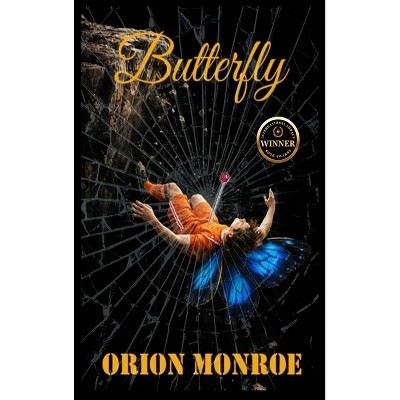
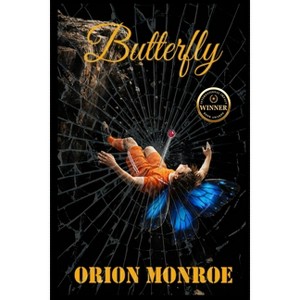
Butterfly - by Monroe (Paperback)
In Stock
Sponsored
About this item
Highlights
- Inspired by true events-one accusation can destroy everything.Eighteen-year-old soccer prodigy Davis Day had everything: contract offers, loyal teammates, and a future on the field.
- Author(s): Monroe
- 416 Pages
- Fiction + Literature Genres, Literary
Description
Book Synopsis
Inspired by true events-one accusation can destroy everything.
Eighteen-year-old soccer prodigy Davis Day had everything: contract offers, loyal teammates, and a future on the field. Until a single lie destroyed it all.
Overnight, he becomes a criminal in the court of public opinion. Friends vanish. Coaches turn their backs.
When prosecutors offer a plea deal that could save him or bury him, he faces an impossible choice: tell the truth and lose everything, or confess to a crime he didn't commit.
Content This novel contains emotionally intense scenes, including depictions of sexual trauma, social ostracism, and self-harm. These elements are portrayed with sensitivity and purpose, but may be distressing for some readers.
Review Quotes
Butterfly - A Literary Review
by Ellis Rowe
Ellis Rowe is a contributing editor forRiverfold Literary Review and a regular essayist on youth, identity, and power in modern fiction. His work has appeared in The Adrift Quarterly, Margin Notes, and the Northern Prose Archive. He lives in Vermont with his rescue dog, several old typewriters, and a lifelong belief that literature can hurt, and should.
In Butterfly, Orion Monroe delivers a haunting, masterfully constructed coming-of-age novel that refuses to stop. At once lyrical and ruthless, this is not a story about innocence lost. It is a story about innocence denied and torn from a boy before he ever had the chance to decide what kind of person he might become.
Told across the adolescent and young adult years of Davis Day, a soccer prodigy falsely accused, socially crucified, and emotionally stripped. Butterfly is a raw and uncompromising portrait of a boy trapped in the merciless tug-of-war between identity and expectation, vulnerability and performance, survival and surrender.
Monroe's prose is searing, and cinematic. Scenes unfold in immersive experience. Each and every setting comes alive with texture and memory. The locker rooms, the trails, the beach, the barn... all become battlegrounds for Davis's psyche; spaces where morality, masculinity, and self-worth are contested with devastating clarity.
Davis himself is not written as a tragic angel. He's an asshat. He's defiant, self-absorbed, even cruel. Still, Monroe never lets the reader forget that Davis is also a boy. One whose body grows faster than his ability to protect it. One whose sharp edges are a kind of armor. One who, despite his posturing, desperately wants to be understood or left alone, if understanding means giving in.
The novel's emotional center of gravity lands in its final chapters, where grief becomes action and friendship becomes elegy. Monroe captures Davis's final moments with a restraint that elevates the horror. There is no gore. There is no spectacle. There is only the wind, the trees, and a shadow that remains. When Davis leaps, the reader doesn't fall - they plummet. And when he lands, it is not with violence but with stillness. With finality. With terrifying grace.
Butterfly is a novel about injustice, yes. But more than that, it's about how we fail boys by demanding strength before they've learned how to feel safe. It's about the rot beneath adolescent bravado. It's about the cruelty of being told to grow up before you're ready, and the silent, aching beauty of refusing to.
Devastating, precise, and unforgettable, Butterfly doesn't just leave a mark. It scars (the kind you trace with your fingers long after the story is over).