
Sponsored
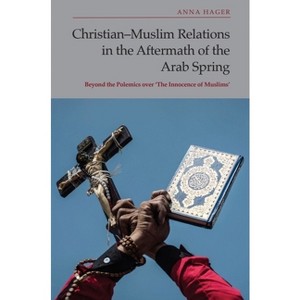
Christian-Muslim Relations in the Aftermath of the Arab Spring - by Anna Hager (Paperback)
$24.99
Pre-order
Eligible for registries and wish lists
Sponsored
About this item
Highlights
- This book uses 'The Innocence of Muslims' controversy as an entry point into the study of relations between Christians and Muslims in Egypt, Lebanon and Jordan.
- Author(s): Anna Hager
- 240 Pages
- Religion + Beliefs, Religion, Politics & State
Description
About the Book
Uses 'The Innocence of Muslims' controversy as a starting point for exploring Christian-Muslim relations in Egypt, Lebanon and Jordan.Book Synopsis
This book uses 'The Innocence of Muslims' controversy as an entry point into the study of relations between Christians and Muslims in Egypt, Lebanon and Jordan. Instead of dismissing the condemnations and joint reactions as shallow and ritualised displays of solidarity, Anna Hager argues that they offer insights into the mechanisms of Christian-Muslim relations. Christians and Muslims, including Islamist figures, channelled the potential violence - turning it into an occasion to strengthen inter-communal relations and, crucially, their own positions.Review Quotes
Anna Hager's book Christian-Muslim Relations in the Aftermath of the Arab Spring. Beyond the Polemics over 'The Innocence of Muslims' is a significant contribution to the field of Oriental Studies, offering a methodical solution to a complex question: how do we understand the nuanced dynamics between Christian and Muslim communities in the wake of transformative political events? By focusing on the reactions to the controversial 'Innocence of Muslims' video, Hager brings new insights that challenge conventional wisdom and provide a richer understanding of agency, rhetoric, and power in the Middle East.--Marta Woźniak-Bobińska
Christian-Muslim Relations in the Aftermath of the Arab Spring offers timely reflection on the character of relations between Christians and Muslims in the Middle East. Based upon a wide range of sources skilfully deployed, Hager seeks to describe how society assuages violence, reframing Muslim-Christian relations at moments of tension around Christian agency and the constraints on radical Muslim actors, thus allowing for a dynamic and complex web of political factors to strengthen their relations and respective religious statuses. Hager offers much to ponder in considering the Christian-Muslim encounter today.
--Anthony O'Mahony, University of OxfordDimensions (Overall): 9.21 Inches (H) x 6.14 Inches (W)
Suggested Age: 22 Years and Up
Number of Pages: 240
Genre: Religion + Beliefs
Sub-Genre: Religion, Politics & State
Publisher: Edinburgh University Press
Format: Paperback
Author: Anna Hager
Language: English
Street Date: January 31, 2026
TCIN: 1004095784
UPC: 9781399528450
Item Number (DPCI): 247-20-8380
Origin: Made in the USA or Imported
If the item details aren’t accurate or complete, we want to know about it.
Shipping details
Estimated ship dimensions: 1 inches length x 6.14 inches width x 9.21 inches height
Estimated ship weight: 1 pounds
We regret that this item cannot be shipped to PO Boxes.
This item cannot be shipped to the following locations: American Samoa (see also separate entry under AS), Guam (see also separate entry under GU), Northern Mariana Islands, Puerto Rico (see also separate entry under PR), United States Minor Outlying Islands, Virgin Islands, U.S., APO/FPO
Return details
This item can be returned to any Target store or Target.com.
This item must be returned within 90 days of the date it was purchased in store, shipped, delivered by a Shipt shopper, or made ready for pickup.
See the return policy for complete information.
Frequently bought together
$9.51
MSRP $9.99

Trending Non-Fiction
$18.28
was $19.58 New lower price
4.7 out of 5 stars with 17 ratings



Discover more options
$24.99 - $105.88
MSRP $24.95 - $110.00




$39.99 - $156.97
MSRP $44.95 - $165.00