Sponsored
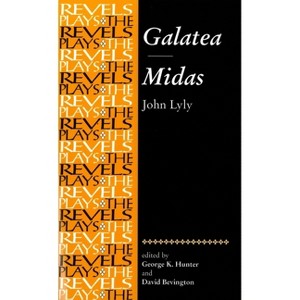
Galatea and Midas - (Revels Plays) by George Hunter & Stephen Bevington (Paperback)
In Stock
Sponsored
About this item
Highlights
- Galatea and Midas are two of John Lyly's most engaging plays.
- About the Author: George K. Hunter is Professor Emeritus at Yale University David Bevington is Phyllis Fay Horton Professor in the Humanities at the University of Chicago
- 304 Pages
- Drama, European
- Series Name: Revels Plays
Description
About the Book
Galatea and Midas are two of John Lyly's most engaging plays. Lyly took up the story of two young women, Galatea (or Gallathea) and Phillida who are dressed up in male clothes by their fathers so that they can avoid the requirement of the god Neptune that every year 'the fairest and chastest virgin in all the country' be sacrificed to a sea-monster. Hiding together in the forest, the two maidens fall in love, each supposing the other to be a young man. Galatea has become the subject of considerable feminist critical study in recent years. Midas (1590) uses mythology in quite a different way, dramatising two stories about King Midas in such a way as to fashion a satire of King Philip of Spain (and of any tyrant like him) for colossal greediness and folly. In the wake of the defeat of Philip's Armada fleet and its attempted invasion of England in 1588, this satire was calculated to win the approval of Queen Elizabeth and her court.Book Synopsis
Galatea and Midas are two of John Lyly's most engaging plays. Lyly took up the story of two young women, Galatea (or Gallathea) and Phillida who are dressed up in male clothes by their fathers so that they can avoid the requirement of the god Neptune that every year 'the fairest and chastest virgin in all the country' be sacrificed to a sea-monster. Hiding together in the forest, the two maidens fall in love, each supposing the other to be a young man. Galatea has become the subject of considerable feminist critical study in recent years. Midas (1590) uses mythology in quite a different way, dramatising two stories about King Midas in such a way as to fashion a satire of King Philip of Spain (and of any tyrant like him) for colossal greediness and folly. In the wake of the defeat of Philip's Armada fleet and its attempted invasion of England in 1588, this satire was calculated to win the approval of Queen Elizabeth and her court.From the Back Cover
Galatea and Midas are two of John Lyly's most engaging plays. Shortly after his early success with Capaspe and Sappho and Phao in 1583-84, he took up the story of two young women, Galatea (or Gallathea) and Phillida who are dressed up in male clothes by their fathers so that they can avoid the requirement of the god Neptune that every year 'the fairest and chastest virgin in all the country' be sacrificed to a sea-monster. Hiding together in the forest, the two maidens fall in love, each supposing the other to be a young man. This leads to delightful complications that remind us of the mix-ups in Shakespeare's romantic comedies. Galatea has become the subject of considerable feminist critical study in recent years.
Midas (1590) uses mythology in quite a different way, dramatising two stories about King Midas (the golden touch and the ass's ears) in such a way as to fashion a satire of King Philip of Spain (and of any tyrant like him) for colossal greediness and folly. In the wake of the defeat of Philip's Armada fleet and its attempted invasion of England in 1588, this satire was calculated to win the approval of Queen Elizabeth and her court. The plays are newly presented here by the scholars who have recently edited Campaspe, Sappho and Phao, and Endmion for the Revels series.About the Author
George K. Hunter is Professor Emeritus at Yale University
David Bevington is Phyllis Fay Horton Professor in the Humanities at the University of ChicagoShipping details
Return details
Trending Drama






Discover more options