Sponsored
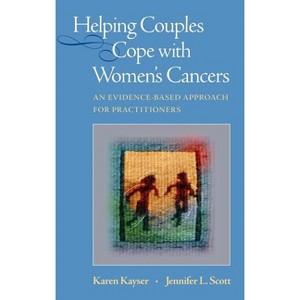
Helping Couples Cope with Women's Cancers - by Karen Kayser & Jennifer L Scott (Hardcover)
In Stock
Sponsored
About this item
Highlights
- At last, here is a comprehensive guide for practitioners who work with breast cancer patients and their families.
- About the Author: Karen Kayser, Professor, specializes in health psychology, social work in medical settings, intervention research, and couples therapy.
- 229 Pages
- Psychology, Clinical Psychology
Description
About the Book
Here is a comprehensive guide for practitioners who work with breast cancer patients and their families. It includes a series of psychosocial interventions to be used with couples during early stage breast cancer.
Book Synopsis
At last, here is a comprehensive guide for practitioners who work with breast cancer patients and their families. It includes a series of psychosocial interventions to be used with couples during early stage breast cancer. Chapters present information on assessing the levels of stress in these couples and on the most appropriate interventions for this problem. There is extensive evidence that emotional and social support positively influences women's abilities to cope to breast cancer. The first person that a woman with breast cancer turns to for support is her husband or intimate partner. However, as partners of breast cancer patients are struggling with their emotional distress, helplessness, and anxiety with the diagnosis, they often feel inadequate about their ability to help their wives and partners cope. It is important for practitioners to understand this concept of twofold stress.
From the Back Cover
Close relationships can be vital to a woman's recovery from breast or gynecological cancer and the myriad stressors that accompany diagnosis and treatment. Helping Couples Cope with Women's Cancer shows readers not only how to enlist the patient's closest support person in coping with the disease, but also to help that partner with the stressors, such as feelings of inadequacy and loss, that so often come with the role.
The authors, established experts on their subject, recognize the challenges couples face, the central role of communication in coping, and the individuality of each patient and couple. In addition to proven intervention techniques and helpful assessment tools, the book features case illustrations, "What to do if..." sections, sociocultural considerations, and suggestions for when the patient's caregiver is not her partner. Key areas of coverage include:
- Assessment: quality of life, impact of illness, family resources.
- Balancing work, family, self-care, and the demands of illness.
- Cognitive coping, relaxation, stress reduction.
- Body image, sexuality, and intimacy.
- Helping children cope: developmental guidelines.
- Transitions: goal-setting, life after cancer, facing recurrence or terminal illness.
The skills and insights contained in Helping Couples Cope with Women's Cancers will benefit a range of health and mental health practitioners, including counselors, social workers, clinical psychologists, psychiatrists, and nurses. Graduate students planning a career in health psychology or couples therapy should also find it a valuable resource.
Review Quotes
From the reviews:
"A family systems/cognitive behavioral approach to dealing with the stressors felt by a woman who is diagnosed with breast or gynecological cancer and her intimate partner. ... This book would make an excellent text for a graduate-level health psychology course dealing with the psychology of illness. It also would be good for a clinician ... . is a current, up-to-date refresher on the literature of how illness affects the individuals diagnosed as well as the loved ones who support and help care for them." (Leslie B. Rosen, PsycCRITIQUES, Vol. 53 (42), October, 2008)
"Helping Couples Cope with Women's Cancers is a guide that describes an approach to working with couples who are dealing with early stage breast or gynecological cancers. ... Overall, this book is a useful resource for clinicians working with women coping with breast or gynecological cancers. ... this book will serve as a helpful guide for clinicians working with this patient population." (Sharon L. Manne, Psycho-Oncology, Vol. 18, 2009)
About the Author
Karen Kayser, Professor, specializes in health psychology, social work in medical settings, intervention research, and couples therapy. She is the principal investigator of "Skills Training for Breast Cancer Patients and Their Partners" (funded by the Massachusetts Department of Public Health Breast Cancer Research Program).
Recently she co-organized the "International Meeting on the Developmental Course of Couples Coping with Stress" (supported by a grant from the American Psychological Association, Science Directorate). She teaches courses on family theories and research, couples therapy, and social work practice with women. She received her B.A. from Michigan State University and her M.S.W. and Ph.D. (Social Work & Psychology) from the University of Michigan.
Shipping details
Return details
Frequently bought together





Trending Non-Fiction






Discover more options