Sponsored
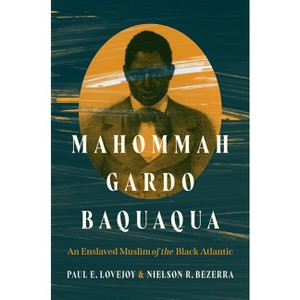
Mahommah Gardo Baquaqua - by Paul E Lovejoy & Nielson Bezerra
In Stock
Sponsored
About this item
Highlights
- A literate Muslim born between 1820 and 1830 in present-day Benin, Mahommah Gardo Baquaqua was enslaved in West Africa and forcibly moved to Brazil in 1845.
- About the Author: Paul E. Lovejoy is Distinguished Research Professor and Canada Research Chair in African Diaspora History at York University.
- 302 Pages
- History, World
Description
About the Book
"A literate Muslim born between 1820 and 1830 in present-day Benin, Mahommah Gardo Baquaqua was enslaved in the interior of West Africa and forcibly moved to Brazil in 1845. He escaped from slavery when his master took him to New York City in 1847. Baquaqua then fled to Haiti where he converted to Christianity. When he eventually returned to the United States, he enrolled in New York Central College. Baquaqua published his autobiography in 1854 and traveled to Liverpool, England, with the intention of returning to Africa. He apparently achieved this goal by the early 1860s, when his paper trail disappears. Lovejoy and Bezerra's analysis of this remarkable autobiography - the only known narrative by a former Brazilian slave - illuminates what Baquaqua's home in Africa was like, examines African slavery in mid-nineteenth-century Brazil, and offers an Atlantic perspective on resistance to slavery in the Americas in the era of the Fugitive Slave Law of 1850"--Book Synopsis
A literate Muslim born between 1820 and 1830 in present-day Benin, Mahommah Gardo Baquaqua was enslaved in West Africa and forcibly moved to Brazil in 1845. During a trip to New York City in 1847, he escaped from his master and fled to Haiti, where he converted to Christianity. When he eventually returned to the United States, he enrolled in New York Central College. Baquaqua published his autobiography --the only known narrative by a former Brazilian slave-- in 1854 and traveled to England with the intention of returning to Africa. He apparently achieved this goal by the early 1860s, when his paper trail disappears.
Lovejoy and Bezerra's analysis of this remarkable autobiography--the only known narrative by a former Brazilian slave--illuminates what Baquaqua's home in Africa was like and examines African slavery in mid-nineteenth-century Brazil. It also offers an Atlantic perspective on resistance to slavery in the Americas in the era of the Fugitive Slave Law of 1850.
Review Quotes
"The breadth of his experiences as an African in enslavement and freedom, in Africa, Brazil, the United States, Haiti, Canada, England and then again in Africa where he probably ended his days, are examined in exquisite detail in Mahommah Gardo Baquaqua. . . . Outstanding and impressive work by Paul Lovejoy and Nielson Bezarra."--Muslim World Review
"A beautiful, clearly written, and much-needed monograph on the harrowing life of Baquaqua . . . Paul Lovejoy is the greatest specialist on the subject and the best author for this book."--Ana Lucia Araujo, author of The Gift: How Objects of Prestige Shaped the Atlantic Slave Trade and Colonialism
"A true feat of research, this book goes beyond biography; rather, it uses Baquaqua's story as a vehicle to explore the nineteenth-century Black Atlantic. Lovejoy and Bezerra dispel prevailing misconceptions about Baquaqua's life and unearth a wealth of new detail."--Sean M. Kelley, author of The Voyage of the Slave Ship Hare: A Journey into Captivity from Sierra Leone to South Carolina
About the Author
Paul E. Lovejoy is Distinguished Research Professor and Canada Research Chair in African Diaspora History at York University. Nielson Bezerra is associate professor at Universidade do Estado do Rio de Janeiro and director of Museu Vivo do São Bento.Shipping details
Return details
Frequently bought together


Trending Non-Fiction






Discover more options