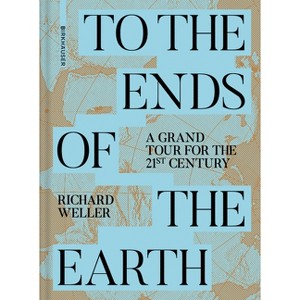
Das Buch nimmt den Leser als intellektuelles Abenteuer auf eine Reise durch eine sorgfältig zusammengestellte Auswahl von 120 Orten, die als Metaphern der zeitgenössischen "Kultur" verstanden werden können und somit den Zustand unserer heutigen Welt wiederspiegeln.
About the Author: Richard Weller is professor and former chair of landscape architecture and urbanism at the University of Pennsylvania, where he (together with Fritz Steiner) established the Ian L. McHarg Center for Urbanism and Ecology.
312 Pages
Architecture, Landscape
Description
Book Synopsis
Das Buch nimmt den Leser als intellektuelles Abenteuer auf eine Reise durch eine sorgfältig zusammengestellte Auswahl von 120 Orten, die als Metaphern der zeitgenössischen "Kultur" verstanden werden können und somit den Zustand unserer heutigen Welt wiederspiegeln. Diese Orte, die über alle sieben Kontinente verteilt sind, von den Tiefen des Ozeans bis zum Weltraum, gliedern sich in sechs Kapitel: Paradiese, Utopien, Maschinen, Ungeheuer, Ruinen und Instrumente.
Das Spektrum reicht vom Apple Park von Steve Jobs in Kalifornien über einen Nationalpark in Costa Rica, eine kleine Feldstation für den Schutz der Orang Utans auf Borneo, Afrikas Grüne Mauer, das Trump-Resort Mar-a-Lago bis hin zum Grenzzaun zwischen den USA und Mexiko. Die Publikation offeriert eine Grand Tour zu den wichtigsten Orten unserer Zeit.
Eine Reise um die Erde von heute der ganz besonderen Art
Mit eigens für diese Publikation erstellten, maßgefertigten Karten
Review Quotes
"Not just a book for cultural anthropologists and urban educators, To the Ends of the Earth is a clarion call to all environmentally conscientious citizens of our planet, with several sublime moments of ongoing habitat restoration and climate justice [...]. Part instruction manual for saving our planet, part guidebook for the new Grand Tourist, this book takes us on a journey not to be missed!" (Sean Ruten in Spacing)
***
"Pretty much everyone [...] will discover something new - and, more importantly, be inspired to think something new." (Elizabeth Farrelly in Landscape Australia)
***
"The book is a curated journey to explore the world and the impact of people through its places, objects, and ideas in a well-published, hardcover book" (Damian Holmes in World Landscape Architecture)
***
Interview with Richard Weller in A is for Architecture
***
"[...] das Buch nutzt den maximal möglichen Betrachtungswinkel für einen faktengewaltigen Appell. Wie genau dieser lautet, muss man allerdings selbst herausfinden." (Friederike Meyer in BauNetz)
***
"Weller gelingt es, wortstark die Welt als Ganzes zu betrachten und den Blick zu weiten. Auch wenn die Auswahl der Orte subjektiv erscheint, konfrontieren sie uns mit dem Zustand des Planeten im Kontext der Klimakatastrophe und animiert die Leser: innen, eigene Monster und Paradiese zu entdecken." (Natalie Scholder in DBZ)
***
"Noch kein Ziel für die nächste Bildungsreise? Flugscham? Oder schon überall gewesen? Die allerletzte große Tour führt zu den Ruinen von morgen." (Marcus Woeller in Welt am Sonntag)
***
"[...] eine anregende Lektüre [...], um das Wirken des Menschen auf dem Weg zum Ende der Erde zu reflektieren." (Christian Holl in Marlowes, )
About the Author
Richard Weller is professor and former chair of landscape architecture and urbanism at the University of Pennsylvania, where he (together with Fritz Steiner) established the Ian L. McHarg Center for Urbanism and Ecology. He is co-founder (with Tatum Hands) and former creative director of LA+ Interdisciplinary Journal of Landscape Architecture, founding director (with Vladimir Sitta) of Australian design firm Room 4.1.3., and holds adjunct professorships at the University of Western Australia and the University of New South Wales. His work has been frequently awarded in international design competitions and exhibited internationally, including at the Guggenheim Museum in New York, the Venice and Rotterdam Biennales, the Museum of Contemporary Art in Sydney, the Isabella Stewart Gardner Museum in Boston, the MAXXI Gallery in Rome, the Canadian Design Museum in Toronto, and the Central Academy of Fine Arts in Beijing. His publications include Room 4.1.3: Innovations in Landscape Architecture (University of Pennsylvania Press, 2005), Boomtown 2050: Scenarios for a Rapidly Growing City (University of Western Australia Press, 2009), Made in Australia: The Future of Australian Cities (UWAP, 2013), Transects (ORO Editions, 2014), Design with Nature Now (Lincoln Institute of Land Policy, 2019), Beautiful China: Reflections on Landscape Architecture in Contemporary China (ORO Editions, 2020), The Landscape Project (AR+D Publishing, 2022), and An Art of Instrumentality (ORO Editions, 2023). 'The Atlas for the End of the World, ' Weller's recent research work on biodiversity and cities, has been published in National Geographic and Scientific American, while his related research and design project to establish a 'World Park' is currently being considered for implementation by UNESCO.
Dimensions (Overall): 7.7 Inches (H) x 5.7 Inches (W) x 1.0 Inches (D)
Weight: 1.25 Pounds
Suggested Age: 22 Years and Up
Number of Pages: 312
Genre: Architecture
Sub-Genre: Landscape
Publisher: Birkhauser
Format: Hardcover
Author: Richard Weller
Language: English
Street Date: February 23, 2024
TCIN: 89674347
UPC: 9783035627930
Item Number (DPCI): 247-36-7205
Origin: Made in the USA or Imported
If the item details aren’t accurate or complete, we want to know about it.
Shipping details
Estimated ship dimensions: 1 inches length x 5.7 inches width x 7.7 inches height
Estimated ship weight: 1.25 pounds
We regret that this item cannot be shipped to PO Boxes.
This item cannot be shipped to the following locations: American Samoa (see also separate entry under AS), Guam (see also separate entry under GU), Northern Mariana Islands, Puerto Rico (see also separate entry under PR), United States Minor Outlying Islands, Virgin Islands, U.S., APO/FPO, Alaska, Hawaii
Return details
This item can be returned to any Target store or Target.com.
This item must be returned within 90 days of the date it was purchased in store, delivered to the guest, delivered by a Shipt shopper, or picked up by the guest.