Target New ArrivalsBack to SchoolCollegeClothing, Shoes & AccessoriesHome & DecorKitchen & DiningOutdoor Living & GardenGroceryHousehold EssentialsBabyBeautyPersonal CareSports & OutdoorsHealthWellnessSchool & Office SuppliesToys & GamesElectronicsVideo GamesMovies, Music & BooksParty SuppliesGift IdeasGift CardsPetsUlta Beauty at TargetShop by CommunityTarget OpticalDealsClearanceNew ArrivalsBack to SchoolCollegeTop DealsTarget Circle DealsWeekly AdShop Order PickupShop Same Day DeliveryRegistryRedCardTarget CircleFind Stores
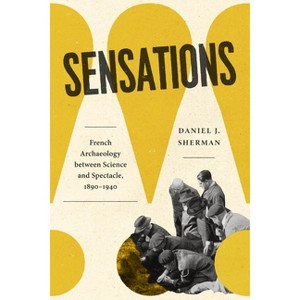
Sensations - by  Daniel J Sherman (Hardcover) - 1 of 1

Sensations - by Daniel J Sherman (Hardcover)

$47.50

In Stock

Free & easy returns
Free & easy returns
Return this item by mail or in store within 90 days for a full refund.
Eligible for registries and wish lists

About this item

Highlights

  • Delves into two controversies from the French archaeological world to illuminate the tension between the discipline's scientific ambitions and its hunger for media attention.
  • About the Author: Daniel J. Sherman is the Lineberger Distinguished Professor of Art History and History at the University of North Carolina, Chapel Hill.
  • 288 Pages
  • Social Science, Archaeology

Description


About the Book


"Delves into two controversies from the French archaeological world to illuminate the tension between the discipline's scientific ambitions and its hunger for media attention. For well over a century, from Heinrich Schliemann's sensational discoveries at Troy in the 1880s, through the Tutankhamun excavations of the 1920s, to the recent LIDAR-aided uncovering of lost Maya cities, archaeology has made headlines. In this new history of archaeology and its archival traces, Daniel J. Sherman treats the friction between science and spectacle as constitutive of the field. By exploring two long-running controversies that roiled the French archaeological world and its wider public in the first third of the twentieth century, he gives the science/media relationship a unique place in the history of archaeology-and its present. The first controversy involves a dispute over the conduct of excavations at Carthage in Tunisia, then under French colonial rule. In the second, accusations of forgery clouded what seemed to be a stunning Neolithic find at a hamlet called Glozel, in the Auvergne region in central France. The affair divided the scholarly community and attracted enormous media attention across Europe and North America. Both controversies occurred at a transitional moment between what has been called the heroic age of archaeology, dominated by explorers and adventurers with little specialized training, and the beginnings of its professionalization. As Sherman shows, the two affairs put the methods, procedures, and networks of archaeology in the spotlight and profoundly shaped its history"--


Book Synopsis


Delves into two controversies from the French archaeological world to illuminate the tension between the discipline's scientific ambitions and its hunger for media attention.

For well over a century, from Heinrich Schliemann's sensational discoveries at Troy in the 1880s, through the Tutankhamun excavations of the 1920s, to the recent LIDAR-aided uncovering of lost Maya cities, archaeology has made headlines. In this new history of archaeology and its archival traces, Daniel J. Sherman treats the friction between science and spectacle as constitutive of the field. By exploring two long-running controversies that roiled the French archaeological world and its wider public in the first third of the twentieth century, he gives the science/media relationship a unique place in the history of archaeology--and its present.

The first controversy involves a dispute over the conduct of excavations at Carthage in Tunisia, then under French colonial rule. In the second, accusations of forgery clouded what seemed to be a stunning Neolithic find at a hamlet called Glozel, in the Auvergne region in central France. The affair divided the scholarly community and attracted enormous media attention across Europe and North America. Both controversies occurred at a transitional moment between what has been called the heroic age of archaeology, dominated by explorers and adventurers with little specialized training, and the beginnings of its professionalization. As Sherman shows, the two affairs put the methods, procedures, and networks of archaeology in the spotlight and profoundly shaped its history.


Review Quotes


"Sherman's work--in Sensations as in his previous books--combines archival research, in-depth knowledge of the surrounding historical context, and insights from various strands of theoretically-oriented scholarship (in this case, Bruno Latour, Bonnie Smith, Judith Butler, Roland Barthes, and others). In sum, Sensations is an engaging, wide-ranging, well-crafted study that illuminates, as its subtitle promises, archaeology's formation between science and spectacle in the twentieth century."

-- "Surmises and suspicions"

"In Sensations, Sherman lays out the ways in which media, journalism, and publishing played a central and complex role in the legitimation of colonial archaeology and its claims to scientific expertise. Moving between the ruins of Carthage in Tunis to the hamlet of Glozel in France, the scientific, the sensational, and the scandalous are brought into focus as an archaeological nucleus of the fame of discovery, racialism, and imperial power. A superbly written and erudite book that exposes the historical bond between archaeology and the press, Sensations lays out the links between science, spectacle, and empire that continue to support archaeology's sensationalizing claims today."--Zainab Bahrani, coeditor of "Scramble for the Past: A Story of Archaeology in the Ottoman Empire, 1753-1914"

"Only a scholar of Sherman's breadth, depth, and experience could produce such an innovative and interdisciplinary study. Sensations shows us how archaeology positioned itself between science and spectacle. Using case studies from France and French-occupied Tunisia, Sherman explores the extent of archaeology's implication in colonial structures and discourse, from the 1880s to the 1920s and beyond. Dependent on media attention, yet ambitious for academic recognition, archaeology captured the public imagination even (or especially) when it struggled to interpret the distant past it had uncovered. This deeply researched and closely argued book traces an important new history of archaeology by connecting it to transnational histories of science, media, sexuality, and visual culture."--Christina Riggs, author of "Treasured: How Tutankhamun Shaped a Century"

"As a discipline grounded in fieldwork, archaeology involves both the social and natural sciences. But this position is the product of a long history that only came to fruition in the twentieth century. The originality of Sherman's book lies in its ability to shed new light on this history: he brings a global and critical lens to bear upon excavation practices, their neocolonial context, archaeology's complex relationship with the media, and the decisive role that amateur archaeologists have played in the discipline. In considering two seemingly dissimilar objects--the founding of French mandate-era Tunisian archeology and the most infamous controversy of the 1920s, the Glozel affair--Sherman brilliantly illuminates an emerging field's sometimes farcical vicissitudes in the face of the public's expectations. His deft and assured mastery of profoundly diverse and often comical sources exposes archaeology's deep connections with what Guy Debord called 'the society of the spectacle.'"--Alain Schnapp, author of "The Discovery of the Past"

"Sherman is one of a handful of people who work at the intersection of history and art history. He brings to his scholarship an exceptional depth of research and methodological sophistication, and now he has done it again. This time, his subject is archaeology in Jazz Age France, a critical moment when the field was making a concerted effort to professionalize itself, a process, as Sherman shows, that was aimed not just at disciplining practitioners but also at creating a self-legitimizing public image through visual devices of varied kinds: photographs, theatricals, and spectacular displays."--Philip Nord, author of "France's New Deal: From the Thirties to the Postwar Era"


About the Author


Daniel J. Sherman is the Lineberger Distinguished Professor of Art History and History at the University of North Carolina, Chapel Hill. He is the author of, among other books, The Construction of Memory in Interwar France and French Primitivism and the Ends of Empire, 1945-1975, both published by the University of Chicago Press.
Dimensions (Overall): 9.13 Inches (H) x 6.14 Inches (W) x .87 Inches (D)
Weight: 1.49 Pounds
Suggested Age: 22 Years and Up
Number of Pages: 288
Genre: Social Science
Sub-Genre: Archaeology
Publisher: University of Chicago Press
Format: Hardcover
Author: Daniel J Sherman
Language: English
Street Date: May 7, 2025
TCIN: 1009335216
UPC: 9780226835372
Item Number (DPCI): 247-54-4662
Origin: Made in the USA or Imported
If the item details aren’t accurate or complete, we want to know about it.

Shipping details

Estimated ship dimensions: 0.87 inches length x 6.14 inches width x 9.13 inches height
Estimated ship weight: 1.49 pounds
We regret that this item cannot be shipped to PO Boxes.
This item cannot be shipped to the following locations: American Samoa (see also separate entry under AS), Guam (see also separate entry under GU), Northern Mariana Islands, Puerto Rico (see also separate entry under PR), United States Minor Outlying Islands, Virgin Islands, U.S., APO/FPO, Alaska, Hawaii

Return details

This item can be returned to any Target store or Target.com.
This item must be returned within 90 days of the date it was purchased in store, delivered to the guest, delivered by a Shipt shopper, or picked up by the guest.
See the return policy for complete information.

Additional product information and recommendations

Discover more options

Frequently bought together

Best-selling Social Science Books

Get top deals, latest trends, and more.