Many analog clocks add a lower LCD/info panel that displays month, day, date and often indoor temperature. That panel commonly runs on a separate quartz movement and can also show a second time zone or 24-hour time alongside the main analog hands.
Many models use radio/atomic synchronization (daily signals such as WWVB/NIST) for the main analog time, while the calendar/info panel typically runs on a separate quartz movement. Some clocks are advertised as self-setting or self-adjusting via atomic signals for both time and calendar features.
Some models let you select the language used for day and month labels (examples show three selectable languages) and offer multiple time-zone presets (some listings show up to seven zones) with Daylight Saving options. Other clocks simply allow the LCD panel to be set to a second time zone or switched to a 24-hour format. Feature availability varies by model, so confirm options in the product details.
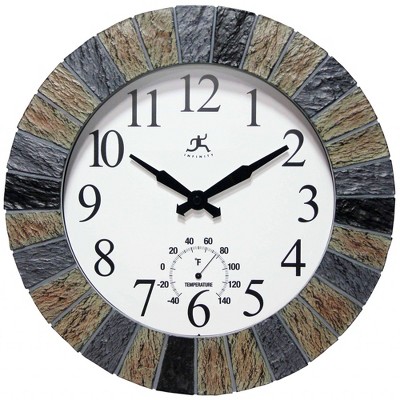
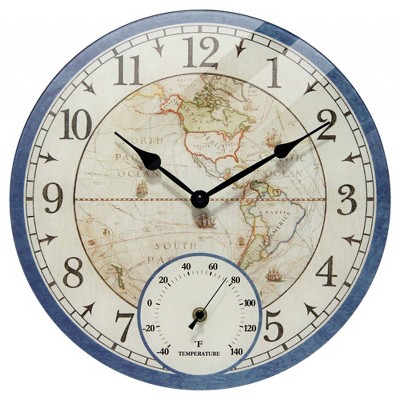
Besides time and date, many models display temperature (indoor or indoor/outdoor) and calendar details. Some include a wireless sensor to report outdoor temperature in addition to the built-in indoor reading.
Most are designed to hang on a wall, while some models also include a foldable stand so they can be placed on a desk, shelf, or countertop for tabletop display.
Warranty terms and included items vary by listing—examples include a 1 Year Limited Warranty or listings that state "No Applicable Warranty." Battery inclusion also varies: some models include batteries, while others list batteries as required but not included. Check the product details for exact coverage and contents.
Designs differ: some clocks use two separate movements (for example, an atomic-synced main analog movement plus a quartz-driven LCD/info panel), while other calendar-capable clocks are integrated atomic/self-setting units that calibrate time and calendar together.