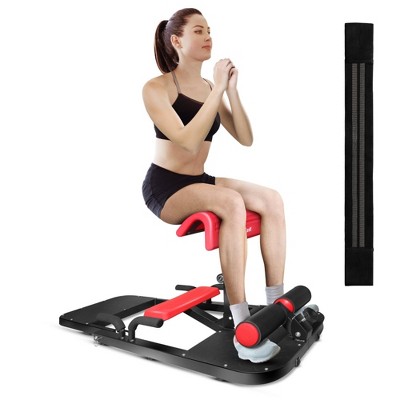
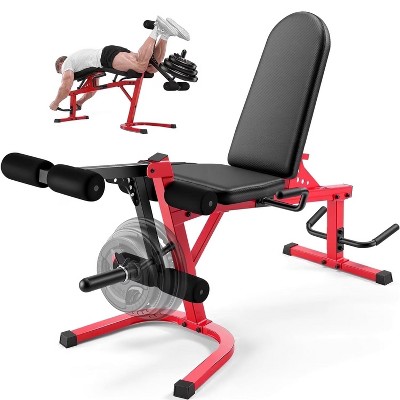
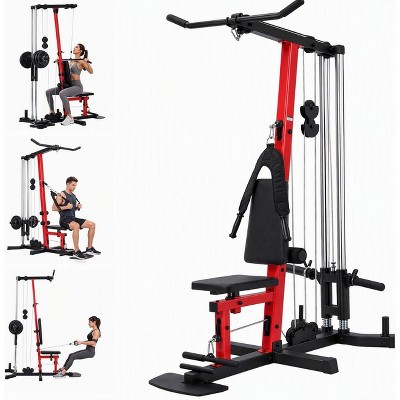
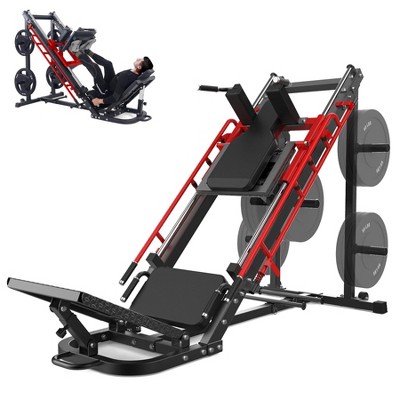
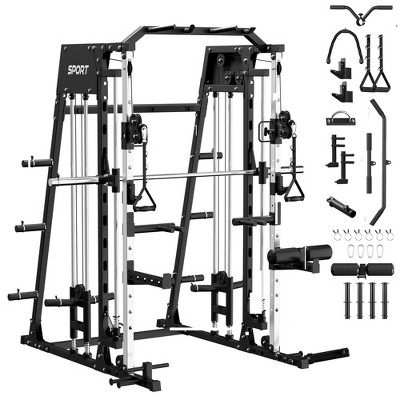
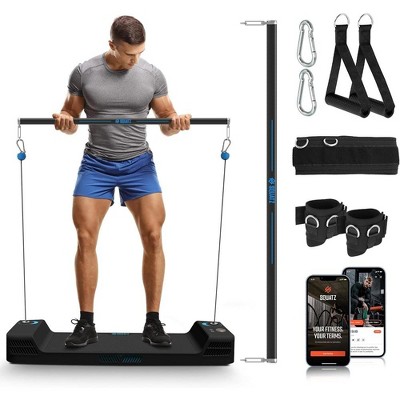
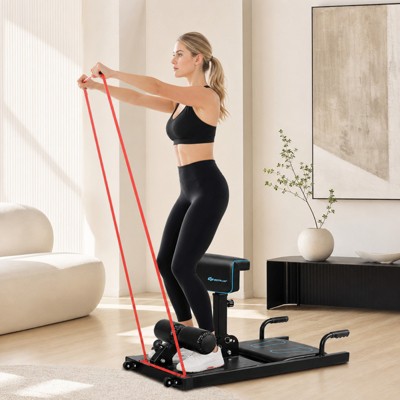
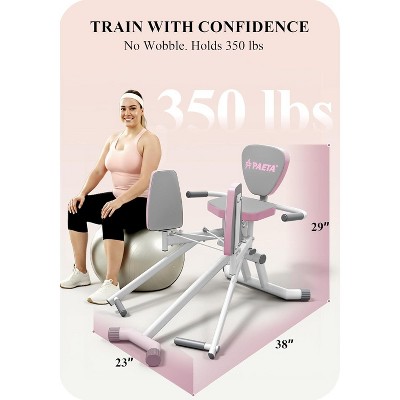
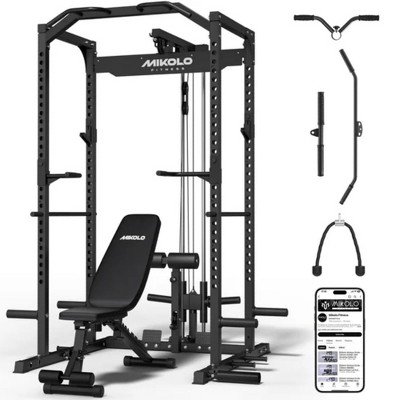
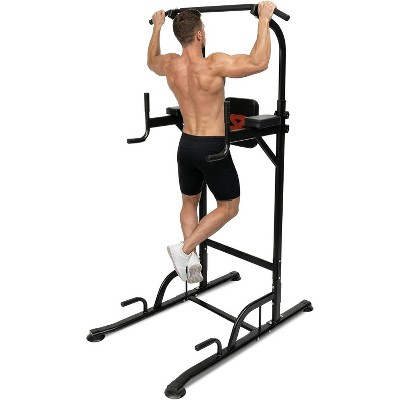
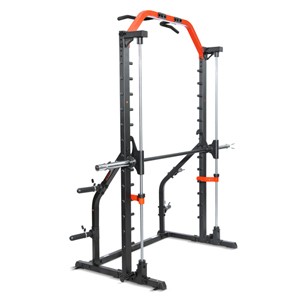
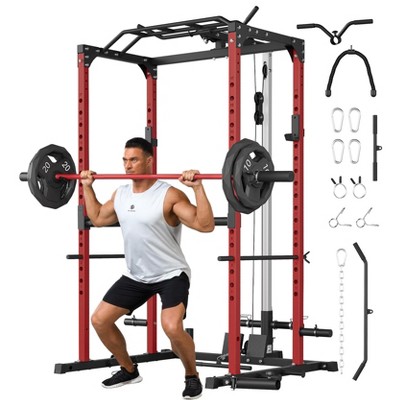
Most home models offer a tool‑free conversion: you flip or reposition the back pad and adjust or lower the footplate/foot pedal to change modes. Some models add a hydraulic handle or a safety‑catch mechanism to speed and simplify the switch.
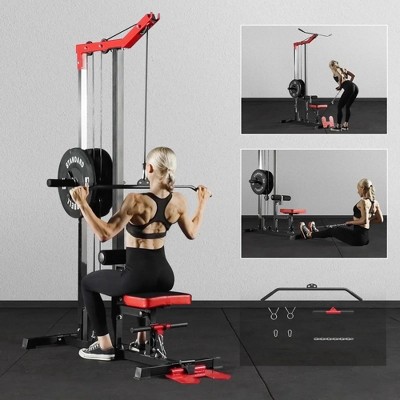
Many units use linear bearings on solid guide rails for smooth, quiet sled motion. Related cable-and-pulley designs typically use rolling bearings on the pulleys to improve pulley action and reduce noise.
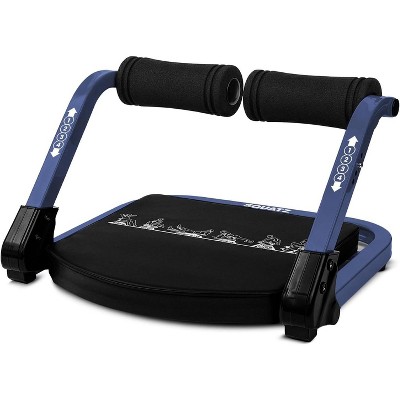
Common adjustments include multi‑angle backrests and footplates plus multiple lockout/safety positions. Listings often cite around four lockout positions and safety limiters that commonly span three to five levels.
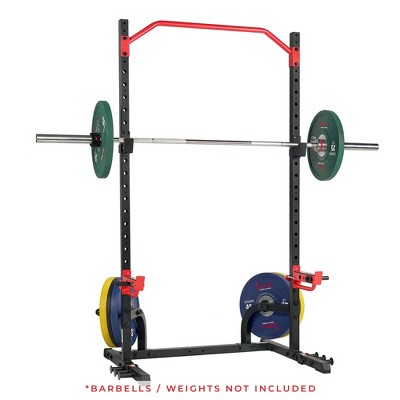
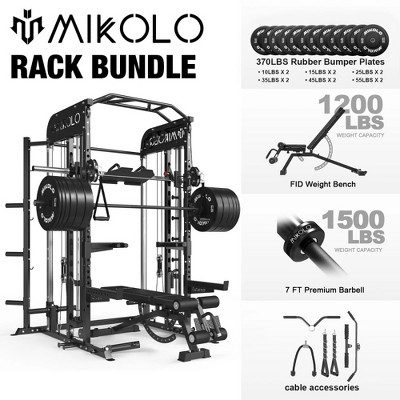
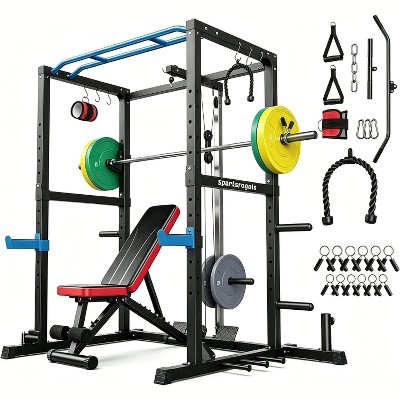
Yes. Many combos include built‑in weight plate storage posts or racks and resistance‑band pegs. Some full rack-style units also list bar storage and multiple accessory hooks for organizing plates and handles.
Capacities vary widely by model. Example listings span roughly from 1,200 lb up to 2,200 lb, so check each product’s rated maximum load before purchasing.
Most frames are steel—described variously as carbon steel, steel alloy, or high‑tensile solid steel. Some listings also include tube dimensions (for example, 50×100 mm) in their specs.
Descriptions commonly mention thick, high‑density shoulder and back cushions covered in anti‑slip, wear‑resistant leather. Other models list ergonomic cushions with PVC/PU covers. Foam density and detailed padding specs are not consistently provided.
Dimensions vary by model. In the provided listings heights range roughly 52.4"–86.1", widths about 37.8"–61", and depths commonly in the mid‑70s to low‑80s inches. Always confirm the specific model’s footprint and ceiling clearance before ordering.
Many units ship in multiple packages (two or three) to reduce transit damage. Most require adult assembly at home; tools for assembly are typically provided with the shipment.