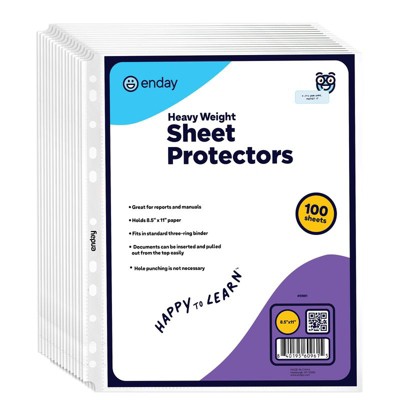
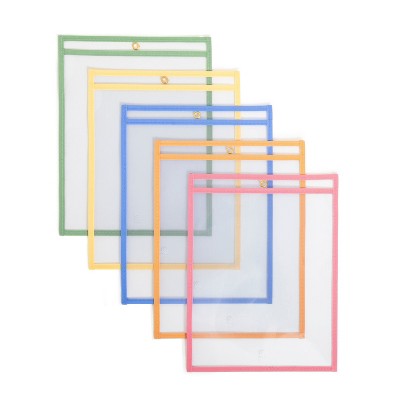
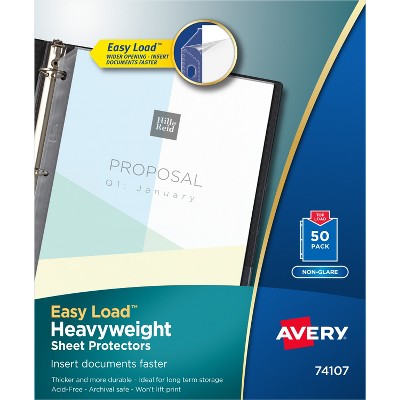
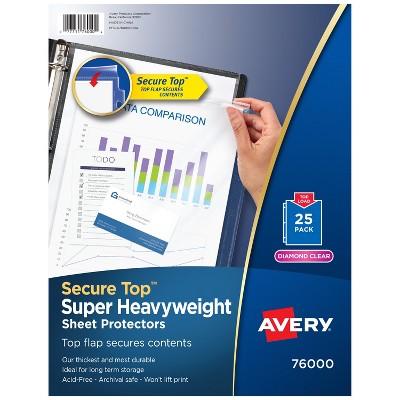
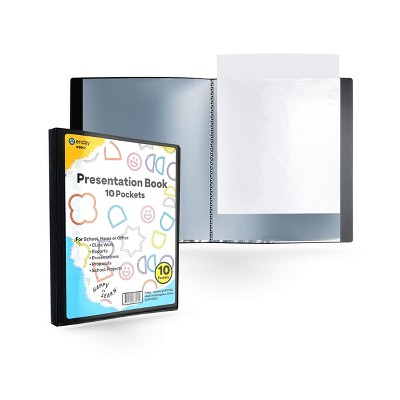
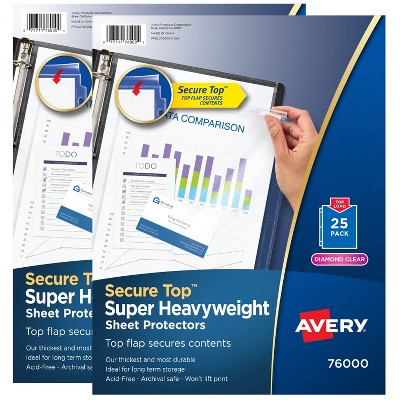
Top-loading protectors that are sealed on three sides (or fully sealed on three sides) provide the most security because the opening is limited. Three-side sealed or fully sealed designs prevent sheets from sliding out compared with open-edge styles.
Common finishes include high-clarity (often called diamond clear or polished) for unobstructed viewing, and reduced-glare or economy finishes for lower reflectivity. Shoppers can choose based on whether maximum clarity or less reflection is the priority.
Listings show overall sizes ranging from about 11.0 x 8.5 inches up to roughly 11.75 x 9.75 inches while still accommodating standard 8.5 x 11 sheets.
Top-loading protectors open at the top edge and accept pages from above; side-loading protectors open at a side edge and accept pages from the side. The opening orientation determines how you insert and remove pages and can affect how easily sheets stay in place once inserted.
Many protectors are made from polypropylene or clear plastic and are described as acid-free or archival. Some listings note features like “no photocopy transfer” or that the material won’t lift print, which helps protect documents and printed text.
Product descriptions use terms such as economy, reduced-glare, heavyweight, or heavy-gauge. Where provided numerically, thickness is sometimes listed (for example, one listing specifies 0.08 mm).
Many listings mention reinforced binding edges or reinforced holes designed to resist tearing under frequent or heavy binder use. These reinforcements help the protector hold up to repeated page turns and binder handling.