Target New ArrivalsBack to SchoolCollegeClothing, Shoes & AccessoriesHome & DecorKitchen & DiningOutdoor Living & GardenGroceryHousehold EssentialsBabyBeautyPersonal CareSports & OutdoorsHealthWellnessSchool & Office SuppliesToys & GamesElectronics & TechVideo GamesMovies, Music & BooksParty SuppliesGift IdeasGift CardsPetsUlta Beauty at TargetShop by CommunityTarget OpticalDealsClearanceNew ArrivalsBack to SchoolCollegeTop DealsTarget Circle DealsWeekly AdShop Order PickupShop Same Day DeliveryRegistryRedCardTarget CircleFind Stores

metal fish spatula

358 results for “metal fish spatula”

Sponsored

Oster Stainless Steel Four Sided Box Grater

Sponsored

Powered by AI

Guests also ask:

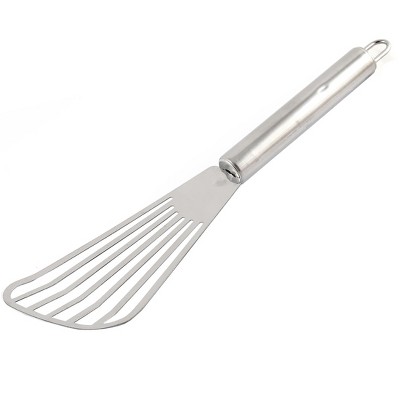
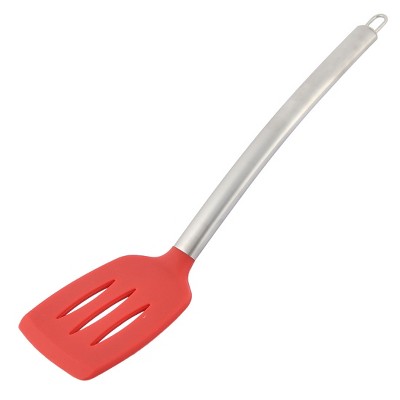
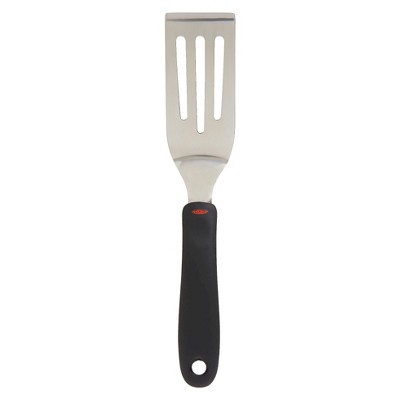
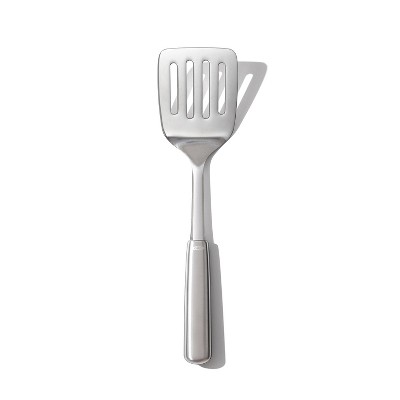
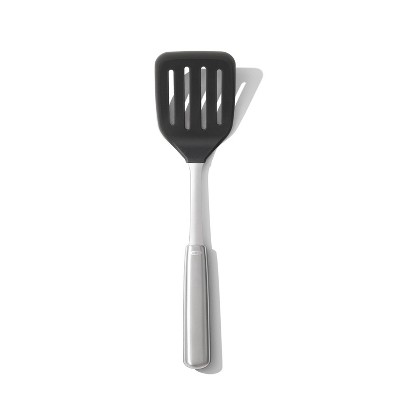
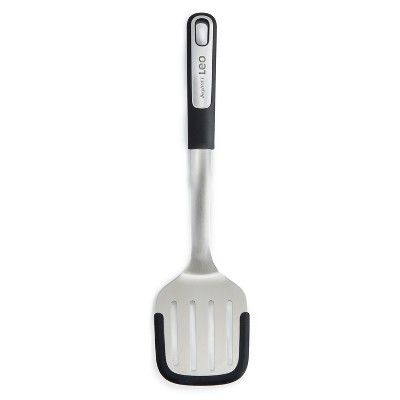
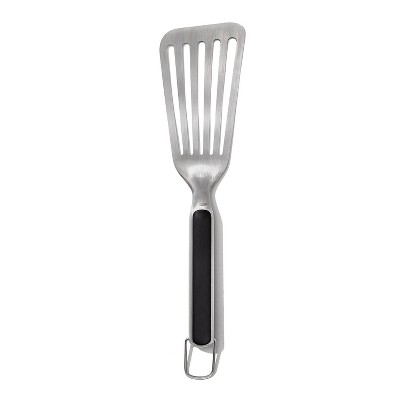
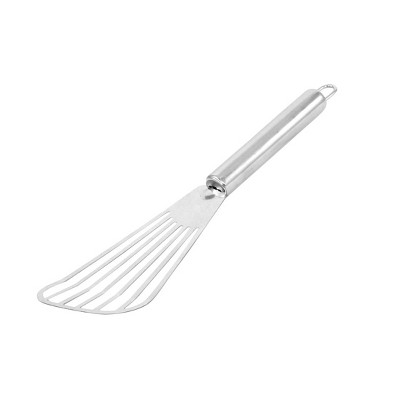
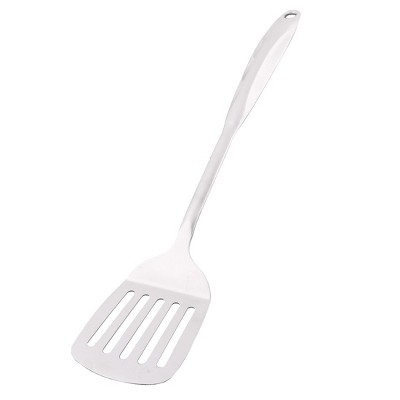
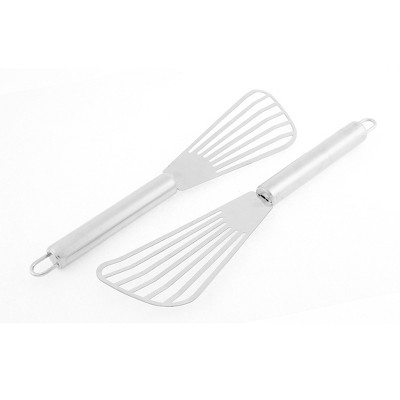
Most metal fish spatulas are stainless steel. Some combine a stainless-steel body with a flexible silicone head and a recycled polypropylene (PP) handle. Several listings specifically call out 304 (304‑grade) stainless steel for durability and corrosion resistance.

Lengths commonly range from about 10 inches up to 18 inches, while head widths typically fall between roughly 2.8 inches and 6 inches.

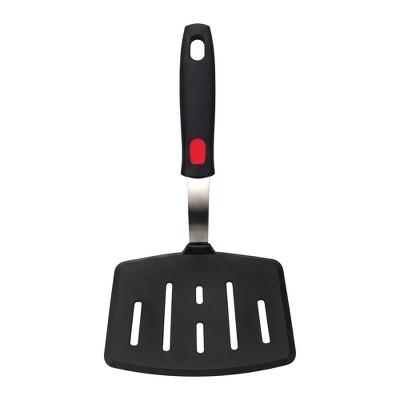
Common handle features include ergonomic/non‑slip grips, longer lengths to keep hands away from heat, recycled PP grips on some models, and a hanging loop or hole for easy storage.

They’re often described as flexible yet sturdy. Silicone heads tend to be more flexible, while thin, beveled metal blades provide enough flex to slide under food but retain enough stiffness to lift it.

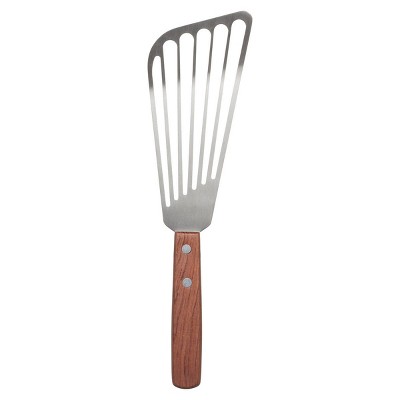
Metal fish spatulas are commonly used for flipping and lifting delicate foods like fish fillets and whole fish, and are also used for pancakes, eggs, omelets, steaks, seafood cakes, and transferring delicate baked goods or vegetables.

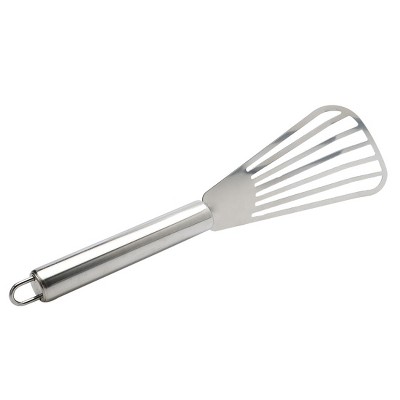
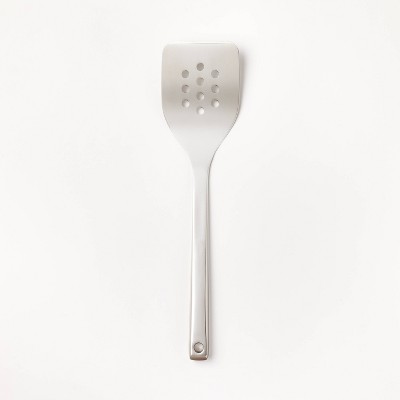
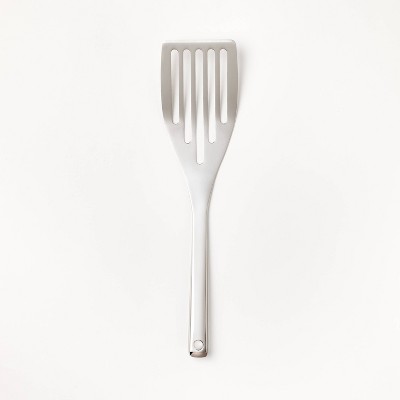
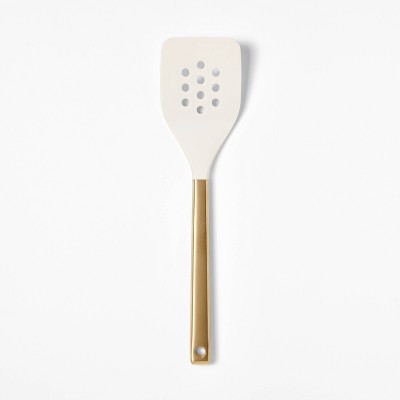
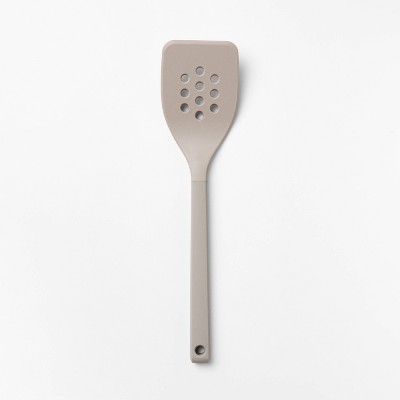
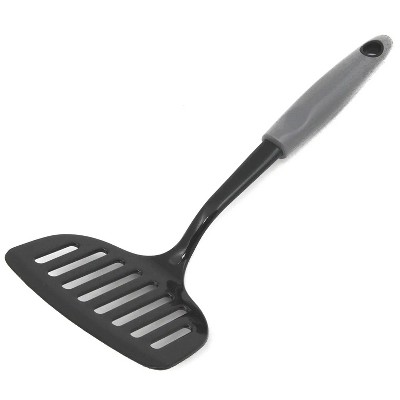
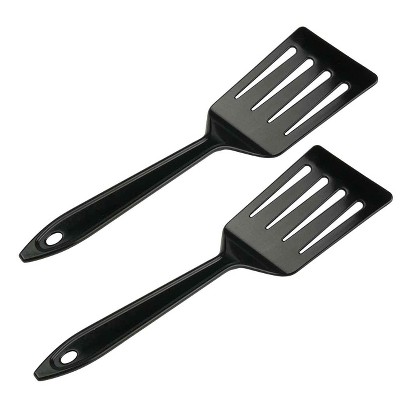
Many have slotted or perforated (hollowed) heads so fats, oil, or water can drain through while lifting or transferring food.

Several listings specify 304 (sometimes noted as 304‑grade or 18/10) stainless steel and commonly claim resistance to rust, corrosion, discoloration, and staining.

They’re intended for metal pans and grills; because a stainless‑steel blade can damage nonstick coatings, use caution or choose a nonstick‑safe turner for coated cookware.

Get top deals, latest trends, and more.