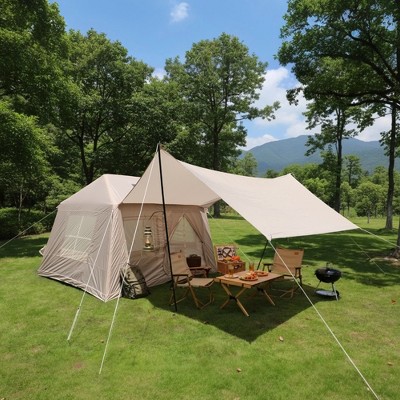
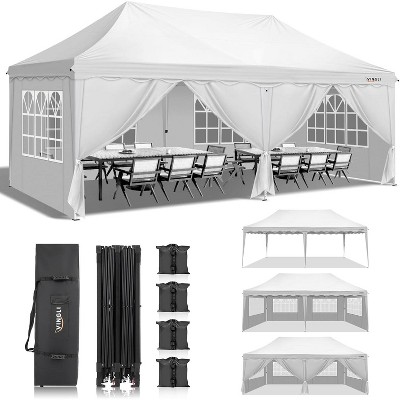
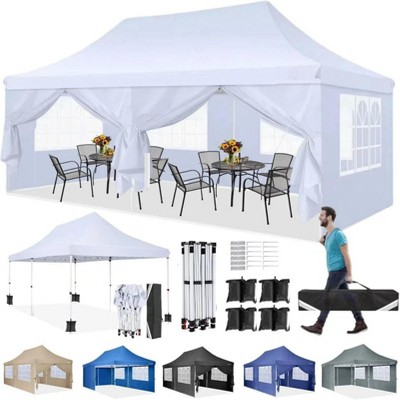
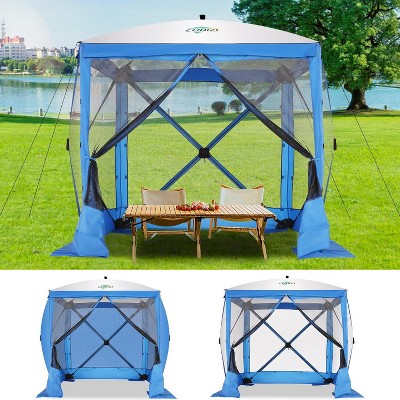
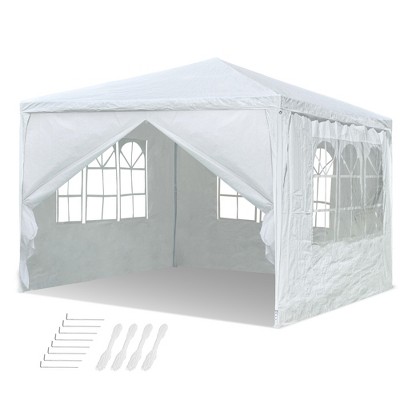
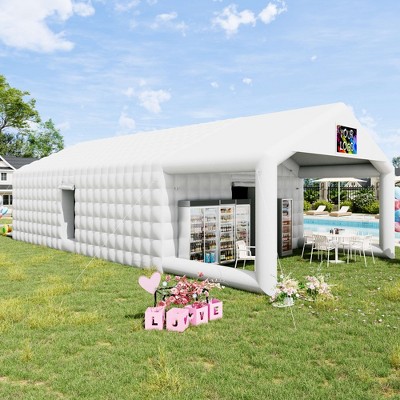
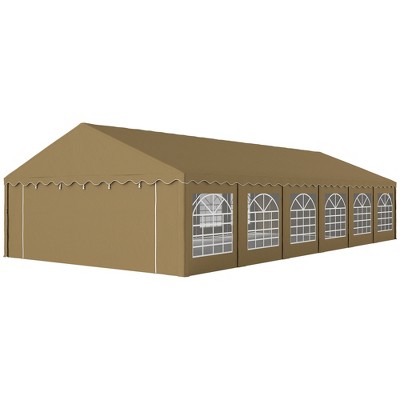
Wind resistance varies by model—some listings state explicit ratings (for example, level 5 wind or about 28–38 mph), while others warn to take precautions around 25 mph. For anchoring, use ground pegs and sandbags on soft ground (grass/dirt) and expansion screws or concrete anchors on hard surfaces. Many tents include sandbags, ground pegs and wind ropes; if anchoring hardware isn’t included, plan to buy appropriate anchors for your surface and local wind conditions.
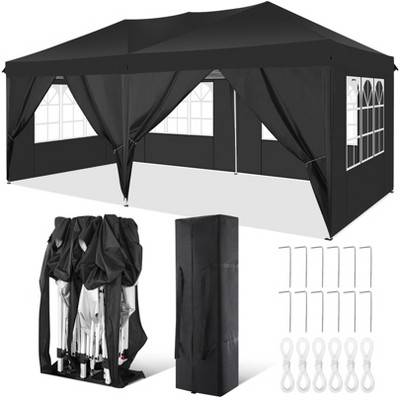
Listings commonly include stability gear such as sandbags, ground pegs and wind ropes; some models also list expansion screws for hard surfaces. For transport, larger pop-up tents often include wheeled or rolling carry bags. Included accessories vary by model, so check the product details before buying.
Many listings advertise fully waterproof tops and high UV protection. Examples include claims of "100% waterproof" with around a 1500 mm waterproof pressure rating and UPF 50+ or wording that the fabric blocks roughly 99% of UV rays. Specific ratings vary by model, so check product specs for exact numbers.
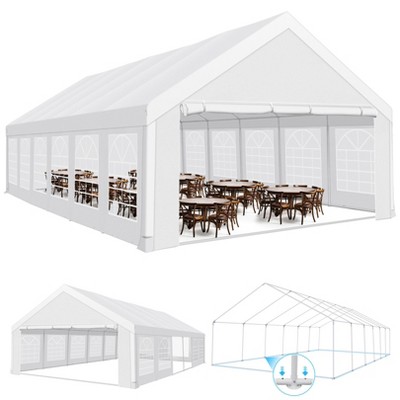
Many listings describe quick, tool‑free setup using a pre‑assembled frame and recommend 2–3 adults to erect the tent. Some product details state "No Tools Needed," while others note "Adult Assembly Required," so setup time and tools vary by model—check the listing for specific assembly instructions.
Descriptions commonly list canopy tops made from 420D Oxford cloth with a dual‑layer PU coating and sidewalls from 210D polyester with a PU lining. Product details also note PU linings and heat‑sealed seams used to enhance waterproofing. Exact materials and coatings vary by model—check the product specs.