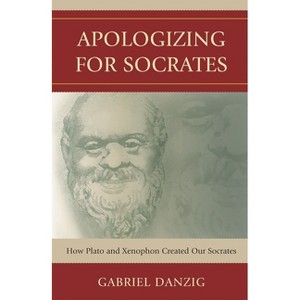
Apologizing for Socrates examines some of Plato's and Xenophon's Socratic writings, specifically those that address well-known controversiese concerning the life and death of Socrates.
About the Author: Gabriel Danzig is chair of the department of classics and a lecturer in the department of philosophy at Bar Ilan University, Israel.
286 Pages
Philosophy, History & Surveys
Description
About the Book
Apologizing for Socrates places some of the Platonic and Xenophontic writings in the context of contemporary controversies over Socrates, providing a perspective in which many of the philosophic and literary features of the text can be explained. In addition, it sheds light on...
Book Synopsis
Apologizing for Socrates examines some of Plato's and Xenophon's Socratic writings, specifically those that address well-known controversiese concerning the life and death of Socrates. Gabriel Danzig argues that the effort to defend Socrates from a variety of contemporary charges helps explain some of the central philosophical arguments and literary features that appear in these works. Concentrating on the two Apologies, Crito, Euthyphro, Xenophon's Symposium and Memorabilia, Lysis, and Oeconommicus, Danzig argues that the apologetic efforts were essential for rebuilding the community of Socratic friends and companions, which was devastated by the trial and death of Socrates. The Socratic writings are not merely literary or philosophical endeavors, but also political acts of great competence.
Review Quotes
"Bold in its main hypothesis and both lucid and scholarly in detail, Danzig's book will have to be read by any Hellenist or philosopher with a serious interest in Socrates and Plato." --Michael C. Stokes, Durham University
"Gabriel Danzig's Apologizing for Socrates: How Plato and Xenophon Created Our Socrates provides an original and illuminating approach to the puzzle posed by the undeniable inconsistencies in the Platonic corpus as well as by the apparent logical lapses in the Socratic arguments presented in Plato's dialogues. Judiciously consulting Xenophon's portrait of Socrates and comparing it with Plato's, Danzig suggests that both authors engaged in defending Socrates against the suspicions and deprecations of him by his contemporaries. Situating both Plato and Xenophon within their historical milieu, Danzig refreshingly charts a middle course between, on the one hand, judging Plato unduly harshly, and, on the other, going to extreme interpretive lengths to secure his reputation as a literary and philosophical genius." --Roslyn Weiss, Lehigh University "Exciting, scholarly and partly convincing....the book should be urgent reading for all serious students of Socrates." --Bryn Mawr Classical Review "There is a lot of worthwhile detail in each of the chapters, and students of any of the main works examined in the book will certainly want to read the book for its insights." --The Heythrop Journal "Apologizing for Socrates: How Plato and Xenophon Created our Socrates complements such existing approaches as the assumption that Socrates adapts his argumentative style to his interlocutor or the assumption that Plato's thinking changed during his career.... Apologizing for Socrates is well worth reading for anyone interested in the historical Socrates or the authorial agendas of Plato and Xenophon." --The Journal of Hellenic Studies
About the Author
Gabriel Danzig is chair of the department of classics and a lecturer in the department of philosophy at Bar Ilan University, Israel. He is also author of the Hebrew translation of Socratic Dialogues: Xenophon's Apology of Socrates, Symposium and Oeconomicus.
Dimensions (Overall): 9.1 Inches (H) x 6.0 Inches (W) x 1.0 Inches (D)
Weight: 1.25 Pounds
Suggested Age: 22 Years and Up
Number of Pages: 286
Genre: Philosophy
Sub-Genre: History & Surveys
Publisher: Lexington Books
Theme: Ancient & Classical
Format: Hardcover
Author: Gabriel Danzig
Language: English
Street Date: April 16, 2010
TCIN: 1009489362
UPC: 9780739132449
Item Number (DPCI): 247-56-6707
Origin: Made in the USA or Imported
If the item details aren’t accurate or complete, we want to know about it.
Shipping details
Estimated ship dimensions: 1 inches length x 6 inches width x 9.1 inches height
Estimated ship weight: 1.25 pounds
We regret that this item cannot be shipped to PO Boxes.
This item cannot be shipped to the following locations: American Samoa (see also separate entry under AS), Guam (see also separate entry under GU), Northern Mariana Islands, Puerto Rico (see also separate entry under PR), United States Minor Outlying Islands, Virgin Islands, U.S., APO/FPO, Alaska, Hawaii
Return details
This item can be returned to any Target store or Target.com.
This item must be returned within 90 days of the date it was purchased in store, delivered to the guest, delivered by a Shipt shopper, or picked up by the guest.
A: It places them in the context of contemporary controversies, analyzing the philosophical and literary features within these texts.
submitted byAI Shopping Assistant - 10 days ago
Ai generated
Q: Who is the author of Apologizing for Socrates?
submitted by AI Shopping Assistant - 10 days ago
A: Gabriel Danzig, a chair and lecturer in classics and philosophy at Bar Ilan University, wrote the book.
submitted byAI Shopping Assistant - 10 days ago
Ai generated
Q: What is the target audience for this book?
submitted by AI Shopping Assistant - 10 days ago
A: The book is suggested for readers aged 22 and up, particularly those interested in philosophy and ancient history.
submitted byAI Shopping Assistant - 10 days ago
Ai generated
Q: What types of writings does the book examine?
submitted by AI Shopping Assistant - 10 days ago
A: It examines Socratic writings from both Plato and Xenophon, focusing on their responses to accusations against Socrates.
submitted byAI Shopping Assistant - 10 days ago
Ai generated
Q: What main themes does the book address?
submitted by AI Shopping Assistant - 10 days ago
A: The book discusses themes related to the life, death, and philosophical interpretations of Socrates, emphasizing the apologetic efforts of Plato and Xenophon.