Target New ArrivalsGift Ideas for DadClothing, Shoes & AccessoriesHome & DecorKitchen & DiningOutdoor Living & GardenGroceryHousehold EssentialsBabyBeautyPersonal CareSports & OutdoorsHealthWellnessLuggageSchool & Office SuppliesToysElectronicsVideo GamesMovies, Music & BooksParty SuppliesGift IdeasGift CardsPetsUlta Beauty at TargetShop by CommunityTarget OpticalDealsClearanceNew ArrivalsGift Ideas for DadBack to SchoolCollegeTop DealsTarget Circle DealsWeekly AdShop Order PickupShop Same Day DeliveryRegistryRedCardTarget CircleFind Stores
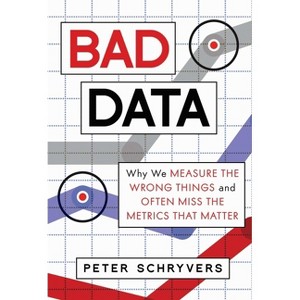
Bad Data - by  Peter Schryvers (Hardcover) - 1 of 1

Bad Data - by Peter Schryvers (Hardcover)

$19.19Save $5.81 (23% off)

In Stock

Free & easy returns

Free & easy returns

Return this item by mail or in store within 90 days for a full refund.
Eligible for registries and wish lists

About this item

Highlights

  • Highlights the pitfalls of data analysis and emphasizes the importance of using the appropriate metrics before making key decisions.
  • About the Author: Peter Schryvers is an urban planner in Calgary, Alberta and is the founder of the Beltline Urban Mural Project.
  • 352 Pages
  • Social Science, Research

Description


About the Book


Big data is often touted as the key to understanding almost every aspect of contemporary life. This critique of "information hubris" shows that even more important than data is finding the right metrics to evaluate it. The author, an expert in environmental design and city planning, examines the many ways in which we measure ourselves and our world. He dissects the metrics we apply to health, worker productivity, our children's education, the quality of our environment, the effectiveness of leaders, the dynamics of the economy, and the overall well-being of the planet. Among the areas where the wrong metrics have led to poor outcomes, he cites the fee-for-service model of health care, corporate cultures that emphasize time spent on the job while overlooking key productivity measures, overreliance on standardized testing in education to the detriment of authentic learning, and a blinkered focus on carbon emissions, which underestimates the impact of industrial damage to our natural world. He also examines various communities and systems that have achieved better outcomes by adjusting the ways in which they measure data. The best results are attained by those that have learned not only what to measure and how to measure it, but what it all means. By highlighting the pitfalls inherent in data analysis, this illuminating book reminds us that not everything that can be counted really counts.


Book Synopsis


Highlights the pitfalls of data analysis and emphasizes the importance of using the appropriate metrics before making key decisions. Big data is often touted as the key to understanding almost every aspect of contemporary life. This critique of "information hubris" shows that even more important than data is finding the right metrics to evaluate it. The author, an expert in environmental design and city planning, examines the many ways in which we measure ourselves and our world. He dissects the metrics we apply to health, worker productivity, our children's education, the quality of our environment, the effectiveness of leaders, the dynamics of the economy, and the overall well-being of the planet. Among the areas where the wrong metrics have led to poor outcomes, he cites the fee-for-service model of health care, corporate cultures that emphasize time spent on the job while overlooking key productivity measures, overreliance on standardized testing in education to the detriment of authentic learning, and a blinkered focus on carbon emissions, which underestimates the impact of industrial damage to our natural world. He also examines various communities and systems that have achieved better outcomes by adjusting the ways in which they measure data. The best results are attained by those that have learned not only what to measure and how to measure it, but what it all means. By highlighting the pitfalls inherent in data analysis, this illuminating book reminds us that not everything that can be counted really counts.


About the Author


Peter Schryvers is an urban planner in Calgary, Alberta and is the founder of the Beltline Urban Mural Project. A Registered Planning Professional with a master's in Environmental Design, he is a member of the Canadian Institute of Planners.
Dimensions (Overall): 9.0 Inches (H) x 6.3 Inches (W) x 1.3 Inches (D)
Weight: 1.48 Pounds
Suggested Age: 22 Years and Up
Number of Pages: 352
Genre: Social Science
Sub-Genre: Research
Publisher: Prometheus Books
Format: Hardcover
Author: Peter Schryvers
Language: English
Street Date: January 10, 2020
TCIN: 1010866296
UPC: 9781633885905
Item Number (DPCI): 247-16-5774
Origin: Made in the USA or Imported
If the item details aren’t accurate or complete, we want to know about it.

Shipping details

Estimated ship dimensions: 1.3 inches length x 6.3 inches width x 9 inches height
Estimated ship weight: 1.48 pounds
We regret that this item cannot be shipped to PO Boxes.
This item cannot be shipped to the following locations: American Samoa (see also separate entry under AS), Guam (see also separate entry under GU), Northern Mariana Islands, Puerto Rico (see also separate entry under PR), United States Minor Outlying Islands, Virgin Islands, U.S., APO/FPO, Alaska, Hawaii

Return details

This item can be returned to any Target store or Target.com.
This item must be returned within 90 days of the date it was purchased in store, delivered to the guest, delivered by a Shipt shopper, or picked up by the guest.
See the return policy for complete information.

Q: What topics does the author examine in the book?

submitted by AI Shopping Assistant - 16 hours ago
  • A: The author examines metrics related to health, productivity, education, environment, leadership, economy, and overall well-being.

    submitted byAI Shopping Assistant - 16 hours ago
    Ai generated

Q: What is the main focus of the book?

submitted by AI Shopping Assistant - 16 hours ago
  • A: The book critiques data analysis pitfalls and emphasizes the importance of using appropriate metrics for decision-making.

    submitted byAI Shopping Assistant - 16 hours ago
    Ai generated

Q: Who is the author of this book?

submitted by AI Shopping Assistant - 16 hours ago
  • A: The author is Peter Schryvers, an urban planner and founder of the Beltline Urban Mural Project.

    submitted byAI Shopping Assistant - 16 hours ago
    Ai generated

Q: What is the author's background?

submitted by AI Shopping Assistant - 16 hours ago
  • A: Peter Schryvers has a master's in Environmental Design and is a Registered Planning Professional.

    submitted byAI Shopping Assistant - 16 hours ago
    Ai generated

Q: What is the genre of this book?

submitted by AI Shopping Assistant - 16 hours ago
  • A: The book falls under the genre of Social Science, specifically in the sub-genre of Research.

    submitted byAI Shopping Assistant - 16 hours ago
    Ai generated

Additional product information and recommendations

Discover more options

Get top deals, latest trends, and more.

Privacy policy