Target New ArrivalsGift Ideas for MomClothing, Shoes & AccessoriesHome & DecorKitchen & DiningOutdoor Living & GardenGroceryHousehold EssentialsBabyBeautyPersonal CareHealthWellnessLuggageSports & OutdoorsToysElectronicsVideo GamesMovies, Music & BooksSchool & Office SuppliesParty SuppliesGift IdeasGift CardsPetsUlta Beauty at TargetShop by CommunityTarget OpticalDealsClearanceTarget New ArrivalsSpring OutfitsGift Ideas for MomWomen’s Festival OutfitsTop DealsTarget Circle DealsWeekly AdShop Order PickupShop Same Day DeliveryRegistryRedCardTarget CircleFind Stores
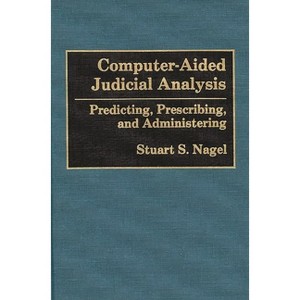
Computer-Aided Judicial Analysis - by  Stuart S Nagel (Hardcover) - 1 of 1

Computer-Aided Judicial Analysis - by Stuart S Nagel (Hardcover)

$100.00

In Stock

Free & easy returns

Free & easy returns

Return this item by mail or in store within 90 days for a full refund.
Eligible for registries and wish lists

About this item

Highlights

  • Decision-aiding software, the underpinning of computer-aided judicial analysis, can facilitate the prediction of how cases are likely to be decided, prescribe decisions that should be reached in such cases, and help administrate more efficiently the court process.
  • About the Author: STUART S. NAGEL is Professor of Political Science at the University of Illinois and a member of the Illinois bar.
  • 392 Pages
  • Freedom + Security / Law Enforcement, Civil Procedure

Description


About the Book


Decision-aiding software, the underpinning of computer-aided judicial analysis, can facilitate the prediction of how cases are likely to be decided, prescribe decisions that should be reached in such cases, and help administrate more efficiently the court process. It can do so, says Nagel, by listing past cases on each row of a spreadsheet matrix, by listing predictive criteria in the columns, and in general by showing for each factual element the estimated probability of winning a case. The software aggregates the information available and deduces likely outcomes. But it can also prescribe judicial decisions by listing alternatives in the rows, the goals to be achieved in the columns, and by showing relations between alternatives in the cells. By similar means decision-aiding software can also help perform administrative tasks, such as rationally assigning judges or other personnel to cases, and by sequencing cases to reduce the time consumed by each case.

In Part I, Nagel provides an overview of computer-aided analysis and the role of decision-aiding software in the legal process. In the second part he deals with judicial prediction from prior cases and from present facts; and in the third part he emphasizes the prescribing role of judges, particularly in deciding the rules that ought to be applied in civil and criminal procedures. Nagel also covers computer-aided mediation and provides a new perspective on judicial decisions. Then, in Part IV, he treats at length the process of judicial administration and how to improve its efficiency. Of particular interest to court personnel will be the benefits to be derived from reducing delays and in the docketing and sequencing of cases.


Book Synopsis


Decision-aiding software, the underpinning of computer-aided judicial analysis, can facilitate the prediction of how cases are likely to be decided, prescribe decisions that should be reached in such cases, and help administrate more efficiently the court process. It can do so, says Nagel, by listing past cases on each row of a spreadsheet matrix, by listing predictive criteria in the columns, and in general by showing for each factual element the estimated probability of winning a case. The software aggregates the information available and deduces likely outcomes. But it can also prescribe judicial decisions by listing alternatives in the rows, the goals to be achieved in the columns, and by showing relations between alternatives in the cells. By similar means decision-aiding software can also help perform administrative tasks, such as rationally assigning judges or other personnel to cases, and by sequencing cases to reduce the time consumed by each case.

In Part I, Nagel provides an overview of computer-aided analysis and the role of decision-aiding software in the legal process. In the second part he deals with judicial prediction from prior cases and from present facts; and in the third part he emphasizes the prescribing role of judges, particularly in deciding the rules that ought to be applied in civil and criminal procedures. Nagel also covers computer-aided mediation and provides a new perspective on judicial decisions. Then, in Part IV, he treats at length the process of judicial administration and how to improve its efficiency. Of particular interest to court personnel will be the benefits to be derived from reducing delays and in the docketing and sequencing of cases.


About the Author


STUART S. NAGEL is Professor of Political Science at the University of Illinois and a member of the Illinois bar. He is the author of such relevant books as Decision-Aiding Software and Legal Decision-Making: A Guide to Skills and Applications throughout the Law (Quorum Books, 1990). He is the editor of such relevant books as Law, Decision-Making, and Microcomputers: Cross-National Perspectives (Quorum Books, 1991), and Public Administration and Decision-Aiding Software: Improving Procedure and Substance (Greenwood Press, 1990). He has been an attorney to the United States Senate Judiciary Committee, the National Labor Relations Board, and the Legal Services Corporation. He has also been a special master to the Federal District Courts. He is also active as a workshop instructor for courses sponsored by the ABA Judicial Administrative Division and the American Law Institute.
Dimensions (Overall): 9.0 Inches (H) x 6.0 Inches (W) x 1.0 Inches (D)
Weight: 1.64 Pounds
Suggested Age: 22 Years and Up
Number of Pages: 392
Genre: Freedom + Security / Law Enforcement
Sub-Genre: Civil Procedure
Publisher: Praeger
Format: Hardcover
Author: Stuart S Nagel
Language: English
Street Date: October 23, 1992
TCIN: 1010327966
UPC: 9780899306704
Item Number (DPCI): 247-03-8187
Origin: Made in the USA or Imported
If the item details aren’t accurate or complete, we want to know about it.

Shipping details

Estimated ship dimensions: 1 inches length x 6 inches width x 9 inches height
Estimated ship weight: 1.64 pounds
We regret that this item cannot be shipped to PO Boxes.
This item cannot be shipped to the following locations: American Samoa (see also separate entry under AS), Guam (see also separate entry under GU), Northern Mariana Islands, Puerto Rico (see also separate entry under PR), United States Minor Outlying Islands, Virgin Islands, U.S., APO/FPO, Alaska, Hawaii

Return details

This item can be returned to any Target store or Target.com.
This item must be returned within 90 days of the date it was purchased in store, delivered to the guest, delivered by a Shipt shopper, or picked up by the guest.
See the return policy for complete information.

Q: What is the target audience for this book?

submitted by AI Shopping Assistant - 1 month ago
  • A: The book is intended for legal professionals, including judges and court personnel, and is suitable for readers aged 22 and up.

    submitted byAI Shopping Assistant - 1 month ago
    Ai generated

Q: How many pages does the book contain?

submitted by AI Shopping Assistant - 1 month ago
  • A: This hardcover book contains a total of 392 pages.

    submitted byAI Shopping Assistant - 1 month ago
    Ai generated

Q: What is the main purpose of decision-aiding software in this book?

submitted by AI Shopping Assistant - 1 month ago
  • A: The software helps predict case outcomes, prescribes decisions, and improves judicial administration efficiency.

    submitted byAI Shopping Assistant - 1 month ago
    Ai generated

Q: What are the main topics covered in the book?

submitted by AI Shopping Assistant - 1 month ago
  • A: The book discusses computer-aided analysis, judicial prediction, decision-making, and improving judicial administration.

    submitted byAI Shopping Assistant - 1 month ago
    Ai generated

Q: Who is the author of this book?

submitted by AI Shopping Assistant - 1 month ago
  • A: The book is authored by Stuart S. Nagel, a Professor of Political Science.

    submitted byAI Shopping Assistant - 1 month ago
    Ai generated

Additional product information and recommendations

Discover more options

Trending Business & Law Books

Get top deals, latest trends, and more.

Privacy policy