Why doesn't all this cognitive processing go on "in the dark," without any consciousness at all?
About the Author: Robert S. Chirinko is Professor of Finance at the University of Illinois at Chicago.
430 Pages
Psychology, Cognitive Psychology & Cognition
Description
About the Book
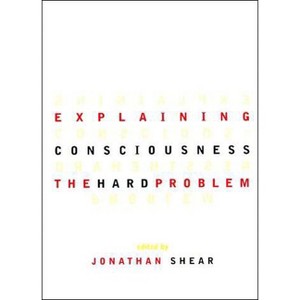
Why doesn't all this cognitive processing go on in the dark, without any consciousness at all? In this book philosophers, physicists, psychologists, neurophysiologists, computer scientists, and others address this central topic in the growing discipline of consciousness studies.
Book Synopsis
Why doesn't all this cognitive processing go on "in the dark," without any consciousness at all? In this book philosophers, physicists, psychologists, neurophysiologists, computer scientists, and others address this central topic in the growing discipline of consciousness studies.
At the 1994 landmark conference "Toward a Scientific Basis for Consciousness", philosopher David Chalmers distinguished between the "easy" problems and the "hard" problem of consciousness research. According to Chalmers, the easy problems are to explain cognitive functions such as discrimination, integration, and the control of behavior; the hard problem is to explain why these functions should be associated with phenomenal experience. Why doesnt all this cognitive processing go on "in the dark", without any consciousness at all? In this book, philosophers, physicists, psychologists, neurophysiologists, computer scientists, and others address this central topic in the growing discipline of consciousness studies. Some take issue with Chalmers' distinction, arguing that the hard problem is a non-problem, or that the explanatory gap is too wide to be bridged. Others offer alternative suggestions as to how the problem might be solved, whether through cognitive science, fundamental physics, empirical phenomenology, or with theories that take consciousness as irreducible.
Contributors Bernard J. Baars, Douglas J. Bilodeau, David Chalmers, Patricia S. Churchland, Thomas Clark, C. J. S. Clarke, Francis Crick, Daniel C. Dennett, Stuart Hameroff, Valerie Hardcastle, David Hodgson, Piet Hut, Christof Koch, Benjamin Libet, E. J. Lowe, Bruce MacLennan, Colin McGinn, Eugene Mills, Kieron OHara, Roger Penrose, Mark C. Price, William S. Robinson, Gregg Rosenberg, Tom Scott, William Seager, Jonathan Shear, Roger N. Shepard, Henry Stapp, Francisco J. Varela, Max Velmans, Richard Warner
About the Author
Robert S. Chirinko is Professor of Finance at the University of Illinois at Chicago.
Dimensions (Overall): 9.86 Inches (H) x 7.0 Inches (W) x .92 Inches (D)
Weight: 1.9 Pounds
Suggested Age: 22 Years and Up
Number of Pages: 430
Genre: Psychology
Sub-Genre: Cognitive Psychology & Cognition
Publisher: Bradford Book
Format: Paperback
Author: Jonathan Shear
Language: English
Street Date: January 22, 1999
TCIN: 1006600729
UPC: 9780262692212
Item Number (DPCI): 247-06-9218
Origin: Made in the USA or Imported
If the item details aren’t accurate or complete, we want to know about it.
Shipping details
Estimated ship dimensions: 0.92 inches length x 7 inches width x 9.86 inches height
Estimated ship weight: 1.9 pounds
We regret that this item cannot be shipped to PO Boxes.
This item cannot be shipped to the following locations: American Samoa (see also separate entry under AS), Guam (see also separate entry under GU), Northern Mariana Islands, Puerto Rico (see also separate entry under PR), United States Minor Outlying Islands, Virgin Islands, U.S., APO/FPO
Return details
This item can be returned to any Target store or Target.com.
This item must be returned within 90 days of the date it was purchased in store, shipped, delivered by a Shipt shopper, or made ready for pickup.