Target New ArrivalsGift Ideas for MomClothing, Shoes & AccessoriesHome & DecorKitchen & DiningOutdoor Living & GardenGroceryHousehold EssentialsBabyBeautyPersonal CareHealthWellnessLuggageSports & OutdoorsToysElectronicsVideo GamesMovies, Music & BooksSchool & Office SuppliesParty SuppliesGift IdeasGift CardsPetsUlta Beauty at TargetShop by CommunityTarget OpticalDealsClearanceTarget New ArrivalsSpring OutfitsGift Ideas for MomWomen’s Festival OutfitsTop DealsTarget Circle DealsWeekly AdShop Order PickupShop Same Day DeliveryRegistryRedCardTarget CircleFind Stores
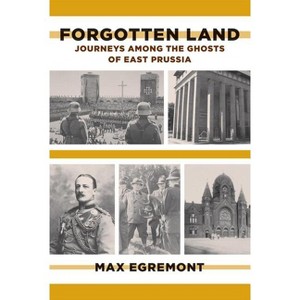
Forgotten Land - by  Max Egremont (Paperback) - 1 of 1

Forgotten Land - by Max Egremont (Paperback)

$19.59Save $8.41 (30% off)

In Stock

Free & easy returns

Free & easy returns

Return this item by mail or in store within 90 days for a full refund.
Eligible for registries and wish lists

About this item

Highlights

  • Until the end of World War II, East Prussia was the German empire's farthest eastern redoubt, a thriving and beautiful land on the southeastern coast of the Baltic Sea.
  • About the Author: Max Egremont was born in 1948 and studied modern history at Oxford University.
  • 384 Pages
  • History, Europe

Description


About the Book


"Until the end of World War II, East Prussia was the German empire's farthest eastern redoubt, a thriving and beautiful land on the southeastern coast of the Baltic Sea. Now it lives only in history and in myth. Since 1945, the territory has been divided between Poland and Russia, stretching from the border between Russia and Lithuania in the east and south, and through Poland in the west. In Forgotten Land, Max Egremont offers a vivid account of this region and its people through the stories of individuals who were intimately involved in and transformed by its tumultuous history, as well as accounts of his own travels and interviews he conducted along the way. Forgotten Land is a story of historical identity and character, told through intimate portraits of people and places. It is a unique examination of the layers of history, of the changing perceptions and myths of homeland, of virtue and of wickedness, and of how a place can still overwhelm those who left it years before"--


Book Synopsis


Until the end of World War II, East Prussia was the German empire's farthest eastern redoubt, a thriving and beautiful land on the southeastern coast of the Baltic Sea. Now it lives only in history and in myth. Since 1945, the territory has been divided between Poland and Russia, stretching from the border between Russia and Lithuania in the east and south, and through Poland in the west. In Forgotten Land, Max Egremont offers a vivid account of this region and its people through the stories of individuals who were intimately involved in and transformed by its tumultuous history, as well as accounts of his own travels and interviews he conducted along the way.

Forgotten Land is a story of historical identity and character, told through intimate portraits of people and places. It is a unique examination of the layers of history, of the changing perceptions and myths of homeland, of virtue and of wickedness, and of how a place can still overwhelm those who left it years before.


Review Quotes


"This is it. The thoroughly authentic, artistically intelligent biography we've been waiting for. The book is refreshingly rich and subtle as well as psychologically acute. Thank you, Max Egremont." --Paul Fussell, author of The Great War and Modern Memory on Siegfried Sassoon

"Memory, its suppression and manipulation, is a recurrent theme in this original book . . . Egremont has written a book that tries to make sense of this history--not as a single, chronological narrative, but as a sequence of short, interconnected essays in which measured reflections, portraits of the leading political and cultural figures, and conversations with exiles from this 'forgotten land' are interwoven. Egremont's allusive prose style seems to echo these multiple perspectives, changing frontiers, blurred racial identities, shifting allegiances and the mass movement of peoples--a story for our time." --Richard Calvocoressi, The New Statesman

"The book's canvas is remarkable . . . Egremont's compelling tale exploits his boundless intellectual curiosity, mastery of German and eye for whimsy as well as tragedy. I know enough of the story he tells to appreciate how much he has discovered that is quite unfamiliar to Anglo-Saxon readers . . . his literary journey through its past makes fascinating reading." --Max Hastings, Sunday Times (UK)

"East Prussia is Germany's lost province, in national memory the place of Immanuel Kant, honorable nationalism, and military strength. Max Egremont has captured the spirit of the land and its people." --Professor Roger Louis

"The experience of reading Max Egremont's wonderful evocation of the final years of East Prussia is like watching a film whose images you know will stay with you for years to come. You stumble out onto the street numb and haunted, unable and reluctant to rejoin the present . . . Its characters represent not only the vanished fringes of Germany, but of that swath of Eastern Europe little known in the West and whose intensity of human experience--from doomed nobility to war-time suffering--now appears almost mythical in scale." --Phillip Marsden, Country Life

"Forgotten Land [is] a work of consummate artistry . . . Max Egremont dovetails the stories of individual East Prussians with the wider narrative's tangled skein . . . [Egremont has] a deftly controlling intelligence which draws the reader in before resuming the main thread. The result is continuously satisfying both as a work of art and as a professional work of history." --Hywell Williams, The Spectator

"[Egremont's] new book, mixing a personal quest with the strange history of [East Prussia], represents the very best form of travel writing . . . Finally, in a post-totalitarian age, the deeper history of the country is now allowed to raise its head." --Antony Beevor, The Mail on Sunday

"In Forgotten Land: Journeys Among the Ghosts of East Prussia, Max Egremont reconstructs the tragic sequence of events that took place in this picturesque region on the Baltic Sea . . . As we delve into the history of East Prussia, the author introduces us to a range of people. Tracking these individuals across time provides us with a nuanced sense of how each person dealt with conflict and turmoil. Some became martyrs, others villains . . . Egremont observes: 'Terrible things happen to countries--yet most of them can be proud of much of their past; here such pride skulks in secret, as if within a forbidden sect.' Most of the people who were driven out of their East Prussian homeland are gone now. This potent book bestows an overdue honor to their memory." --Vick Mickunas, Dayton Daily News

"Max Egremont's idiosyncratic . . . and beautifully written volume makes an ideal guide to this shifting, shadowy realm. In part a piecemeal history of the final half-century of German East Prussia, in part a travelogue through what was left behind, Forgotten Land is gently elegiac. Shifting constantly between present and a variety of pasts, it is as wistful as a flick-through of an old photo album, as melancholy as a rain-spattered northern autumn afternoon . . . On visiting Kaliningrad in the 1960s, the poet Joseph Brodsky wrote that the trees 'whisper in German.' They don't any more. But Max Egremont heard their last words." --Andrew Stuttaford, The Wall Street Journal

"Max Egremont is at his best when describing his travels and conversations. He has a good sense of local atmosphere and a sharp eye for how 'the tourist trail reshapes the past' . . . The interwoven story lines are artfully managed, the anecdotes are lively, and Egremont's urbane voice carries the reader along." --David Blackbourn, Times Literary Supplement

"Egremont eloquently survey the 'layered history' of a land in which Germans, assorted Slavs, Lithuanians, and even French Huguenots have left their marks. He draws on testimonies of former residents and provides often touching biographical vignettes of some prominent East Prussians in what is a striking yet melancholy tribute to a homeland now consigned to history." --Jay Freeman, Booklist


About the Author


Max Egremont was born in 1948 and studied modern history at Oxford University. He is the author of four novels and four biographies, most recently Siegfried Sassoon: A Life (FSG, 2005). Egremont is a Fellow of the Royal Society of Literature.

Dimensions (Overall): 8.2 Inches (H) x 5.5 Inches (W) x 1.1 Inches (D)
Weight: .75 Pounds
Suggested Age: 22 Years and Up
Number of Pages: 384
Genre: History
Sub-Genre: Europe
Publisher: Farrar, Strauss & Giroux-3pl
Theme: Eastern
Format: Paperback
Author: Max Egremont
Language: English
Street Date: November 13, 2012
TCIN: 90819686
UPC: 9780374533564
Item Number (DPCI): 247-47-4937
Origin: Made in the USA or Imported
If the item details aren’t accurate or complete, we want to know about it.

Shipping details

Estimated ship dimensions: 1.1 inches length x 5.5 inches width x 8.2 inches height
Estimated ship weight: 0.75 pounds
We regret that this item cannot be shipped to PO Boxes.
This item cannot be shipped to the following locations: American Samoa (see also separate entry under AS), Guam (see also separate entry under GU), Northern Mariana Islands, Puerto Rico (see also separate entry under PR), United States Minor Outlying Islands, Virgin Islands, U.S., APO/FPO, Alaska, Hawaii

Return details

This item can be returned to any Target store or Target.com.
This item must be returned within 90 days of the date it was purchased in store, delivered to the guest, delivered by a Shipt shopper, or picked up by the guest.
See the return policy for complete information.

Q: What type of writing style is used in this book?

submitted by AI Shopping Assistant - 1 month ago
  • A: The writing style is allusive and reflective, consisting of interconnected essays that highlight personal stories and historical insights.

    submitted byAI Shopping Assistant - 1 month ago
    Ai generated

Q: What themes does Max Egremont explore in this work?

submitted by AI Shopping Assistant - 1 month ago
  • A: Egremont examines themes of historical identity, perception of homeland, virtue versus wickedness, and personal connections to place.

    submitted byAI Shopping Assistant - 1 month ago
    Ai generated

Q: Who is the target audience for this book?

submitted by AI Shopping Assistant - 1 month ago
  • A: The book is aimed at readers interested in history, particularly those aged 22 and up, who appreciate detailed historical narratives.

    submitted byAI Shopping Assistant - 1 month ago
    Ai generated

Q: How does the author incorporate personal experiences into the narrative?

submitted by AI Shopping Assistant - 1 month ago
  • A: Egremont weaves his own travels and conversations with locals into the broader historical narrative, enriching the storytelling.

    submitted byAI Shopping Assistant - 1 month ago
    Ai generated

Q: What historical events are covered in the book?

submitted by AI Shopping Assistant - 1 month ago
  • A: The book chronicles the tumultuous history of East Prussia until the end of World War II, highlighting the complexities of the region and its people.

    submitted byAI Shopping Assistant - 1 month ago
    Ai generated

Additional product information and recommendations

Discover more options

Trending History

Get top deals, latest trends, and more.

Privacy policy