Target New ArrivalsGift Ideas for MomClothing, Shoes & AccessoriesHome & DecorKitchen & DiningOutdoor Living & GardenGroceryHousehold EssentialsBabyBeautyPersonal CareHealthWellnessLuggageSports & OutdoorsToysElectronicsVideo GamesMovies, Music & BooksSchool & Office SuppliesParty SuppliesGift IdeasGift CardsPetsUlta Beauty at TargetShop by CommunityTarget OpticalDealsClearanceTarget New ArrivalsSpring OutfitsGift Ideas for MomWomen’s Festival OutfitsTop DealsTarget Circle DealsWeekly AdShop Order PickupShop Same Day DeliveryRegistryRedCardTarget CircleFind Stores
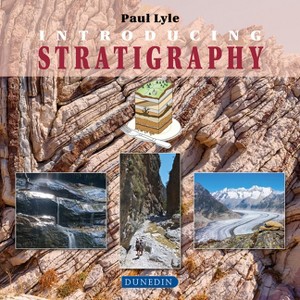
Introducing Stratigraphy - (Introducing Earth and Environmental Sciences) by  Paul Lyle (Paperback) - 1 of 1

Introducing Stratigraphy - (Introducing Earth and Environmental Sciences) by Paul Lyle (Paperback)

$29.99

In Stock

Free & easy returns

Free & easy returns

Return this item by mail or in store within 90 days for a full refund.
Eligible for registries and wish lists

About this item

Highlights

  • Stratigraphy is the branch of geology which studies rock layers (strata) and layering (stratification).
  • About the Author: Paul Lyle has retired from his post as a lecturer in geology at the University of Ulster at Jordanstown and devotes his time to writing on geological issues.
  • 144 Pages
  • Science, Earth Sciences
  • Series Name: Introducing Earth and Environmental Sciences

Description


About the Book


A concise, highly illustrated introduction to stratigraphy, the study of rock layers and layering. It is used in the study of sedimentary and layered volcanic rocks and is a key component of the search for fossil fuels.


Book Synopsis


Stratigraphy is the branch of geology which studies rock layers (strata) and layering (stratification).Stratigraphy deals primarily with sedimentary rocks but also embraces layered igneous rocks where layers result from successive lava flows.A common goal of stratigraphic studies is the interpretation of sequences of rock strata, thus understanding the time relationships involved, and correlating units of the sequence with rock strata elsewhere. Nicholas Steno described four principles of stratigraphy in the seventeenth century, including the law of superposition which states that states that, in undeformed stratigraphic sequences, the oldest strata will be at the bottom of the sequence. These ideas still underpin modern stratigraphy which is governed by The International Commission on Stratigraphy. Its primary objective is to precisely define global units (systems, series, and stages) of the International Chronostratigraphic Chart that, in turn, are the basis for the units (periods, epochs, and age) of the International Geologic Time Scale.Stratigraphy has application in many scientific fields, including archaeology, palaeontology and in the search for natural resources. This succinct and accessible introduction to stratigraphy will prove helpful to students and amateur geologists alike.


Review Quotes


'In this book Paul Lyle is able to draw on his considerable experience of field geology. aided by lots of good photographs. diagrams and maps, to make this an enthralling read! Dunedin have employed a fairly large format for this book and the resultant pages are well designed and allow for large illustrations, meaning that it isn't too text heavy.

Paul obligingly starts with a definition of stratigraphy and sets it into a historical setting that helps the reader to understand the importance of the principles of time and strata. Due deference is paid to James Hutton and his appreciation of deep time. especially at the 'holy grail' of Siccar Point.

Only by going down this historical road can the various potential pitfalls of the construction of the geological timescale be appreciated. This is one of those cases where an example serves well to illustrate the problems and Paul chooses the Cambrian-Silurian controversy that was eventually solved by Charles Lapworth when he gave us the Ordovician.

The pioneers came in two camps, the catastrophists and those who believed in the principle of uniformitarianism. Paul shows how these opposing views can be reconciled. The subject of absolute dating is dealt with in a way that enables everyone to understand what can be a difficult subject for those without much scientific background.

For me. the best part of this book is a long chapter that examines the stratigraphic column from beginning to end on a world wide scale. So far as I know that has never been done in a popular book before and it's long overdue!

This is followed short chapters that introduce us to stratigraphic units and the -golden spike' and the applications of stratigraphy. This is surely a reminder that stratigraphy isn't just about historical geology, it's a live part of our science. especially in the search for hydrocarbons and in climate studies.

This book fills a very large hole in popular Earth science publishing that has existed for many years. Go out and buy it!' Down to Earth

- -


About the Author


Paul Lyle has retired from his post as a lecturer in geology at the University of Ulster at Jordanstown and devotes his time to writing on geological issues. His previous book for Dunedin, The Abyss of Time, won the ASE Science Book of the Year Award 2016.

Dimensions (Overall): 8.6 Inches (H) x 8.6 Inches (W) x .4 Inches (D)
Weight: .95 Pounds
Suggested Age: 22 Years and Up
Number of Pages: 144
Genre: Science
Sub-Genre: Earth Sciences
Series Title: Introducing Earth and Environmental Sciences
Publisher: Liverpool University Press
Theme: Geology
Format: Paperback
Author: Paul Lyle
Language: English
Street Date: May 23, 2019
TCIN: 1010460414
UPC: 9781780460222
Item Number (DPCI): 247-21-2859
Origin: Made in the USA or Imported
If the item details aren’t accurate or complete, we want to know about it.

Shipping details

Estimated ship dimensions: 0.4 inches length x 8.6 inches width x 8.6 inches height
Estimated ship weight: 0.95 pounds
We regret that this item cannot be shipped to PO Boxes.
This item cannot be shipped to the following locations: American Samoa (see also separate entry under AS), Guam (see also separate entry under GU), Northern Mariana Islands, Puerto Rico (see also separate entry under PR), United States Minor Outlying Islands, Virgin Islands, U.S., APO/FPO, Alaska, Hawaii

Return details

This item can be returned to any Target store or Target.com.
This item must be returned within 90 days of the date it was purchased in store, delivered to the guest, delivered by a Shipt shopper, or picked up by the guest.
See the return policy for complete information.

Q: Who is the intended audience for this book?

submitted by AI Shopping Assistant - 5 days ago
  • A: The book is intended for students and amateur geologists interested in understanding stratigraphy.

    submitted byAI Shopping Assistant - 5 days ago
    Ai generated

Q: How does this book explain absolute dating?

submitted by AI Shopping Assistant - 5 days ago
  • A: It simplifies the concept of absolute dating for readers without a scientific background, making it accessible.

    submitted byAI Shopping Assistant - 5 days ago
    Ai generated

Q: What historical context does the author provide?

submitted by AI Shopping Assistant - 5 days ago
  • A: The author includes historical perspectives on stratigraphy, discussing key figures and principles crucial to the field.

    submitted byAI Shopping Assistant - 5 days ago
    Ai generated

Q: What are the main topics covered in the book?

submitted by AI Shopping Assistant - 5 days ago
  • A: The book covers stratigraphy, sedimentary rocks, layered igneous rocks, and geological time relationships.

    submitted byAI Shopping Assistant - 5 days ago
    Ai generated

Q: What type of illustrations does the book include?

submitted by AI Shopping Assistant - 5 days ago
  • A: The book includes photographs, diagrams, and maps to enhance understanding of stratigraphy concepts.

    submitted byAI Shopping Assistant - 5 days ago
    Ai generated

Additional product information and recommendations
Discover more options

Trending Education Books

Get top deals, latest trends, and more.

Privacy policy