Target New ArrivalsGift Ideas for MomClothing, Shoes & AccessoriesHome & DécorKitchen & DiningOutdoor Living & GardenFurnitureGroceryHousehold EssentialsBabyBeautyPersonal CareHealthWellnessLuggageSports & OutdoorsToysElectronicsVideo GamesMovies, Music & BooksSchool & Office SuppliesParty SuppliesGift IdeasGift CardsPetsUlta Beauty at TargetShop by CommunityTarget OpticalDealsClearanceTarget New ArrivalsSpring OutfitsGift Ideas for MomWomen’s Festival OutfitsTop DealsTarget Circle DealsWeekly AdShop Order PickupShop Same Day DeliveryRegistryRedCardTarget CircleFind Stores
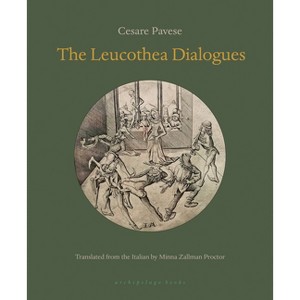
The Leucothea Dialogues - by  Cesare Pavese (Paperback) - 1 of 1

The Leucothea Dialogues - by Cesare Pavese (Paperback)

$18.78Save $3.22 (15% off)

In Stock

Eligible for registries and wish lists

About this item

Highlights

  • Winner of the 2026 PEN Translation Prize A shifting, primordial work by Cesare Pavese, plumbing the netherworlds of philosophy, myth, human feeling, and mortality "Above all [Pavese's novels] are works of an extraordinary depth where one never stops finding new levels, new meanings . . . Each one of Pavese's novels revolves around a hidden theme, something unsaid which is the real thing he wants to say.
  • About the Author: Cesare Pavese (1908-1950) was born in the countryside near Turin in northern Italy.
  • 184 Pages
  • Fiction + Literature Genres,

Description


Book Synopsis


Winner of the 2026 PEN Translation Prize

A shifting, primordial work by Cesare Pavese, plumbing the netherworlds of philosophy, myth, human feeling, and mortality

"Above all [Pavese's novels] are works of an extraordinary depth where one never stops finding new levels, new meanings . . . Each one of Pavese's novels revolves around a hidden theme, something unsaid which is the real thing he wants to say." -- Italo Calvino


Cesare Pavese's The Leucothea Dialogues is peopled with gods, centaurs, clouds, poets, hunters, snakes, and nymphs. These are the beings who spoke to him through the ancient plays and poems he read in primary school. Here they speak again in the twenty-seven dialogues that form the novel. Pavese calls mythology a "hothouse of symbols." His hothouse is liveliest at night, in the peculiar clarity of darkness. Pavese's characters are more than "characters," they play like the dreams of earliest childhood, they pose questions that seem to travel through the minds of the dead to the minds of the living and back again. Through reeds, shadows, glens, fields of blazing straw, homes and villages on the edges of valleys, and over cliffs, we follow their harried stories. In Minna Zallman Proctor's radiant translation, The Leucothea Dialogues is an expression of an exhilarating intelligence.


Review Quotes


"Minna Zallman Proctor's vigorous retranslation from Italian of Cesare Pavese's singular yet multiplicitous The Leucothea Dialogues stands out from a superb shortlist as a brilliant meditation on, as well as in, translation... [Proctor] makes the book come alive for readers today. Her introduction is especially remarkable for soaring beyond the usual necessary context about author and book into its own mythological register." -- PEN Translation Prize Judges

"The experience of reading The Leucothea Dialogues is much like being told a set of stories one assumed one had already forgotten, only to be reimmersed in their alien but undeniably familiar contours . . . There was, for Pavese, no escapism in a return to mythology. That ancient well allowed him to step outside himself . . . at which remove the distinctions between pain and pleasure, exhilaration and suffering, were dissolved." --Adam Krasnoff, House House Magazine

"The Leucothea Dialogues is rendered in resplendent prose . . . It offers English audiences a work as mournful and human as it is symbolic . . . Pavese's dialogues engage with questions about humanity's relationship to the divine, to violence, sexuality, and the sacred, all themes that are central to the mythic imagination he so hauntingly revives." --Elena Borelli, Reading in Translation

"What is it to be in love, to be cursed, to be lost, to lose one's love, to remember, to smile? . . . Brief instants of animation, in the hands of Pavese and Proctor, are miraculous. The characters in these dialogues are both in and out of time, both mobile and static. That dialectic and its uncanniness clearly fascinated Pavese, whose smiling gods are trapped within a continuous present." --Alec Mapes-Frances, The Paris Review

"This elliptical 1947 work from Pavese, comprising 27 existentialist scenes with characters from Greek and Roman mythology and commentary from the author, is revived in a lively translation by Proctor . . . Throughout, Proctor ably captures the tension between Pavese's conversational tone and harrowing themes." --Publishers Weekly

"These dialogues transform mythology, our oldest stories, into a new and unique form. Combining poetry and prose, they are crucial to understanding Pavese's themes--his preoccupation with antiquity, with silence, and with time. Proctor's enchanting English version honors the author's profound engagement with translation with precision, modernity, and wit." --Jhumpa Lahiri

"Pavese's Leucothea Dialogues stirs the settled soil of the mind. Minna Proctor uncovers new ground in her astonishing translation of this primal novel."--Idra Novey

"There can be no excuse for not reading Pavese, one of the few essential novelists of the mid-twentieth century." -- Susan Sontag

"This is how writers in our ever-worsening world should write." --Saul Bellow

"Pavese's nine short novels make up the most dense, dramatic and homogeneous narrative cycle of modern Italy, and are also . . . the richest in representing social ambiances, the human comedy, the chronicle of a society. But above all they are works of an extraordinary depth where one never stops finding new levels, new meanings . . . Each one of Pavese's novels revolves around a hidden theme, something unsaid which is the real thing he wants to say." -- Italo Calvino

"There is something about Pavese . . . that is insinuating, haunting and lyrically pervasive." -- The New York Times Book Review

"One of the word's great creative depressives." -- Tim Parks, The Daily Telegraph

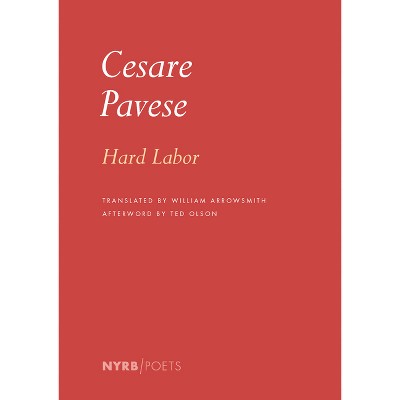
"There is nothing with quite this passionate intensity and purity in American poetry . . . Hard Labor shows us Pavese at the outset of his own ultimately tragic career, writing poetry of courageous originality, intelligence, and power." --Jonathan Galassi, The New York Times

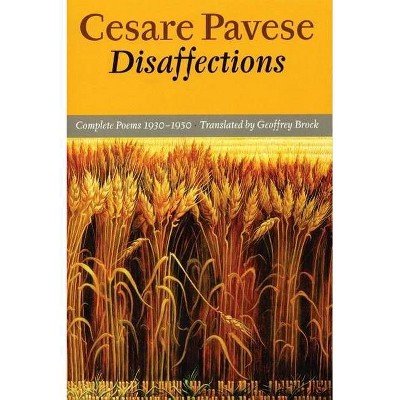
"Cesare Pavese is one of those singular, disruptive poets, like Blake or Lawrence, who go against the grain--or the flow--of their culture, and for whom precedents would be as hard to find as successors . . . His marvellously peopled poems not only document the time--what Calvino called 'the Pavese era'--but also bear witness to a unique and restless intelligence." --Jamie McKendric, The Guardian


About the Author


Cesare Pavese (1908-1950) was born in the countryside near Turin in northern Italy. His translations of Hermann Melville, James Joyce, Gertrude Stein, and Daniel Defoe influenced his contemporaries, and the wider reading public. Pavese also worked at the Turin publisher Einaudi, where he went on to become the editorial director. He wrote poetry, essays and fiction, and kept diaries. In 1950, Pavese won the Strega Prize, Italy's most prestigious award for literature, for The Moon and the Bonfires. Later the same year, he committed suicide.

Minna Zallman Proctor is the author of Landslide: True Stories (2017) and the editor of The Literary Review. Her essays have appeared in Bookforum, The Nation, and The New York Times Book Review, among other publications. Proctor's translation of Love in Vain, Selected Stories of Federigo Tozzi won the PEN Poggioli Prize. Her translations include Fleur Jaeggy's These Possible Lives, Natalia Ginzburg's Happiness, as Such, Bruno Arpaia's The Angel of History, and essays by Umberto Eco, and Pier Paolo Pasolini.

Dimensions (Overall): 7.0 Inches (H) x 5.7 Inches (W) x .6 Inches (D)
Weight: .55 Pounds
Suggested Age: 22 Years and Up
Number of Pages: 184
Genre: Fiction + Literature Genres
Publisher: Archipelago Books
Theme: Italy
Format: Paperback
Author: Cesare Pavese
Language: Italian
Street Date: October 14, 2025
TCIN: 1001620466
UPC: 9781962770378
Item Number (DPCI): 247-36-4271
Origin: Made in the USA or Imported
If the item details aren’t accurate or complete, we want to know about it.

Shipping details

Estimated ship dimensions: 0.6 inches length x 5.7 inches width x 7 inches height
Estimated ship weight: 0.55 pounds
We regret that this item cannot be shipped to PO Boxes.
This item cannot be shipped to the following locations: American Samoa (see also separate entry under AS), Guam (see also separate entry under GU), Northern Mariana Islands, Puerto Rico (see also separate entry under PR), United States Minor Outlying Islands, Virgin Islands, U.S., APO/FPO, Alaska, Hawaii

Return details

This item can be returned to any Target store or Target.com.
This item must be returned within 90 days of the date it was purchased in store, delivered to the guest, delivered by a Shipt shopper, or picked up by the guest.
See the return policy for complete information.

Q: What is the significance of mythology in Pavese's writing?

submitted by AI Shopping Assistant - 27 days ago
  • A: Mythology serves as a symbolic framework for exploring profound human questions, connecting past and present experiences.

    submitted byAI Shopping Assistant - 27 days ago
    Ai generated

Q: What themes does The Leucothea Dialogues explore?

submitted by AI Shopping Assistant - 27 days ago
  • A: The dialogues delve into philosophy, myth, human feelings, mortality, and the complexity of human experiences.

    submitted byAI Shopping Assistant - 27 days ago
    Ai generated

Q: Who translated The Leucothea Dialogues into English?

submitted by AI Shopping Assistant - 27 days ago
  • A: The English translation was done by Minna Zallman Proctor, known for her engaging literary work.

    submitted byAI Shopping Assistant - 27 days ago
    Ai generated

Q: What type of characters are present in this work?

submitted by AI Shopping Assistant - 27 days ago
  • A: The work features gods, centaurs, nymphs, poets, and various mythological beings interacting in dialogues.

    submitted byAI Shopping Assistant - 27 days ago
    Ai generated

Q: What is unique about the writing style of Pavese?

submitted by AI Shopping Assistant - 27 days ago
  • A: Pavese's style combines poetry and prose, facilitating deep exploration of ancient themes and modern implications.

    submitted byAI Shopping Assistant - 27 days ago
    Ai generated

Additional product information and recommendations

Get top deals, latest trends, and more.

Privacy policy

Footer

About Us

About TargetCareersNews & BlogTarget BrandsBullseye ShopSustainability & GovernancePress CenterAdvertise with UsInvestorsAffiliates & PartnersSuppliersTargetPlus

Help

Target HelpReturnsTrack OrdersRecallsContact UsFeedbackAccessibilitySecurity & FraudTeam Member ServicesLegal & Privacy

Stores

Find a StoreClinicPharmacyTarget OpticalMore In-Store Services

Services

Target Circle™Target Circle™ CardTarget Circle 360™Target AppRegistrySame Day DeliveryOrder PickupDrive UpFree 2-Day ShippingShipping & DeliveryMore Services
PinterestFacebookInstagramXYoutubeTiktokTermsCA Supply ChainPrivacy PolicyCA Privacy RightsYour Privacy ChoicesInterest Based AdsHealth Privacy Policy