Target New ArrivalsGift Ideas for MomClothing, Shoes & AccessoriesHomeKitchen & DiningOutdoor Living & GardenFurnitureGroceryHousehold EssentialsBabyBeautyPersonal CareHealthWellnessLuggageSports & OutdoorsToysElectronicsVideo GamesMovies, Music & BooksSchool & Office SuppliesParty SuppliesGift IdeasGift CardsPetsUlta Beauty at TargetTarget OpticalDealsClearanceTarget New ArrivalsGift Ideas for MomTop DealsTarget Circle DealsWeekly AdShop Order PickupShop Same Day DeliveryRegistryRedCardTarget CircleFind Stores
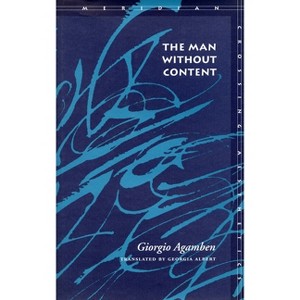
The Man Without Content - (Meridian: Crossing Aesthetics) by  Giorgio Agamben (Paperback) - 1 of 1

The Man Without Content - (Meridian: Crossing Aesthetics) by Giorgio Agamben (Paperback)

$16.89Save $7.11 (30% off)

In Stock

Eligible for registries and wish lists

About this item

Highlights

  • In this book, one of Italy's most important and original contemporary philosophers considers the status of art in the modern era.
  • Author(s): Giorgio Agamben
  • 144 Pages
  • Philosophy, Aesthetics
  • Series Name: Meridian: Crossing Aesthetics

Description


About the Book


In this book, one of Italy's most important and original contemporary philosophers considers the status of art in the modern era. He probes the meaning and historical consequences of the indefinite continuation of art in what Hegel called a "self-annulling" mode, in the process offering an imaginative reinterpretation of the history of aesthetics from Kant to Heidegger.


Book Synopsis


In this book, one of Italy's most important and original contemporary philosophers considers the status of art in the modern era. He probes the meaning and historical consequences of the indefinite continuation of art in what Hegel called a "self-annulling" mode, in the process offering an imaginative reinterpretation of the history of aesthetics from Kant to Heidegger.


From the Back Cover


In this book, one of Italy's most important and original contemporary philosophers considers the status of art in the modern era. He takes seriously Hegel's claim that art has exhausted its spiritual vocation, that it is no longer through art that Spirit principally comes to knowledge of itself. He argues, however, that Hegel by no means proclaimed the "death of art" (as many still imagine) but proclaimed rather the indefinite continuation of art in what Hegel called a "self-annulling" mode.
With astonishing breadth and originality, the author probes the meaning, aesthetics, and historical consequences of that self-annulment. In essence, he argues that the birth of modern aesthetics is the result of a series of schisms--between artist and spectator, genius and taste, and form and matter, for example--that are manifestations of the deeper, self-negating yet self-perpetuating movement of irony.
Through this concept of self-annulment, the author offers an imaginative reinterpretation of the history of aesthetic theory from Kant to Heidegger, and he opens up original perspectives on such phenomena as the rise of the modern museum, the link between art and terror, the natural affinity between "good taste" and its perversion, and kitsch as the inevitable destiny of art in the modern era. The final chapter offers a dazzling interpretation of Dürer's Melancholia in the terms that the book has articulated as its own.
The Man Without Content will naturally interest those who already prize Agamben's work, but it will also make his name relevant to a whole new audience--those involved with art, art history, the history of aesthetics, and popular culture.
Dimensions (Overall): 8.4 Inches (H) x 5.4 Inches (W) x .5 Inches (D)
Weight: .48 Pounds
Suggested Age: 22 Years and Up
Number of Pages: 144
Genre: Philosophy
Sub-Genre: Aesthetics
Series Title: Meridian: Crossing Aesthetics
Publisher: Stanford University Press
Format: Paperback
Author: Giorgio Agamben
Language: English
Street Date: June 1, 1999
TCIN: 84021864
UPC: 9780804735544
Item Number (DPCI): 247-05-2161
Origin: Made in the USA or Imported
If the item details aren’t accurate or complete, we want to know about it.

Shipping details

Estimated ship dimensions: 0.5 inches length x 5.4 inches width x 8.4 inches height
Estimated ship weight: 0.48 pounds
We regret that this item cannot be shipped to PO Boxes.
This item cannot be shipped to the following locations: American Samoa (see also separate entry under AS), Guam (see also separate entry under GU), Northern Mariana Islands, Puerto Rico (see also separate entry under PR), United States Minor Outlying Islands, Virgin Islands, U.S., APO/FPO, Alaska, Hawaii

Return details

This item can be returned to any Target store or Target.com.
This item must be returned within 90 days of the date it was purchased in store, delivered to the guest, delivered by a Shipt shopper, or picked up by the guest.
See the return policy for complete information.

Q: Who is the author of this book?

submitted by AI Shopping Assistant - 20 days ago
  • A: The author is Giorgio Agamben, recognized as one of Italy's important contemporary philosophers.

    submitted byAI Shopping Assistant - 20 days ago
    Ai generated

Q: What is the main argument regarding Hegel's views on art?

submitted by AI Shopping Assistant - 20 days ago
  • A: The author contends that Hegel did not declare the 'death of art,' but the indefinite continuation of art in a self-annulling manner.

    submitted byAI Shopping Assistant - 20 days ago
    Ai generated

Q: What philosophical themes does the book explore?

submitted by AI Shopping Assistant - 20 days ago
  • A: The book explores themes of art's status in modernity, self-annulment, irony, and the relationship between artist and audience.

    submitted byAI Shopping Assistant - 20 days ago
    Ai generated

Q: What aesthetic theories does the book reinterpret?

submitted by AI Shopping Assistant - 20 days ago
  • A: The book offers a reinterpretation of aesthetic theory spanning from Kant to Heidegger, focusing on historical implications and transformations.

    submitted byAI Shopping Assistant - 20 days ago
    Ai generated

Q: What notable phenomenon does the final chapter analyze?

submitted by AI Shopping Assistant - 20 days ago
  • A: The final chapter presents a unique interpretation of Dürer's Melancholia, aligning with the book's broader themes of self-annulment.

    submitted byAI Shopping Assistant - 20 days ago
    Ai generated

Additional product information and recommendations

Get top deals, latest trends, and more.

Privacy policy

Footer

About Us

About TargetCareersNews & BlogTarget BrandsBullseye ShopSustainability & GovernancePress CenterAdvertise with UsInvestorsAffiliates & PartnersSuppliersTargetPlus

Help

Target HelpReturnsTrack OrdersRecallsContact UsFeedbackAccessibilitySecurity & FraudTeam Member ServicesLegal & Privacy

Stores

Find a StoreClinicPharmacyTarget OpticalMore In-Store Services

Services

Target Circle™Target Circle™ CardTarget Circle 360™Target AppRegistrySame Day DeliveryOrder PickupDrive UpFree 2-Day ShippingShipping & DeliveryMore Services
PinterestFacebookInstagramXYoutubeTiktokTermsCA Supply ChainPrivacy PolicyCA Privacy RightsYour Privacy ChoicesInterest Based AdsHealth Privacy Policy