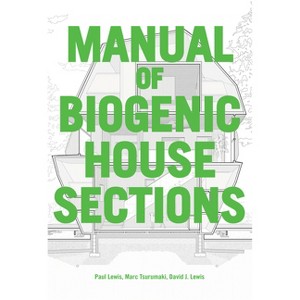
Recognizing that buildings are a major contributor to global warming and the critical role of embodied versus operational carbon, the book focuses on houses built from materials that either sequester carbon (plants), use materials with very low embodied carbon (earth and stone) or reuse substantial amounts of existing materials.Organized by those materials (wood, bamboo, straw, hemp, cork, earth, brick, stone and re-use), and incorporating life cycle diagrams demonstrating how the raw material is processed into building components, the book shows how the unique properties of each material can transform the ways architects conceive the sections of houses.
Author(s): Paul Lewis & Marc Tsurumaki & David J Lewis
320 Pages
Architecture, Individual Architects & Firms
Description
Book Synopsis
Recognizing that buildings are a major contributor to global warming and the critical role of embodied versus operational carbon, the book focuses on houses built from materials that either sequester carbon (plants), use materials with very low embodied carbon (earth and stone) or reuse substantial amounts of existing materials.
Organized by those materials (wood, bamboo, straw, hemp, cork, earth, brick, stone and re-use), and incorporating life cycle diagrams demonstrating how the raw material is processed into building components, the book shows how the unique properties of each material can transform the ways architects conceive the sections of houses.
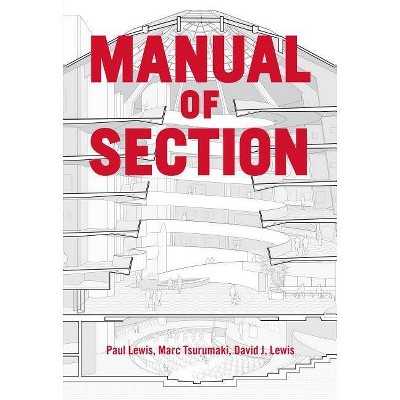
The house was selected as the vehicle for these investigations due to its scale, its role as a site of architectural experimentation, and its ubiquity. Building on the techniques of the Manual of Section, the book is comprised of newly generated cross-sectional drawings of fifty-five recent, modestly sized houses from around the world, making legible the tectonics and materials used in their construction. Each house is also shown through exploded axonometric, construction photographs and color photographs of the exterior and interior. Introductory essays set up the importance of embodied carbon, the role of vernacular plant-based construction and the problems of contemporary house construction. Drawing connections between the architecture of the house, environmental systems and material economies, the book seeks to change how we build now and for the future.
Review Quotes
"The 352-page book provides a deep insight to the use of low carbon emitting materials or plant-based materials in the substantial building components of buildings: such as sections.
Published by ORO Editions, the book allows architects to rethink architectural cross-sections while using the raw materials of cross-sections that represent the lifeblood of buildings in their design." --World Architecture Community Top 10 Architecture Books Of 2022
Dimensions (Overall): 11.0 Inches (H) x 7.6 Inches (W) x 1.0 Inches (D)
Weight: 2.95 Pounds
Suggested Age: 22 Years and Up
Number of Pages: 320
Genre: Architecture
Sub-Genre: Individual Architects & Firms
Publisher: Oro Editions
Format: Paperback
Author: Paul Lewis & Marc Tsurumaki & David J Lewis
Language: English
Street Date: December 20, 2022
TCIN: 86266726
UPC: 9781957183091
Item Number (DPCI): 247-32-9344
Origin: Made in the USA or Imported
If the item details aren’t accurate or complete, we want to know about it.
Shipping details
Estimated ship dimensions: 1 inches length x 7.6 inches width x 11 inches height
Estimated ship weight: 2.95 pounds
We regret that this item cannot be shipped to PO Boxes.
This item cannot be shipped to the following locations: American Samoa (see also separate entry under AS), Guam (see also separate entry under GU), Northern Mariana Islands, Puerto Rico (see also separate entry under PR), United States Minor Outlying Islands, Virgin Islands, U.S., APO/FPO, Alaska, Hawaii
Return details
This item can be returned to any Target store or Target.com.
This item must be returned within 90 days of the date it was purchased in store, delivered to the guest, delivered by a Shipt shopper, or picked up by the guest.
Q: What themes are discussed in the introductory essays?
submitted by AI Shopping Assistant - 20 days ago
A: The introductory essays discuss the importance of embodied carbon, vernacular plant-based construction, and challenges in contemporary house construction.
submitted byAI Shopping Assistant - 20 days ago
Ai generated
Q: How is the content organized in the book?
submitted by AI Shopping Assistant - 20 days ago
A: The content is organized by materials such as wood, bamboo, and stone, showcasing their unique properties for construction.
submitted byAI Shopping Assistant - 20 days ago
Ai generated
Q: What age group is this book recommended for?
submitted by AI Shopping Assistant - 20 days ago
A: The book is suggested for readers aged 22 years and up, aiming at professionals and enthusiasts in architecture.
submitted byAI Shopping Assistant - 20 days ago
Ai generated
Q: What types of illustrations are included in this book?
submitted by AI Shopping Assistant - 20 days ago
A: The book features cross-sectional drawings, exploded axonometric views, construction photographs, and color images of houses.
submitted byAI Shopping Assistant - 20 days ago
Ai generated
Q: What is the main focus of the book?
submitted by AI Shopping Assistant - 20 days ago
A: The book focuses on houses built from materials that sequester carbon or have low embodied carbon, promoting sustainable building practices.