Target New ArrivalsFourth of JulyBack to SchoolCollegeClothing, Shoes & AccessoriesHome & DecorKitchen & DiningOutdoor Living & GardenGroceryHousehold EssentialsBabyBeautyPersonal CareSports & OutdoorsHealthWellnessSchool & Office SuppliesToys & GamesElectronicsVideo GamesMovies, Music & BooksParty SuppliesGift IdeasGift CardsPetsUlta Beauty at TargetShop by CommunityTarget OpticalDealsClearanceNew ArrivalsBack to SchoolCollegeTop DealsTarget Circle DealsWeekly AdShop Order PickupShop Same Day DeliveryRegistryRedCardTarget CircleFind Stores
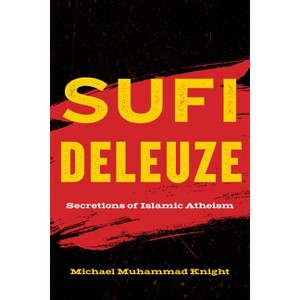
Sufi Deleuze - by  Michael Muhammad Knight (Paperback) - 1 of 1

Sufi Deleuze - by Michael Muhammad Knight (Paperback)

$25.49Save $2.51 (9% off)

In Stock

Free & easy returns
Free & easy returns
Return this item by mail or in store within 90 days for a full refund.
Eligible for registries and wish lists

About this item

Highlights

  • "There is always an atheism to be extracted from a religion," Deleuze and Guattari write in their final collaboration, What Is Philosophy?
  • About the Author: Michael Muhammad Knight is Assistant Professor of Religion and Cultural Studies at the University of Central Florida.
  • 208 Pages
  • Religion + Beliefs, Islam

Description


About the Book


""There is always an atheism to be extracted from a religion," Deleuze and Guattari write in their final collaboration, What Is Philosophy? Their claim that Christianity "secretes" atheism "more than any other religion," however, reflects the limits of their archive. Theological projects seeking to engage Deleuze remain embedded within Christian theologies and intellectual histories; whether they embrace, resist, or negotiate with Deleuze's atheism, the atheism in question remains one extracted from Christian theology, a Christian atheism. In Sufi Deleuze, Michael Muhammad Knight offers an intervention, engaging Deleuzian questions and themes from within Islamic tradition. Even if Deleuze did not think of himself as a theologian, Knight argues, to place Deleuze in conversation with Islam is a project of comparative theology and faces the challenge of any comparative theology: It seemingly demands that complex, internally diverse traditions can speak as coherent, monolithic wholes. To start from such a place would not only defy Islam's historical multiplicity but also betray Deleuze's model of the assemblage, which requires attention to not only the organizing and stabilizing tendencies within a structure but also the points at which a structure resists organization, its internal heterogeneity, and unpredictable "lines of flight." A Deleuzian approach to Islamic theology would first have to affirm that there is no such thing as a universal "Islamic theology" that can speak for all Muslims in all historical settings, but rather a multiplicity of power struggles between major and minor forces that contest each other over authenticity, authority, and the making of "orthodoxy." The discussions in Sufi Deleuze thus highlight Islam's extraordinary range of possibilities, not only making use of canonically privileged materials such as the Qur'an and major hadith collections, but also exploring a variety of marginalized resources found throughout Islam that challenge the notion of a singular "mainstream" interpretive tradition. To say it in Deleuze's vocabulary, Islam is a rhizome"--


Book Synopsis


"There is always an atheism to be extracted from a religion," Deleuze and Guattari write in their final collaboration, What Is Philosophy? Their claim that Christianity "secretes" atheism "more than any other religion," however, reflects the limits of their archive. Theological projects seeking to engage Deleuze remain embedded within Christian theologies and intellectual histories; whether they embrace, resist, or negotiate with Deleuze's atheism, the atheism in question remains one extracted from Christian theology, a Christian atheism. In Sufi Deleuze, Michael Muhammad Knight offers an intervention, engaging Deleuzian questions and themes from within Islamic tradition.

Even if Deleuze did not think of himself as a theologian, Knight argues, to place Deleuze in conversation with Islam is a project of comparative theology and faces the challenge of any comparative theology: It seemingly demands that complex, internally diverse traditions can speak as coherent, monolithic wholes. To start from such a place would not only defy Islam's historical multiplicity but also betray Deleuze's model of the assemblage, which requires attention to not only the organizing and stabilizing tendencies within a structure but also the points at which a structure resists organization, its internal heterogeneity, and unpredictable "lines of flight."

A Deleuzian approach to Islamic theology would first have to affirm that there is no such thing as a universal "Islamic theology" that can speak for all Muslims in all historical settings, but rather a multiplicity of power struggles between major and minor forces that contest each other over authenticity, authority, and the making of "orthodoxy." The discussions in Sufi Deleuze thus highlight Islam's extraordinary range of possibilities, not only making use of canonically privileged materials such as the Qur'an and major hadith collections, but also exploring a variety of marginalized resources found throughout Islam that challenge the notion of a singular "mainstream" interpretive tradition. To say it in Deleuze's vocabulary, Islam is a rhizome.


Review Quotes


This book is sublime. Michael Muhammad Knight shows how key Deleuzian concepts can illuminate a rich texture of often-overlooked religious experimentation. In this territory he is a trustworthy, even masterful guide. Perhaps more importantly, Knight uses Deleuzian thought to challenge and explode received concepts in the study of religion, and to challenge what religion is in itself, disturbing the sense of what is orthodox or heretical, mainstream or marginal, textual or material, immanent or transcendent. And Knight does this not only for the case of Islam (in itself a major contribution to undoing our civiliizational and political-theological impasses) but potentially for the world's many other so-called religions, as well. Essential work.---Joshua Ramey, author of The Hermetic Deleuze: Philosophy and Spiritual Ordeal, and Politics of Divination: Neoliberal Endgame and the Religion of Contingency


About the Author


Michael Muhammad Knight is Assistant Professor of Religion and Cultural Studies at the University of Central Florida. He is the author of numerous books, including, most recently, Muhammad's Body: Baraka Networks and the Prophetic Assemblage.
Dimensions (Overall): 9.0 Inches (H) x 6.0 Inches (W) x .47 Inches (D)
Weight: .67 Pounds
Suggested Age: 22 Years and Up
Number of Pages: 208
Genre: Religion + Beliefs
Sub-Genre: Islam
Publisher: Fordham University Press
Theme: Theology
Format: Paperback
Author: Michael Muhammad Knight
Language: English
Street Date: February 7, 2023
TCIN: 1010131785
UPC: 9781531501815
Item Number (DPCI): 247-21-2779
Origin: Made in the USA or Imported
If the item details aren’t accurate or complete, we want to know about it.

Shipping details

Estimated ship dimensions: 0.47 inches length x 6 inches width x 9 inches height
Estimated ship weight: 0.67 pounds
We regret that this item cannot be shipped to PO Boxes.
This item cannot be shipped to the following locations: American Samoa (see also separate entry under AS), Guam (see also separate entry under GU), Northern Mariana Islands, Puerto Rico (see also separate entry under PR), United States Minor Outlying Islands, Virgin Islands, U.S., APO/FPO, Alaska, Hawaii

Return details

This item can be returned to any Target store or Target.com.
This item must be returned within 90 days of the date it was purchased in store, delivered to the guest, delivered by a Shipt shopper, or picked up by the guest.
See the return policy for complete information.

Q: What are the main themes discussed in Sufi Deleuze?

submitted by AI Shopping Assistant - 3 months ago
  • A: The book engages Deleuzian concepts within Islamic tradition, exploring plurality and challenges to orthodoxy.

    submitted byAI Shopping Assistant - 3 months ago
    Ai generated

Q: What is the genre of Sufi Deleuze?

submitted by AI Shopping Assistant - 3 months ago
  • A: The book falls under the genre of Religion and Beliefs, specifically focusing on Islam.

    submitted byAI Shopping Assistant - 3 months ago
    Ai generated

Q: How does the book view the concept of Islamic theology?

submitted by AI Shopping Assistant - 3 months ago
  • A: It asserts there is no singular 'Islamic theology,' highlighting the complexity and diversity within Islamic traditions.

    submitted byAI Shopping Assistant - 3 months ago
    Ai generated

Q: What unique perspective does Knight provide in this book?

submitted by AI Shopping Assistant - 3 months ago
  • A: Knight uses Deleuze's thought to disrupt traditional notions of religion, challenging concepts of mainstream and marginal interpretations.

    submitted byAI Shopping Assistant - 3 months ago
    Ai generated

Q: Who is the author of this book?

submitted by AI Shopping Assistant - 3 months ago
  • A: The author is Michael Muhammad Knight, an Assistant Professor of Religion and Cultural Studies.

    submitted byAI Shopping Assistant - 3 months ago
    Ai generated

Additional product information and recommendations

Discover more options

Frequently bought together

Best-selling Religion

Get top deals, latest trends, and more.