Target New ArrivalsFourth of JulyBack to SchoolCollegeClothing, Shoes & AccessoriesHome & DecorKitchen & DiningOutdoor Living & GardenGroceryHousehold EssentialsBabyBeautyPersonal CareSports & OutdoorsHealthWellnessSchool & Office SuppliesToys & GamesElectronicsVideo GamesMovies, Music & BooksParty SuppliesGift IdeasGift CardsPetsUlta Beauty at TargetShop by CommunityTarget OpticalDealsClearanceNew ArrivalsBack to SchoolCollegeTop DealsTarget Circle DealsWeekly AdShop Order PickupShop Same Day DeliveryRegistryRedCardTarget CircleFind Stores
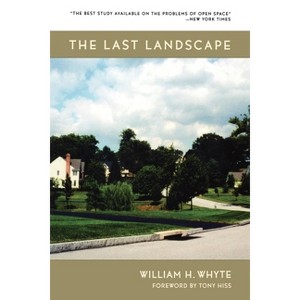
The Last Landscape - by  William H Whyte (Paperback) - 1 of 1

The Last Landscape - by William H Whyte (Paperback)

$39.95

In Stock

Free & easy returns
Free & easy returns
Return this item by mail or in store within 90 days for a full refund.
Eligible for registries and wish lists

About this item

Highlights

  • The remaining corner of an old farm, unclaimed by developers.
  • About the Author: William H. Whyte (1917-1999) was editor of Fortune magazine and Distinguished Professor at Hunter College of the City University of New York.
  • 392 Pages
  • Nature, Environmental Conservation & Protection

Description


About the Book


For years we wasted land with impunity, William H. Whyte writes in this classic work at last returned to print, now we no longer can.


Book Synopsis


The remaining corner of an old farm, unclaimed by developers. The brook squeezed between housing plans. Abandoned railroad lines. The stand of woods along an expanded highway. These are the outposts of what was once a larger pattern of forests and farms, the "last landscape." According to William H. Whyte, the place to work out the problems of our metropolitan areas is within those areas, not outside them. The age of unchecked expansion without consequence is over, but where there is waste and neglect there is opportunity. Our cities and suburbs are not jammed; they just look that way. There are in fact plenty of ways to use this existing space to the benefit of the community, and The Last Landscape provides a practical and timeless framework for making informed decisions about its use.

Called "the best study available on the problems of open space" by the New York Times when it first appeared in 1968, The Last Landscape introduced many cornerstone ideas for land conservation, urging all of us to make better use of the land that has survived amid suburban sprawl. Whyte's pioneering work on easements led to the passage of major open space statutes in many states, and his argument for using and linking green spaces, however small the areas may be, is a recommendation that has more currency today than ever before.


Review Quotes


"A practical handbook for all who care enough to fight for a more liveable environment."-- "Washington Post"

"An excellent book."-- "Jane Jacobs"

"When it was first published, The Last Landscape was radical stuff. As much as Silent Spring challenged American science to recognize its long-term responsibilities, Whyte's book asked communities, the government, and the design profession to do the same. Four decades later, this book is just as timely, the only difference is that the logic is now mainstream and the evidence is overwhelming."-- "Paco Underhill, author of Why We Buy"


About the Author


William H. Whyte (1917-1999) was editor of Fortune magazine and Distinguished Professor at Hunter College of the City University of New York. He was the author numerous books on social and environmental analysis, including City: Rediscovering the Center and The Organization Man, both of which are available from the University of Pennsylvania Press. Tony Hiss, former staff writer for the New Yorker, is a visiting scholar at the Taub Urban Research Center, New York University. He is the author of The Experience of Place.
Dimensions (Overall): 8.8 Inches (H) x 5.9 Inches (W) x 1.0 Inches (D)
Weight: 1.3 Pounds
Suggested Age: 22 Years and Up
Number of Pages: 392
Genre: Nature
Sub-Genre: Environmental Conservation & Protection
Publisher: University of Pennsylvania Press
Format: Paperback
Author: William H Whyte
Language: English
Street Date: February 20, 2002
TCIN: 1010985323
UPC: 9780812217995
Item Number (DPCI): 247-07-8151
Origin: Made in the USA or Imported
If the item details aren’t accurate or complete, we want to know about it.

Shipping details

Estimated ship dimensions: 1 inches length x 5.9 inches width x 8.8 inches height
Estimated ship weight: 1.3 pounds
We regret that this item cannot be shipped to PO Boxes.
This item cannot be shipped to the following locations: American Samoa (see also separate entry under AS), Guam (see also separate entry under GU), Northern Mariana Islands, Puerto Rico (see also separate entry under PR), United States Minor Outlying Islands, Virgin Islands, U.S., APO/FPO, Alaska, Hawaii

Return details

This item can be returned to any Target store or Target.com.
This item must be returned within 90 days of the date it was purchased in store, delivered to the guest, delivered by a Shipt shopper, or picked up by the guest.
See the return policy for complete information.

Q: What genre does The Last Landscape fall under?

submitted by AI Shopping Assistant - 2 months ago
  • A: The book is categorized under Nature, specifically focusing on Environmental Conservation and Protection.

    submitted byAI Shopping Assistant - 2 months ago
    Ai generated

Q: What kind of insights does the book provide?

submitted by AI Shopping Assistant - 2 months ago
  • A: It offers practical frameworks for making informed decisions about environmental conservation and urban land use.

    submitted byAI Shopping Assistant - 2 months ago
    Ai generated

Q: Who is the author of this book?

submitted by AI Shopping Assistant - 2 months ago
  • A: William H. Whyte, a distinguished professor and former editor of Fortune magazine, wrote this book.

    submitted byAI Shopping Assistant - 2 months ago
    Ai generated

Q: What significant impact did Whyte's work have?

submitted by AI Shopping Assistant - 2 months ago
  • A: His pioneering ideas on land conservation contributed to the passage of important open space laws across several states.

    submitted byAI Shopping Assistant - 2 months ago
    Ai generated

Q: What is the main theme of The Last Landscape?

submitted by AI Shopping Assistant - 2 months ago
  • A: The book addresses land use issues and emphasizes the importance of utilizing existing urban spaces for community benefit.

    submitted byAI Shopping Assistant - 2 months ago
    Ai generated

Additional product information and recommendations

Discover more options

Best-selling Nature

Get top deals, latest trends, and more.