Sponsored
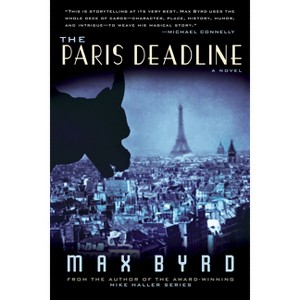
The Paris Deadline - by Max Byrd (Paperback)
In Stock
Sponsored
About this item
Highlights
- From bestselling historical novelist Max Byrd comes a new novel set against the dramatic backdrop of Paris in the Jazz Age-a fascinating suspense tale interwoven with rich historical detail.
- About the Author: Max Byrd is the award-winning author of fourteen books, including four bestselling historical novels and California Thriller, for which he received the Shamus Award.
- 328 Pages
- Fiction + Literature Genres, Thrillers
Description
About the Book
From bestselling historical novelist Max Byrd comes a new novel set against the dramatic backdrop of Paris in the Jazz Age--a fascinating suspense tale interwoven with rich historical detail.
Book Synopsis
From bestselling historical novelist Max Byrd comes a new novel set against the dramatic backdrop of Paris in the Jazz Age-a fascinating suspense tale interwoven with rich historical detail.
Review Quotes
From Publishers Weekly:
Byrd's standalone blends humor and suspense well. It's Paris, 1926 and Toby Keats, a master tunneler for the US Army during WWI, is now a reporter for the Chicago Tribune; his prosaic existence becomes anything but when he's assigned to help the paper's Queen Mother, Katherine Van Etta Medill McCormick, who routinely used him to run errands for her when visiting Paris. Having paid for two "splendid South American automatic parrots," she's upset to have a dingy mechanical duck delivered to her instead. The duck may be more valuable than it appeared-Keats learns that it may be the legendary Vaucanson's defecating duck reported to have eaten "food with its beak, digested it, and...excreted it." Things ramp up in complexity when an attractive woman, Elsie Short, claims that the duck is hers, and Keats's pursuit of the truth enmeshes him in murder. Fans of The Maltese Falcon open to a funny riff on its plot will be delighted. --Cevin Bryerman
From Kirkus Reviews:
Every reader has his or her own appetite for detail in historical fiction. Personally, I tend toward gluttony. Give me a wordy but wholly verisimilitudinous re-creation of some city of yore, a forgotten rural landscape or an archaic industrial enterprise, and I shall gleefully dine upon it page after glorious page. I do have my limits, and some novels manage to exceed it; Elizabeth Kostova's The Historian comes immediately to mind. However, I can be very forgiving of an author's earnest efforts to transport me, through the supple vehicle of English expression, into a period, place and culture that's not otherwise accessible.
So don't bother repeating to me the complaints, leveled by some other critics, that Max Byrd's effervescent new historical mystery, The Paris Deadline, overburdens readers with street and alley monikers, and threatens their patience with its meticulous descriptions of early 20th-century railroad travel or the French capital's once-intricate pneumatic-tube communications system. Far from implying that Byrd was overly fond of his research and intent on proving his scholarship, these particulars add authenticity, significance and essential grounding to a plot that often threatens to spin free of credibility's fragile bounds.
Consider this evocative portrayal of the Chicago Tribune's French bureau in 1926, where a young rewrite man named Toby Keats plies his lowly trade:
The Paris edition of the Tribune occupied the top three floors of a rambling nineteenth-century structure that had not been designed with modern journalism in mind. Apart from the Managing Editor's sanctum behind a frosted glass door, our editorial offices consisted of one long city room, which held a collection of sprung leather chairs, a long oval table covered with typewriters and ashtrays, and a string of smaller rewrite desks like ours, crammed off to the side and in the corners. All practically deserted, of course, at this time of the morning. Bedlam arrived later, with the regular reporters, at the civilized hour of noon.
New Mexico born and Harvard educated, Keats volunteered for the Third Army Engineers during the so-called Great War, only to wind up excavating tunnels through enemy territory--an assignment that left him so traumatized, he now won't even descend into Paris' bustling web of subways. Since the war's finish, he's carved out a less perilous existence for himself in the City of Light, drinking his body weight in coffee, dodging herds of goats in the cobblestone thoroughfares, and observing both the reluctant begging habits of disfigured ex-soldiers and the fashions of local
About the Author
Max Byrd is the award-winning author of fourteen books, including four bestselling historical novels and California Thriller, for which he received the Shamus Award. He was educated at Harvard and King's College Cambridge, England, and has taught at Yale, Stanford, and the University of California. Byrd is a Contributing Editor of The Wilson Quarterly and writes regularly for the New York Times Book Review. He lives in California.Shipping details
Return details
Trending Thriller

Discover more options