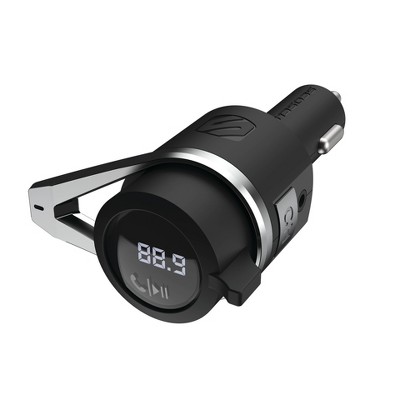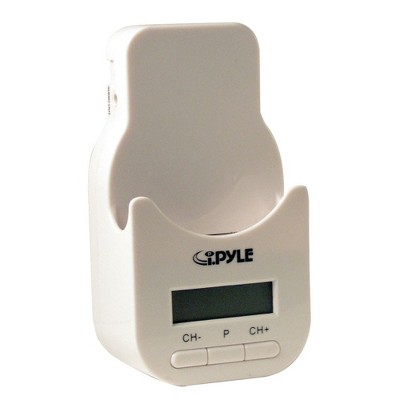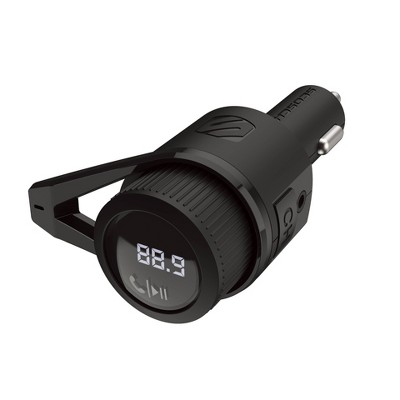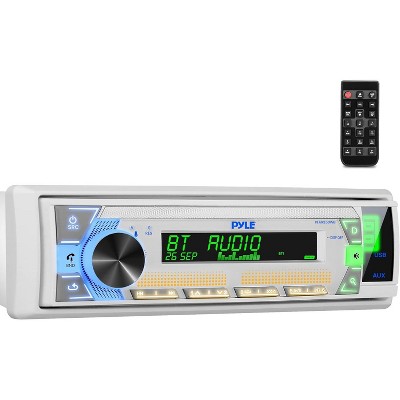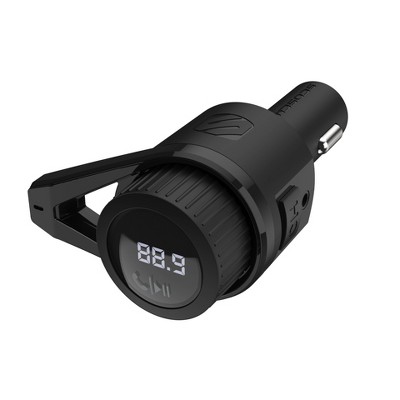
Most car FM transmitters support Bluetooth streaming and wired inputs such as a 3.5mm AUX. Several models also include USB or USB‑C ports for audio and/or charging.
Transmitters commonly include one or more USB‑A and/or USB‑C ports. Power outputs in the examples range from single 12W USB‑A ports up to combinations such as 1.5A/20W USB‑C plus 2.4A/12W USB‑A, and dual‑port setups offering combined outputs like 30W.
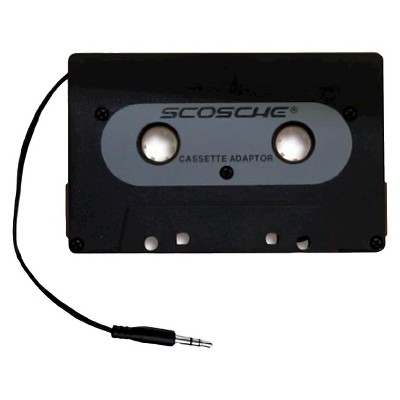
Transmitters typically support Bluetooth streaming and 3.5mm AUX connections. Some models can also play files from USB memory drives, with common supported formats including MP3, WMA, WAV, APE, and FLAC.
Transmitters operate across the standard FM broadcast band (87.5–108.0 MHz) and include tuning controls or buttons so you can match an unused car radio frequency for transmission.
Most FM transmitters plug into the vehicle’s 12V power outlet (cigarette lighter/12V accessory port) for continuous operation while driving.
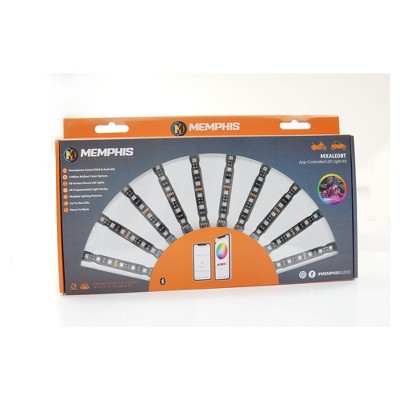
Some units add dedicated bass boost or 3D surround sound processing and offer RGB or color‑changing LED lighting for visual effects and display feedback.
Some transmitters specify Bluetooth 5.0 to indicate more stable connections and list low‑latency encoding to reduce audio delay. Others only state general Bluetooth streaming support without specifying version or codec details.
Several descriptions explicitly list compatibility with iPhone and iPod alongside Android and other Bluetooth/AUX‑capable devices, indicating broad support via Bluetooth or a 3.5mm AUX connection.
Review summaries commonly report clear, crisp audio and generally reliable transmission for music and calls. Some reviewers also note occasional FM static and raise occasional concerns about long‑term durability.