Target New ArrivalsFourth of JulyBack to SchoolCollegeClothing, Shoes & AccessoriesHome & DecorKitchen & DiningOutdoor Living & GardenGroceryHousehold EssentialsBabyBeautyPersonal CareSports & OutdoorsHealthWellnessSchool & Office SuppliesToys & GamesElectronicsVideo GamesMovies, Music & BooksParty SuppliesGift IdeasGift CardsPetsUlta Beauty at TargetShop by CommunityTarget OpticalDealsClearanceNew ArrivalsBack to SchoolCollegeTop DealsTarget Circle DealsWeekly AdShop Order PickupShop Same Day DeliveryRegistryRedCardTarget CircleFind Stores
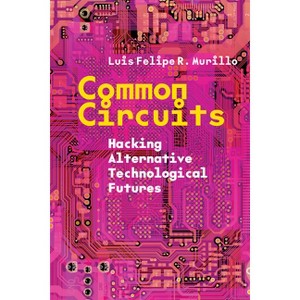
Common Circuits - by  Luis Felipe R Murillo (Paperback) - 1 of 1

Common Circuits - by Luis Felipe R Murillo (Paperback)

$19.28Save $6.72 (26% off)

In Stock

Free & easy returns
Free & easy returns
Return this item by mail or in store within 90 days for a full refund.
Eligible for registries and wish lists

About this item

Highlights

  • How hackers facilitate community technology projects that counter the monoculture of "big tech" and point us to brighter, innovative horizons.
  • About the Author: Luis Felipe R. Murillo is Assistant Professor of Anthropology at the University of Notre Dame.
  • 228 Pages
  • Social Science, Anthropology

Description


About the Book


"How hackers facilitate community technology projects that counter the monoculture of "big tech" and point us to brighter, innovative horizons. A digital world in relentless movement--from artificial intelligence to ubiquitous computing--has been captured and reinvented as a monoculture by Silicon Valley "big tech" and venture capital firms. Yet very little is discussed in the public sphere about existing alternatives. Based on long-term field research across San Francisco, Tokyo, and Shenzhen, Common Circuits explores a transnational network of hacker spaces that stand as potent, but often invisible, alternatives to the dominant technology industry. In what ways have hackers challenged corporate projects of digital development? How do hacker collectives prefigure more just technological futures through community projects? Luis Felipe R. Murillo responds to these urgent questions with an analysis of the hard challenges of collaborative, autonomous community-making through technical objects conceived by hackers as convivial, shared technologies. Through rich explorations of hacker space histories and biographical sketches of hackers who participate in them, Murillo describes the social and technical conditions that allowed for the creation of community projects such as anonymity and privacy networks to counter mass surveillance; community-made monitoring devices to measure radioactive contamination; and small-scale open hardware fabrication for the purposes of technological autonomy. Murillo shows how hacker collectives point us toward brighter technological futures--a renewal of the "digital commons"--where computing projects are constantly being repurposed for the common good"-- Provided by publisher.


Book Synopsis


How hackers facilitate community technology projects that counter the monoculture of "big tech" and point us to brighter, innovative horizons.

A digital world in relentless movement--from artificial intelligence to ubiquitous computing--has been captured and reinvented as a monoculture by Silicon Valley "big tech" and venture capital firms. Yet very little is discussed in the public sphere about existing alternatives. Based on long-term field research across San Francisco, Tokyo, and Shenzhen, Common Circuits explores a transnational network of hacker spaces that stand as potent, but often invisible, alternatives to the dominant technology industry. In what ways have hackers challenged corporate projects of digital development? How do hacker collectives prefigure more just technological futures through community projects? Luis Felipe R. Murillo responds to these urgent questions with an analysis of the hard challenges of collaborative, autonomous community-making through technical objects conceived by hackers as convivial, shared technologies.

Through rich explorations of hacker space histories and biographical sketches of hackers who participate in them, Murillo describes the social and technical conditions that allowed for the creation of community projects such as anonymity and privacy networks to counter mass surveillance; community-made monitoring devices to measure radioactive contamination; and small-scale open hardware fabrication for the purposes of technological autonomy. Murillo shows how hacker collectives point us toward brighter technological futures--a renewal of the "digital commons"--where computing projects are constantly being repurposed for the common good.


Review Quotes


"Common Circuits contributes to the history of computing by shedding light on hackerspaces' long-lasting conviviality experiments. It also offers hackers' firsthand accounts on how these alternative forms of organizing conviviality were collectively enacted, reoriented, and reflected upon over several years. Ultimately, through this and other microhistories of computing, Common Circuits offers insight into the cultivation of hackers' ethics as conviviality guidelines or, as the author puts it, political prefiguration." --Verónica Uribe del Águila, Technology and Culture

"Through Common Circuits, Murillo offers a new lens and case studies to understand how hackers utilize their expertise to create new, more open sociotechnical worlds that challenge the traditional role of technologists in academia, corporate settings, and government spaces." --Marilyn S. Baffoe-Bonnie, H-Sci-Med-Tech

"In paired chapters on places and people--multi-locale pilgrimage sites and personal trajectories as social hieroglyphs--Murillo introduces us to the significance of hacker spaces, including Noisebridge in San Francisco, Chaihuo in Shenzhen, and Tokyo Hacker Space. They are driven, respectively, to create: radical open communities; networks of gift-commodity-gift exchange; and pro-data neutrality of open science collecting and visualizing. Murillo's beautifully written book provides important material for thinking about how to open rather than close the creative commons, and the history of the global circuits and fluorescence of hacker and maker spaces." --Michael M. J. Fischer, Massachusetts Institute of Technology

"Original and timely, Common Circuits makes visible alternatives to the mainstream, neoliberal tech industry, spotlighting how hackerspaces are organized around knowledge exchange, friendship, and mutual aid. With a nuanced assessment of hacker politics, Murillo brings into focus fascinating and overlooked facets of computing cultures and history." --Gabriella Coleman, Harvard University


About the Author


Luis Felipe R. Murillo is Assistant Professor of Anthropology at the University of Notre Dame.
Dimensions (Overall): 8.82 Inches (H) x 5.98 Inches (W) x .63 Inches (D)
Weight: .7 Pounds
Suggested Age: 22 Years and Up
Number of Pages: 228
Genre: Social Science
Sub-Genre: Anthropology
Publisher: Stanford University Press
Theme: Cultural & Social
Format: Paperback
Author: Luis Felipe R Murillo
Language: English
Street Date: February 25, 2025
TCIN: 91257582
UPC: 9781503641488
Item Number (DPCI): 247-52-1910
Origin: Made in the USA or Imported
If the item details aren’t accurate or complete, we want to know about it.

Shipping details

Estimated ship dimensions: 0.63 inches length x 5.98 inches width x 8.82 inches height
Estimated ship weight: 0.7 pounds
We regret that this item cannot be shipped to PO Boxes.
This item cannot be shipped to the following locations: American Samoa (see also separate entry under AS), Guam (see also separate entry under GU), Northern Mariana Islands, Puerto Rico (see also separate entry under PR), United States Minor Outlying Islands, Virgin Islands, U.S., APO/FPO, Alaska, Hawaii

Return details

This item can be returned to any Target store or Target.com.
This item must be returned within 90 days of the date it was purchased in store, delivered to the guest, delivered by a Shipt shopper, or picked up by the guest.
See the return policy for complete information.

Q: Where has the research for this book been conducted?

submitted by AI Shopping Assistant - 3 months ago
  • A: Research was conducted in diverse locations, including San Francisco, Tokyo, and Shenzhen, examining various hacker spaces.

    submitted byAI Shopping Assistant - 3 months ago
    Ai generated

Q: What themes are explored in this book?

submitted by AI Shopping Assistant - 3 months ago
  • A: It explores themes of community-making, technology alternatives, and the social dynamics within hacker spaces across different cultures.

    submitted byAI Shopping Assistant - 3 months ago
    Ai generated

Q: What does Murillo analyze about hacker collectives?

submitted by AI Shopping Assistant - 3 months ago
  • A: He analyzes their role in fostering just technological futures through collaborative and autonomous community projects.

    submitted byAI Shopping Assistant - 3 months ago
    Ai generated

Q: Who is the author of this book?

submitted by AI Shopping Assistant - 3 months ago
  • A: The author is Luis Felipe R. Murillo, an Assistant Professor of Anthropology at the University of Notre Dame.

    submitted byAI Shopping Assistant - 3 months ago
    Ai generated

Q: What is the main focus of Common Circuits?

submitted by AI Shopping Assistant - 3 months ago
  • A: The book discusses how hackers enable community technology projects that challenge big tech's dominance and promote innovative alternatives.

    submitted byAI Shopping Assistant - 3 months ago
    Ai generated

Additional product information and recommendations

Discover more options

Frequently bought together

Best-selling Social Science Books

Get top deals, latest trends, and more.

Privacy policy