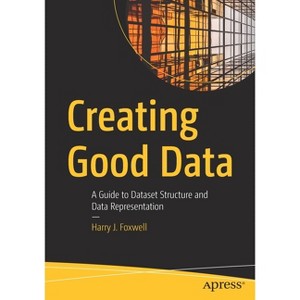
Create good data from the start, rather than fixing it after it is collected.
About the Author: Harry J. Foxwell is a professor.
105 Pages
Computers + Internet,
Description
Book Synopsis
Create good data from the start, rather than fixing it after it is collected. By following the guidelines in this book, you will be able to conduct more effective analyses and produce timely presentations of research data.
Data analysts are often presented with datasets for exploration and study that are poorly designed, leading to difficulties in interpretation and to delays in producing meaningful results. Much data analytics training focuses on how to clean and transform datasets before serious analyses can even be started. Inappropriate or confusing representations, unit of measurement choices, coding errors, missing values, outliers, etc., can be avoided by using good dataset design and by understanding how data types determine the kinds of analyses which can be performed.
This book discusses the principles and best practices of dataset creation, and covers basic data types and their related appropriate statistics and visualizations. A key focus of the book is why certain data types are chosen for representing concepts and measurements, in contrast to the typical discussions of how to analyze a specific data type once it has been selected.
What You Will Learn
Be aware of the principles of creating and collecting data
Know the basic data types and representations
Select data types, anticipating analysis goals
Understand dataset structures and practices for analyzing and sharing
Be guided by examples and use cases (good and bad)
Use cleaning tools and methods to create good data
Who This Book Is For
Researchers who design studies and collect data and subsequently conduct and report the results of their analyses can use the best practices in this book to produce better descriptions and interpretations of their work. In addition, data analysts who explore and explain data of other researchers will be able to create better datasets.
From the Back Cover
Create good data from the start, rather than fixing it after it is collected. By following the guidelines in this book, you will be able to conduct more effective analyses and produce timely presentations of research data.
Data analysts are often presented with datasets for exploration and study that are poorly designed, leading to difficulties in interpretation and to delays in producing meaningful results. Much data analytics training focuses on how to clean and transform datasets before serious analyses can even be started. Inappropriate or confusing representations, unit of measurement choices, coding errors, missing values, outliers, etc., can be avoided by using good dataset design and by understanding how data types determine the kinds of analyses which can be performed.
This book discusses the principles and best practices of dataset creation, and covers basic data types and their related appropriate statistics and visualizations. A key focus of thebook is why certain data types are chosen for representing concepts and measurements, in contrast to the typical discussions of how to analyze a specific data type once it has been selected.
You will:
Be aware of the principles of creating and collecting data
Know the basic data types and representations
Select data types, anticipating analysis goals
Understand dataset structures and practices for analyzing and sharing
Be guided by examples and use cases (good and bad)
Use cleaning tools and methods to create good data
Review Quotes
"The book is definitely valuable and anyone involved in statistical studies would do well to read it. The text could also be a useful tool in a graduate analysis course. The writing is clear and to the point, with no unnecessary 'preaching'." (James Van Speybroeck, Computing Reviews, September 2, 2021)
About the Author
Harry J. Foxwell is a professor. He teaches graduate data analytics courses at George Mason University in the department of Information Sciences and Technology and he designed the data analytics curricula for his university courses. He draws on his decades of experience as Principal System Engineer for Oracle and for other major IT companies to help his students understand the concepts, tools, and practices of big data projects. He is co-author of several books on operating systems administration. He is a US Army combat veteran, having served in Vietnam as a Platoon Sergeant in the First Infantry Division. He lives in Fairfax, Virginia with his wife Eileen and two bothersome cats.
Dimensions (Overall): 10.0 Inches (H) x 7.0 Inches (W) x .26 Inches (D)
Weight: .5 Pounds
Suggested Age: 22 Years and Up
Number of Pages: 105
Genre: Computers + Internet
Publisher: Apress
Format: Paperback
Author: Harry J Foxwell
Language: English
Street Date: October 2, 2020
TCIN: 1011990058
UPC: 9781484261026
Item Number (DPCI): 247-19-3909
Origin: Made in the USA or Imported
If the item details aren’t accurate or complete, we want to know about it.
Shipping details
Estimated ship dimensions: 0.26 inches length x 7 inches width x 10 inches height
Estimated ship weight: 0.5 pounds
We regret that this item cannot be shipped to PO Boxes.
This item cannot be shipped to the following locations: American Samoa (see also separate entry under AS), Guam (see also separate entry under GU), Northern Mariana Islands, Puerto Rico (see also separate entry under PR), United States Minor Outlying Islands, Virgin Islands, U.S., APO/FPO, Alaska, Hawaii
Return details
This item can be returned to any Target store or Target.com.
This item must be returned within 90 days of the date it was purchased in store, delivered to the guest, delivered by a Shipt shopper, or picked up by the guest.