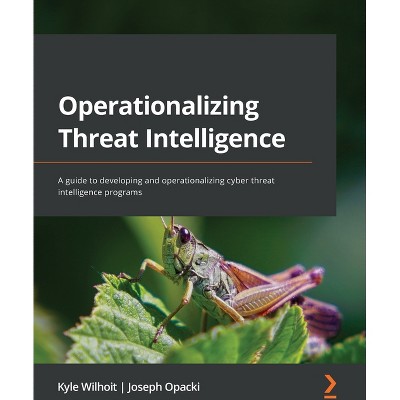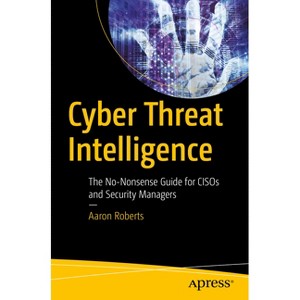
Understand the process of setting up a successful cyber threat intelligence (CTI) practice within an established security team.
About the Author: Aaron Roberts is an intelligence professional specializing in Cyber Threat Intelligence (CTI) and Open-Source Intelligence (OSINT).
207 Pages
Computers + Internet, Security
Description
Book Synopsis
Understand the process of setting up a successful cyber threat intelligence (CTI) practice within an established security team. This book shows you how threat information that has been collected, evaluated, and analyzed is a critical component in protecting your organization's resources. Adopting an intelligence-led approach enables your organization to nimbly react to situations as they develop. Security controls and responses can then be applied as soon as they become available, enabling prevention rather than response.
There are a lot of competing approaches and ways of working, but this book cuts through the confusion. Author Aaron Roberts introduces the best practices and methods for using CTI successfully. This book will help not only senior security professionals, but also those looking to break into the industry. You will learn the theories and mindset needed to be successful in CTI.
This book covers the cybersecurity wild west, the merits and limitations ofstructured intelligence data, and how using structured intelligence data can, and should, be the standard practice for any intelligence team. You will understand your organizations' risks, based on the industry and the adversaries you are most likely to face, the importance of open-source intelligence (OSINT) to any CTI practice, and discover the gaps that exist with your existing commercial solutions and where to plug those gaps, and much more.
What You Will Learn
Know the wide range of cybersecurity products and the risks and pitfalls aligned with blindly working with a vendor
Understand critical intelligence concepts such as the intelligence cycle, setting intelligence requirements, the diamond model, and how to apply intelligence to existing security information
Understand structured intelligence (STIX) and why it's important, and aligning STIX to ATT&CK and how structured intelligence helps improve final intelligence reporting
Know how to approach CTI, depending on your budget
Prioritize areas when it comes to funding and the best approaches to incident response, requests for information, or ad hoc reporting
Critically evaluate services received from your existing vendors, including what they do well, what they don't do well (or at all), how you can improve on this, the things you should consider moving in-house rather than outsourcing, and the benefits of finding and maintaining relationships with excellent vendors
Who This Book Is For
Senior security leaders in charge of cybersecurity teams who are considering starting a threat intelligence team, those considering a career change into cyber threat intelligence (CTI) who want a better understanding of the main philosophies and ways of working in the industry, and security professionals with no prior intelligence experience but have technical proficiency in other areas (e.g., programming, security architecture, or engineering)
From the Back Cover
Understand the process of setting up a successful cyber threat intelligence (CTI) practice within an established security team. This book shows you how threat information that has been collected, evaluated, and analyzed is a critical component in protecting your organization's resources. Adopting an intelligence-led approach enables your organization to nimbly react to situations as they develop. Security controls and responses can then be applied as soon as they become available, enabling prevention rather than response. There are a lot of competing approaches and ways of working, but this book cuts through the confusion. Author Aaron Roberts introduces the best practices and methods for using CTI successfully. This book will help not only senior security professionals, but also those looking to break into the industry. You will learn the theories and mindset needed to be successful in CTI.
This book covers the cybersecurity wild west, the merits and limitations of structured intelligence data, and how using structured intelligence data can, and should, be the standard practice for any intelligence team. You will understand your organizations' risks, based on the industry and the adversaries you are most likely to face, the importance of open-source intelligence (OSINT) to any CTI practice, and discover the gaps that exist with your existing commercial solutions and where to plug those gaps, and much more.
You will:
Know the wide range of cybersecurity products and the risks and pitfalls aligned with blindly working with a vendor
Understand critical intelligence concepts such as the intelligence cycle, setting intelligence requirements, the diamond model, and how to apply intelligence to existing security information
Understand structured intelligence (STIX) and why it's important, and aligning STIX to ATT&CK and how structured intelligence helps improve final intelligence reporting
Know how to approach CTI, depending on your budget
Prioritize areas when it comes to funding and the best approaches to incident response, requests for information, or ad hoc reporting
Critically evaluate services received from your existing vendors, including what they do well, what they don't do well (or at all), how you can improve on this, the things you should consider moving in-house rather than outsourcing, and the benefits of finding and maintaining relationships with excellent vendors
About the Author
Aaron Roberts is an intelligence professional specializing in Cyber Threat Intelligence (CTI) and Open-Source Intelligence (OSINT). He is focused on building intelligence-led cyber capabilities in large enterprises and conducting online investigations and research. He has worked within several the public and private sectors as well as the British Military. As such he understands how intelligence can and should be utilized within a range of environments and the fundamental approach that businesses must take to get the maximum value out of their cyber threat intelligence program.
Dimensions (Overall): 9.21 Inches (H) x 6.14 Inches (W) x .49 Inches (D)
Weight: .73 Pounds
Suggested Age: 22 Years and Up
Number of Pages: 207
Genre: Computers + Internet
Sub-Genre: Security
Publisher: Apress
Theme: General
Format: Paperback
Author: Aaron Roberts
Language: English
Street Date: August 10, 2021
TCIN: 1012218189
UPC: 9781484272190
Item Number (DPCI): 247-22-9826
Origin: Made in the USA or Imported
If the item details aren’t accurate or complete, we want to know about it.
Shipping details
Estimated ship dimensions: 0.49 inches length x 6.14 inches width x 9.21 inches height
Estimated ship weight: 0.73 pounds
We regret that this item cannot be shipped to PO Boxes.
This item cannot be shipped to the following locations: American Samoa (see also separate entry under AS), Guam (see also separate entry under GU), Northern Mariana Islands, Puerto Rico (see also separate entry under PR), United States Minor Outlying Islands, Virgin Islands, U.S., APO/FPO, Alaska, Hawaii
Return details
This item can be returned to any Target store or Target.com.
This item must be returned within 90 days of the date it was purchased in store, delivered to the guest, delivered by a Shipt shopper, or picked up by the guest.