Target New ArrivalsFourth of JulyGift Ideas for DadClothing, Shoes & AccessoriesHome & DecorKitchen & DiningOutdoor Living & GardenGroceryHousehold EssentialsBabyBeautyPersonal CareSports & OutdoorsHealthWellnessLuggageSchool & Office SuppliesToys & GamesElectronicsVideo GamesMovies, Music & BooksParty SuppliesGift IdeasGift CardsPetsUlta Beauty at TargetShop by CommunityTarget OpticalDealsClearanceNew ArrivalsGift Ideas for DadBack to SchoolCollegeTop DealsTarget Circle DealsWeekly AdShop Order PickupShop Same Day DeliveryRegistryRedCardTarget CircleFind Stores
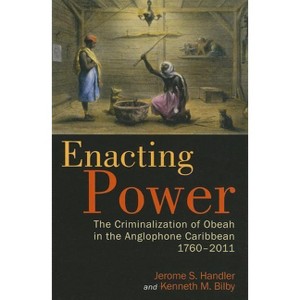
Enacting Power - by  Jerome S Handler & Kenneth M Bilby (Paperback) - 1 of 1

Enacting Power - by Jerome S Handler & Kenneth M Bilby (Paperback)

In Stock

Free & easy returns
Free & easy returns
Return this item by mail or in store within 90 days for a full refund.
Eligible for registries and wish lists

About this item

Highlights

  • More than two and a half centuries after it was first outlawed in Jamaica in 1760, obeah remains illegal in most territories of the former British West Indies.
  • Author(s): Jerome S Handler & Kenneth M Bilby
  • 186 Pages
  • History, Caribbean & West Indies

Description


About the Book


"More than two and a half centuries after it was first outlawed in Jamaica in 1760, obeah remains illegal in most territories of the former British West Indies. Opinions on the meaning and essential nature of this controversial Afro-Caribbean spiritual phenomenon vary widely. While many contemporary West Indians hold negative views of obeah, viewing it as evil witchcraft or sorcery, others point to its widespread use in healing, protection from harm, and solving a wide range of everyday problems--positive views that were also commonly held by enslaved West Indians in earlier generations. Despite the scholarly attention obeah has received, relatively little has been written about the many laws enacted against it in different territories at different periods. Offering a perspective on obeah that challenges conventional conceptions of this widely misunderstood aspect of West Indian society and culture, the core of this book is a detailed examination of anti-obeah laws, and their socio-political implications, in seventeen jurisdictions of the English-speaking Caribbean from the period of slavery to the present. Aside from chronologically tracing in each territory the development of these laws and their major provisions, the book also examines how anti-obeah legislation has helped to create and perpetuate cultural distortions that resound into the present. Anti-obeah legislation, particularly after the end of slavery in the nineteenth century, played a central role in creating public misunderstandings of the meaning and role of obeah among the West Indian masses, and led to the stigmatization and devaluation among future generations of African-derived spiritual beliefs and practices"--Back cover.


Book Synopsis


More than two and a half centuries after it was first outlawed in Jamaica in 1760, obeah remains illegal in most territories of the former British West Indies. Yet, opinions on the meaning and essential nature of this controversial Afro-Caribbean spiritual phenomenon vary widely. While many contemporary West Indians hold negative views of obeah, viewing it as evil witchcraft or sorcery, others point to its widespread use in healing, protection from harm and solving a wide range of everyday problems - positive views that were also commonly held by enslaved West Indians in earlier generations.

Despite the scholarly attention obeah has received, relatively little has been written about the many laws enacted against it in different territories at different periods. Offering a perspective on obeah that challenges conventional conceptions of this widely misunderstood aspect of West Indian society and culture, the core of this book is a detailed examination of anti-obeah laws, and their socio-political implications, in seventeen jurisdictions of the English-speaking Caribbean from the period of slavery to the present.

Aside from chronologically tracing in each territory the development of these laws and their major provisions, the book also examines how anti-obeah legislation has helped to create and perpetuate cultural distortions that resound into the present. Anti-obeah legislation, particularly after the end of slavery in the nineteenth century, played a central role in creating public misunderstandings of the meaning and role of obeah among the West Indian masses, and led to the stigmatization and devaluation among future generations of African-derived spiritual beliefs and practices.

Dimensions (Overall): 2.7 Inches (H) x 1.5 Inches (W) x .6 Inches (D)
Weight: .45 Pounds
Suggested Age: 22 Years and Up
Number of Pages: 186
Genre: History
Sub-Genre: Caribbean & West Indies
Publisher: University of the West Indies Press
Theme: General
Format: Paperback
Author: Jerome S Handler & Kenneth M Bilby
Language: English
Street Date: November 8, 2012
TCIN: 1011233651
UPC: 9789766403157
Item Number (DPCI): 247-12-6371
Origin: Made in the USA or Imported
If the item details aren’t accurate or complete, we want to know about it.

Shipping details

Estimated ship dimensions: 0.6 inches length x 1.5 inches width x 2.7 inches height
Estimated ship weight: 0.45 pounds
We regret that this item cannot be shipped to PO Boxes.
This item cannot be shipped to the following locations: American Samoa (see also separate entry under AS), Guam (see also separate entry under GU), Northern Mariana Islands, Puerto Rico (see also separate entry under PR), United States Minor Outlying Islands, Virgin Islands, U.S., APO/FPO, Alaska, Hawaii

Return details

This item can be returned to any Target store or Target.com.
This item must be returned within 90 days of the date it was purchased in store, delivered to the guest, delivered by a Shipt shopper, or picked up by the guest.
See the return policy for complete information.

Q: What is the main focus of the book?

submitted by AI Shopping Assistant - 2 months ago
  • A: The book examines anti-obeah laws and their socio-political implications in the Caribbean from slavery to the present.

    submitted byAI Shopping Assistant - 2 months ago
    Ai generated

Q: How many pages does the book contain?

submitted by AI Shopping Assistant - 2 months ago
  • A: The book contains a total of 186 pages.

    submitted byAI Shopping Assistant - 2 months ago
    Ai generated

Q: What cultural aspects does the book explore?

submitted by AI Shopping Assistant - 2 months ago
  • A: It explores the cultural distortions and misunderstandings surrounding African-derived spiritual beliefs in the Caribbean.

    submitted byAI Shopping Assistant - 2 months ago
    Ai generated

Q: Who are the authors of this book?

submitted by AI Shopping Assistant - 2 months ago
  • A: The book is authored by Jerome S Handler and Kenneth M Bilby.

    submitted byAI Shopping Assistant - 2 months ago
    Ai generated

Q: What historical context does the book address?

submitted by AI Shopping Assistant - 2 months ago
  • A: It addresses the outlawing of obeah in Jamaica and its legal status in the Caribbean.

    submitted byAI Shopping Assistant - 2 months ago
    Ai generated

Additional product information and recommendations

Discover more options

Best-selling History

Get top deals, latest trends, and more.

Privacy policy