Target New ArrivalsGift Ideas for MomClothing, Shoes & AccessoriesHome & DecorKitchen & DiningOutdoor Living & GardenGroceryHousehold EssentialsBabyBeautyPersonal CareHealthWellnessLuggageSports & OutdoorsToysElectronicsVideo GamesMovies, Music & BooksSchool & Office SuppliesParty SuppliesGift IdeasGift CardsPetsUlta Beauty at TargetShop by CommunityTarget OpticalDealsClearanceTarget New ArrivalsSpring OutfitsGift Ideas for MomWomen’s Festival OutfitsTop DealsTarget Circle DealsWeekly AdShop Order PickupShop Same Day DeliveryRegistryRedCardTarget CircleFind Stores
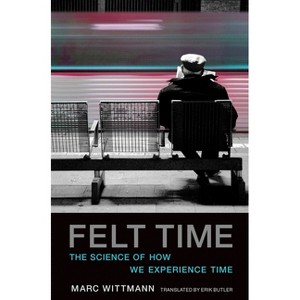
Felt Time - by  Marc Wittmann (Paperback) - 1 of 1

Felt Time - by Marc Wittmann (Paperback)

$30.00

In Stock

Free & easy returns

Free & easy returns

Return this item by mail or in store within 90 days for a full refund.
Eligible for registries and wish lists

About this item

Highlights

  • An expert explores the riddle of subjective time, from why time speeds up as we grow older to the connection between time and consciousness.We have widely varying perceptions of time.
  • About the Author: Marc Wittmann is Research Fellow at the Institute for Frontier Areas of Psychology and Mental Health in Freiburg, Germany, and the author of Felt Time: The Psychology of How We Perceive Time (MIT Press).
  • 184 Pages
  • Science, Time

Description


About the Book


An expert explores the riddle of subjective time, from why time speeds up as we grow older to the connection between time and consciousness.


Book Synopsis


An expert explores the riddle of subjective time, from why time speeds up as we grow older to the connection between time and consciousness.

We have widely varying perceptions of time. Children have trouble waiting for anything. ("Are we there yet?") Boredom is often connected to our sense of time passing (or not passing). As people grow older, time seems to speed up, the years flitting by without a pause. How does our sense of time come about? In Felt Time, Marc Wittmann explores the riddle of subjective time, explaining our perception of time--whether moment by moment, or in terms of life as a whole. Drawing on the latest insights from psychology and neuroscience, Wittmann offers a new answer to the question of how we experience time.

Wittmann explains, among other things, how we choose between savoring the moment and deferring gratification; why impulsive people are bored easily, and why their boredom is often a matter of time; whether each person possesses a personal speed, a particular brain rhythm distinguishing quick people from slow people; and why the feeling of duration can serve as an "error signal," letting us know when it is taking too long for dinner to be ready or for the bus to come. He considers the practice of mindfulness, and whether it can reduce the speed of life and help us gain more time, and he describes how, as we grow older, subjective time accelerates as routine increases; a fulfilled and varied life is a long life. Evidence shows that bodily processes--especially the heartbeat--underlie our feeling of time and act as an internal clock for our sense of time. And Wittmann points to recent research that connects time to consciousness; ongoing studies of time consciousness, he tells us, will help us to understand the conscious self.


Review Quotes


... [A] fascinating inquiry into how our subjective experience of time's passage shapes everything from our emotional memory to our sense of self.

--Maria Popova "Brain Pickings "


About the Author


Marc Wittmann is Research Fellow at the Institute for Frontier Areas of Psychology and Mental Health in Freiburg, Germany, and the author of Felt Time: The Psychology of How We Perceive Time (MIT Press).
Dimensions (Overall): 8.0 Inches (H) x 5.3 Inches (W) x .4 Inches (D)
Weight: .4 Pounds
Suggested Age: 22 Years and Up
Number of Pages: 184
Genre: Science
Sub-Genre: Time
Publisher: MIT Press
Format: Paperback
Author: Marc Wittmann
Language: English
Street Date: April 7, 2017
TCIN: 1008644344
UPC: 9780262533546
Item Number (DPCI): 247-09-5121
Origin: Made in the USA or Imported
If the item details aren’t accurate or complete, we want to know about it.

Shipping details

Estimated ship dimensions: 0.4 inches length x 5.3 inches width x 8 inches height
Estimated ship weight: 0.4 pounds
We regret that this item cannot be shipped to PO Boxes.
This item cannot be shipped to the following locations: American Samoa (see also separate entry under AS), Guam (see also separate entry under GU), Northern Mariana Islands, Puerto Rico (see also separate entry under PR), United States Minor Outlying Islands, Virgin Islands, U.S., APO/FPO, Alaska, Hawaii

Return details

This item can be returned to any Target store or Target.com.
This item must be returned within 90 days of the date it was purchased in store, delivered to the guest, delivered by a Shipt shopper, or picked up by the guest.
See the return policy for complete information.

Q: How many pages does the book contain?

submitted by AI Shopping Assistant - 1 month ago
  • A: The book contains a total of 184 pages, offering a comprehensive exploration of its themes.

    submitted byAI Shopping Assistant - 1 month ago
    Ai generated

Q: Who is the author of this book?

submitted by AI Shopping Assistant - 1 month ago
  • A: The author is Marc Wittmann, a research fellow specializing in psychology and mental health.

    submitted byAI Shopping Assistant - 1 month ago
    Ai generated

Q: What age group is this book recommended for?

submitted by AI Shopping Assistant - 1 month ago
  • A: The book is suggested for readers aged 22 years and up, due to its complex themes.

    submitted byAI Shopping Assistant - 1 month ago
    Ai generated

Q: What are the main topics covered in this book?

submitted by AI Shopping Assistant - 1 month ago
  • A: The book explores subjective time, perceptions of time, consciousness, and the psychological aspects of aging related to time.

    submitted byAI Shopping Assistant - 1 month ago
    Ai generated

Q: Does this book include insights from neuroscience?

submitted by AI Shopping Assistant - 1 month ago
  • A: Yes, it draws on the latest research from psychology and neuroscience concerning the perception of time.

    submitted byAI Shopping Assistant - 1 month ago
    Ai generated

Additional product information and recommendations

Discover more options

Trending Education Books

Get top deals, latest trends, and more.

Privacy policy