Target New ArrivalsGift Ideas for MomClothing, Shoes & AccessoriesHome & DecorKitchen & DiningOutdoor Living & GardenGroceryHousehold EssentialsBabyBeautyPersonal CareHealthWellnessLuggageSports & OutdoorsToysElectronicsVideo GamesMovies, Music & BooksSchool & Office SuppliesParty SuppliesGift IdeasGift CardsPetsUlta Beauty at TargetShop by CommunityTarget OpticalDealsClearanceTarget New ArrivalsSpring OutfitsGift Ideas for MomWomen’s Festival OutfitsTop DealsTarget Circle DealsWeekly AdShop Order PickupShop Same Day DeliveryRegistryRedCardTarget CircleFind Stores
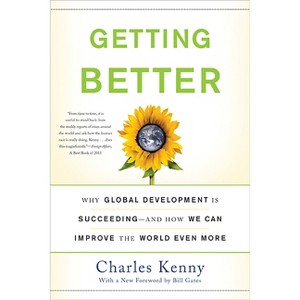
Getting Better - by  Charles Kenny (Paperback) - 1 of 1

Getting Better - by Charles Kenny (Paperback)

$19.99

In Stock

Free & easy returns

Free & easy returns

Return this item by mail or in store within 90 days for a full refund.
Eligible for registries and wish lists

About this item

Highlights

  • As the income gap between developed and developing nations grows, so grows the cacophony of voices claiming that the quest to find a simple recipe for economic growth has failed.
  • About the Author: Charles Kenny, previously a senior economist at the World Bank, is now a senior fellow at the Center for Global Development and a columnist for Bloomberg Businessweek and Foreign Policy magazines.
  • 272 Pages
  • Business + Money Management, Development

Description


About the Book


An expert on the developing world reflects--with optimism--on the past fifty years of aid interventions.


Book Synopsis


As the income gap between developed and developing nations grows, so grows the cacophony of voices claiming that the quest to find a simple recipe for economic growth has failed. "Getting Better," in sharp contrast, reports the good news about global progress. Economist Charles Kenny argues against development naysayers by pointing to the evidence of widespread improvements in health, education, peace, liberty--and even happiness.


Review Quotes


Jeni Klugman, Director and Lead Author, Human Development Report, United Nations Development Programme
This book is an important and welcome counterweight to much of the doom and gloom that pervades popular and policy discussions about Africa. It makes important contributions in documenting the major advances in aspects of human development that have intrinsic valuehealth, knowledge and empowermentthat have been experienced by people in the poorest parts of the world, drawing attention to the role of ideas and innovation. Yet Charles Kenny does not shy away from the fact that, as underlined by the 2010 Human Development Report, not all good things go together.The extent of poverty and inequality, including but not only in terms of incomes but other dimensions of well being, remains a major concern. There are important implications for policy makers in developing countries, and the basic message of realistic optimism should inform all those interested in development assistance and ways to sustain progress in the future."
William Easterly, Professor of Economics at New York University and author ofThe White Man s Burden: Why the West s Efforts to Aid the Rest Have Done So Much Ill and So Little GoodandThe Elusive Quest for Growth: Economists Adventures and Misadventures in the Tropics
Gloom and doom have long been the default view of global poverty. It would take aclear-eyed and courageous researcher to show that the orthodox viewpoint is wrong. Such a researcher has finally appeared in Charles Kenny, who shows convincingly that most trends inhuman well-being worldwide, and region by region, are happily, dramatically positive. Read this delightful book and you will never look at global economic development the same way again.
Tyler Cowen, Holbert C. Harris Professor of Economics, George Mason University
Charles Kenny is one of the best and deepest writers on economic growth and its relationship to quality of life in the modern world. This book represents the pinnacle of his thought.
Felix Salmon, finance blogger forReuters
This nuanced and brilliant book is a must-read for anybody who wants to understand the complexity of development. Kenny doesn t traffic in trite or facile diagnoses or solutions; instead, he compellingly lays out both the obstacles to success and the good reasons to be hopeful. I learned more from this book than from any other book I ve ever read: it s chock-full of important facts, corralled masterfully. Enjoy, and be illuminated!
Nancy Birdsall, President of the Center for Global Development
Getting Better is a wonderful book: a great read, a compelling argument, and what will be a controversial bottom line that growth is not after all necessary for poverty reduction. In a surprising riposte to GDP-focused economists and aid skeptics, Charles Kenny brings readers not just Malthus, Arthur Lewis, Sen and Sachs, but Kipling, Tolstoy, and the unfortunate Mungo Park. Here is a thoughtful and sweeping take on what we don t know about why countries grow and what we do know about how ideas and technology and yes aid are improving lives everywhere.
Kirkus
"A World Bank economist s insightful examination of the effectiveness of global development.... Relying on a relaxed approach flecked with sarcasm and wit, Kenny s accessible and generally jargon-free prose easily guides readers through the contentious and political aspects of global development and the ideologies competing to control it. A poignant and optimistic rebuttal to critics of global development.
The Guardian (UK)
After plenty of aid pessimism, here is a relentlessly cheerful polemic, Getting Better, which is delighting development experts in the US and the UK. Charles Kenny's book celebrates an era of unprecedented human development.... [And] has a very serious and really important point to make.
Financial Times
Getting Better seems likely to become a canonical addition to the development literature. It sets out a manageable thesis, argues it vigorously and with optimism, realism and humility a refreshing combination in any field, and particularly one like international development, too often marked by hubristic confidence or histrionic despair.
Bill Gates, Wall Street Journal
Elegant and deeply researched.... The case made by Mr. Kenny in Getting Better is a powerful antidote to overly gloomy assessments of development aid.... After years of doom and gloom on the subject of foreign aid, it is refreshing to find so thoughtful and contrarian an approach to the topic. Charles Kenny shines a light on the real successes of aid, and he shows us the benefits that additional smart investment can bring.
Foreign Affairs
From time to time, it is useful to stand back from the weekly reports of crises around the world and ask how the human race is really doing. Kenny, a World Bank economist, does this magnificently in this well-written book.... Kenny offers a lighthearted critical survey of what economists have had to say about the determinants of economic growth, but he argues that growth, although important and desirable, should not be the main objective.
Mark Bittman, Opinionator column, New York Times
Original, unusual and radical thinking
David Leonhardt, New York Times Washington Bureau Chief
There is no more important topic than the living standards of the world s seven billion people...and Kenny offers a concise, well-written, fresh take: Life has improved more than is commonly understood, and yet not nearly enough, given our resources and knowledge.
"

Jeni Klugman, Director and Lead Author, Human Development Report, United Nations Development Programme
This book is an important and welcome counterweight to much of the doom and gloom that pervades popular and policy discussions about Africa. It makes important contributions in documenting the major advances in aspects of human development that have intrinsic valuehealth, knowledge and empowermentthat have been experienced by people in the poorest parts of the world, drawing attention to the role of ideas and innovation. Yet Charles Kenny does not shy away from the fact that, as underlined by the 2010 Human Development Report, not all good things go together.The extent of poverty and inequality, including but not only in terms of incomes but other dimensions of well being, remains a major concern. There are important implications for policy makers in developing countries, and the basic message of realistic optimism should inform all those interested in development assistance and ways to sustain progress in the future."
William Easterly, Professor of Economics at New York University and author of"The White Man s Burden: Why the West s Efforts to Aid the Rest Have Done So Much Ill and So Little Good"and"The Elusive Quest for Growth: Economists Adventures and Misadventures in the Tropics"
Gloom and doom have long been the default view of global poverty. It would take aclear-eyed and courageous researcher to show that the orthodox viewpoint is wrong. Such a researcher has finally appeared in Charles Kenny, who shows convincingly that most trends inhuman well-being worldwide, and region by region, are happily, dramatically positive. Read this delightful book and you will never look at global economic development the same way again.
Tyler Cowen, Holbert C. Harris Professor of Economics, George Mason University
Charles Kenny is one of the best and deepest writers on economic growth and its relationship to quality of life in the modern world. This book represents the pinnacle of his thought.
Felix Salmon, finance blogger for"Reuters"
This nuanced and brilliant book is a must-read for anybody who wants to understand the complexity of development. Kenny doesn t traffic in trite or facile diagnoses or solutions; instead, he compellingly lays out both the obstacles to success and the good reasons to be hopeful. I learned more from this book than from any other book I ve ever read: it s chock-full of important facts, corralled masterfully. Enjoy, and be illuminated!
Nancy Birdsall, President of the Center for Global Development
"Getting Better" is a wonderful book: a great read, a compelling argument, and what will be a controversial bottom line that growth is not after all necessary for poverty reduction. In a surprising riposte to GDP-focused economists and aid skeptics, Charles Kenny brings readers not just Malthus, Arthur Lewis, Sen and Sachs, but Kipling, Tolstoy, and the unfortunate Mungo Park. Here is a thoughtful and sweeping take on what we don t know about why countries grow and what we do know about how ideas and technology and yes aid are improving lives everywhere.
"Kirkus"
"A World Bank economist s insightful examination of the effectiveness of global development.... Relying on a relaxed approach flecked with sarcasm and wit, Kenny s accessible and generally jargon-free prose easily guides readers through the contentious and political aspects of global development and the ideologies competing to control it. A poignant and optimistic rebuttal to critics of global development.
"The Guardian" (UK)
After plenty of aid pessimism, here is a relentlessly cheerful polemic, "Getting Better," which is delighting development experts in the US and the UK. Charles Kenny's book celebrates an era of unprecedented human development.... [And] has a very serious and really important point to make.
"Financial Times"
"Getting Better" seems likely to become a canonical addition to the development literature. It sets out a manageable thesis, argues it vigorously and with optimism, realism and humility a refreshing combination in any field, and particularly one like international development, too often marked by hubristic confidence or histrionic despair.
Bill Gates, "Wall Street Journal"
Elegant and deeply researched.... The case made by Mr. Kenny in Getting Better is a powerful antidote to overly gloomy assessments of development aid.... After years of doom and gloom on the subject of foreign aid, it is refreshing to find so thoughtful and contrarian an approach to the topic. Charles Kenny shines a light on the real successes of aid, and he shows us the benefits that additional smart investment can bring.
"Foreign Affairs"
From time to time, it is useful to stand back from the weekly reports of crises around the world and ask how the human race is really doing. Kenny, a World Bank economist, does this magnificently in this well-written book.... Kenny offers a lighthearted critical survey of what economists have had to say about the determinants of economic growth, but he argues that growth, although important and desirable, should not be the main objective.
Mark Bittman, Opinionator column, "New York Times"
Original, unusual and radical thinking
David Leonhardt, "New York Times" Washington Bureau Chief
There is no more important topic than the living standards of the world s seven billion people...and Kenny offers a concise, well-written, fresh take: Life has improved more than is commonly understood, and yet not nearly enough, given our resources and knowledge.
"

Jeni Klugman, Director and Lead Author, Human Development Report, United Nations Development Programme
"This book is an important and welcome counterweight to much of the doom and gloom that pervades popular and policy discussions about Africa. It makes important contributions in documenting the major advances in aspects of human development that have intrinsic value--health, knowledge and empowerment--that have been experienced by people in the poorest parts of the world, drawing attention to the role of ideas and innovation. Yet Charles Kenny does not shy away from the fact that, as underlined by the 2010 Human Development Report, not all good things go together. The extent of poverty and inequality, including but not only in terms of incomes but other dimensions of well being, remains a major concern. There are important implications for policy makers in developing countries, and the basic message of realistic optimism should inform all those interested in development assistance and ways to sustain progress in the future."William Easterly, Professor of Economics at New York University and author of "The White Man's Burden: Why the West's Efforts to Aid the Rest Have Done So Much Ill and So Little Good" and "The Elusive Quest for Growth: Economists' Adventures and Misadventures in the Tropics" "Gloom and doom have long been the default view of global poverty. It would take a clear-eyed and courageous researcher to show that the orthodox viewpoint is wrong. Such a researcher has finally appeared in Charles Kenny, who shows convincingly that most trends in human well-being worldwide, and region by region, are happily, dramatically positive. Read this delightful book and you will never look at global economic development the same way again." Tyler Cowen, Holbert C. Harris Professor of Economics, George Mason University
"Charles Kenny is one of the best and deepest writers on economic growth and its relationship to quality of life in the modern world. This bo


About the Author


Charles Kenny, previously a senior economist at the World Bank, is now a senior fellow at the Center for Global Development and a columnist for Bloomberg Businessweek and Foreign Policy magazines. He lives in Washington, DC.
Dimensions (Overall): 8.2 Inches (H) x 5.5 Inches (W) x .8 Inches (D)
Weight: .6 Pounds
Suggested Age: 22 Years and Up
Number of Pages: 272
Genre: Business + Money Management
Sub-Genre: Development
Publisher: Basic Books
Theme: Economic Development
Format: Paperback
Author: Charles Kenny
Language: English
Street Date: December 1, 2012
TCIN: 1004353357
UPC: 9780465031030
Item Number (DPCI): 247-29-7449
Origin: Made in the USA or Imported
If the item details aren’t accurate or complete, we want to know about it.

Shipping details

Estimated ship dimensions: 0.8 inches length x 5.5 inches width x 8.2 inches height
Estimated ship weight: 0.6 pounds
We regret that this item cannot be shipped to PO Boxes.
This item cannot be shipped to the following locations: American Samoa (see also separate entry under AS), Guam (see also separate entry under GU), Northern Mariana Islands, Puerto Rico (see also separate entry under PR), United States Minor Outlying Islands, Virgin Islands, U.S., APO/FPO, Alaska, Hawaii

Return details

This item can be returned to any Target store or Target.com.
This item must be returned within 90 days of the date it was purchased in store, delivered to the guest, delivered by a Shipt shopper, or picked up by the guest.
See the return policy for complete information.

Q: Who is the author and his background?

submitted by AI Shopping Assistant - 1 month ago
  • A: The author, Charles Kenny, is a former senior economist at the World Bank and a senior fellow at the Center for Global Development.

    submitted byAI Shopping Assistant - 1 month ago
    Ai generated

Q: What unique perspective does Kenny offer on economic growth?

submitted by AI Shopping Assistant - 1 month ago
  • A: Kenny suggests that economic growth may not be essential for poverty reduction and emphasizes the importance of ideas and technology.

    submitted byAI Shopping Assistant - 1 month ago
    Ai generated

Q: What type of writing style does the author use?

submitted by AI Shopping Assistant - 1 month ago
  • A: Charles Kenny employs an accessible and often witty writing style to discuss complex topics in global development without jargon.

    submitted byAI Shopping Assistant - 1 month ago
    Ai generated

Q: How does the book address global poverty views?

submitted by AI Shopping Assistant - 1 month ago
  • A: The book counters the prevailing gloom about poverty by highlighting significant positive trends in human well-being across the globe.

    submitted byAI Shopping Assistant - 1 month ago
    Ai generated

Q: What is the main theme of the book?

submitted by AI Shopping Assistant - 1 month ago
  • A: The main theme focuses on global economic development and the improvements in health, education, and well-being over the past decades.

    submitted byAI Shopping Assistant - 1 month ago
    Ai generated

Additional product information and recommendations

Discover more options

Frequently bought together

Trending Business & Law Books

Get top deals, latest trends, and more.

Privacy policy