Target New ArrivalsGift Ideas for DadFourth of JulyClothing, Shoes & AccessoriesHome & DecorKitchen & DiningOutdoor Living & GardenGroceryHousehold EssentialsBabyBeautyPersonal CareSports & OutdoorsHealthWellnessLuggageSchool & Office SuppliesToys & GamesElectronicsVideo GamesMovies, Music & BooksParty SuppliesGift IdeasGift CardsPetsUlta Beauty at TargetShop by CommunityTarget OpticalDealsClearanceNew ArrivalsGift Ideas for DadBack to SchoolCollegeTop DealsTarget Circle DealsWeekly AdShop Order PickupShop Same Day DeliveryRegistryRedCardTarget CircleFind Stores
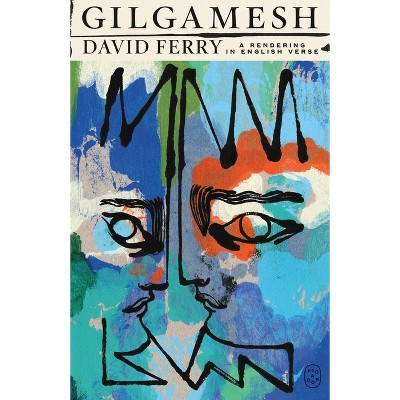
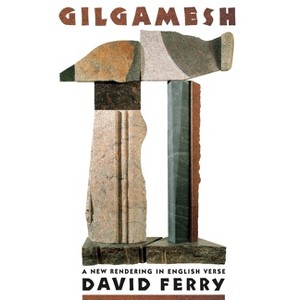
Gilgamesh - by  David Ferry (Paperback) - 1 of 1

Gilgamesh - by David Ferry (Paperback)

$9.16Save $6.84 (43% off)

In Stock

Free & easy returns

Free & easy returns

Return this item by mail or in store within 90 days for a full refund.
Eligible for registries and wish lists

About this item

Highlights

  • The classic verse rendering of the great epic of ancient Mesopotamia.
  • About the Author: David Ferry, a finalist for the National Book Critics Circle Award in Poetry for his translation of Gilgamesh in 1992, has translated The Odes of Horace, The Eclogues of Virgil, and the Epistles of Horace.
  • 112 Pages
  • Social Science, Folklore & Mythology

Description


Book Synopsis


The classic verse rendering of the great epic of ancient Mesopotamia.

Gilgamesh is the story of the godlike ruler of the ancient Mesopotamian city Uruk. The start of the poem finds Gilgamesh as a brutal tyrant, whose potency is unmatched and unchecked. The god Aruru fashions him a match, a wild man called Enkidu, who fights the ruler but soon becomes Gilgamesh's beloved companion and friend. The story of their shared heroism, the pain of Enkidu's untimely death, and of Gilgamesh's quest for immortality was told across a series of cuneiform clay tablets. It is said to be the oldest recorded literary work.

David Ferry's elegant verse rendering transmutes the ancient epic into the language of our time. Much like Robert Fitzgerald's Odyssey or Seamus Heaney's Beowulf, Ferry's Gilgamesh is a work whose poetic invention and lyrical rendering makes new that which is ancient, and draws forth the antique echoes that persist in our moment.


Review Quotes


"Ferry's version [of Gilgamesh will] become the standard English text." --Fred Marchant, The Harvard Review

"There have been other English accounts of this hero with a thousand descendants, but this is the first one that is as much poetry as scholarship." --Michael Dirda, The Washington Post Book World

"Ferry's skill brings a fresh interpretation to the power of Gilgamesh." --John Ray, The Times Literary Supplement

"Ferry's Gilgamesh is uniquely his own, self-contained in holding aloof from fads and hype. No display of adjectival fireworks could do justice to his poem's originality or to the integrity of the poet's formal invention. In identifying the poem as Mr. Ferry's, I mean no disrespect to Sin-leqe-unninni, the ancient poet-editor that Babylonian tradition credits as having developed to their highest form the epic adventures of Gilgamesh, King of Uruk, and his companion, Enkidu. But like Edward Fitzgerald's Rubaiyat or Ezra Pound's Cathay, Mr. Ferry's Gilgamesh is a miraculous transformation of his original into his own, utterly distinctive idiom . . . Perhaps the poem's most moving element is how the desire for fame is superseded, after the death of Enkidu, by a quest that touches every reader, ancient or modern . . . the wish for physical immortality . . . [Ferry's] technical genius and literary sophistication evoke not only the hero's anguish, but the rage and despair of the untouchable." --Tom Sleigh, The New York Times Book Review

"The Gilgamesh epic . . . came to light again in the mid-nineteenth-century and, thanks to the labors of an arduous, exacting philology, slowly began to assume its place as one of the great poems of the world. Hitherto, however, it has existed only in posse, waiting for a poet who could actualize it. David Ferry has performed this service, and has given us a noble poem as close to the ancient original as we in our ignorance have any right to. May his achievement quickly win the recognition it deserves." --D. S. Carne-Ross, The New Criterion


About the Author


David Ferry, a finalist for the National Book Critics Circle Award in Poetry for his translation of Gilgamesh in 1992, has translated The Odes of Horace, The Eclogues of Virgil, and the Epistles of Horace. For Of No Country I Know: New and Selected Poems and Translations he won the Lenore Marshall Poetry Prize, given by the Academy of American Poets, and the Rebekah Johnson Bobbitt National Prize for Poetry, given by the Library of Congress. In 2001 he received an Award in Literature from the American Academy of Arts and Letters, and in 2002 he won the Harold Morton Landon Translation Award. He is the Sophie Chantal Hart Professor of English Emeritus at Wellesley College.

Dimensions (Overall): 8.3 Inches (H) x 5.52 Inches (W) x .32 Inches (D)
Weight: .24 Pounds
Suggested Age: 22 Years and Up
Number of Pages: 112
Genre: Social Science
Sub-Genre: Folklore & Mythology
Publisher: Farrar, Straus and Giroux
Format: Paperback
Author: David Ferry
Language: English
Street Date: June 1, 1993
TCIN: 77257914
UPC: 9780374523831
Item Number (DPCI): 247-52-6432
Origin: Made in the USA or Imported
If the item details aren’t accurate or complete, we want to know about it.

Shipping details

Estimated ship dimensions: 0.32 inches length x 5.52 inches width x 8.3 inches height
Estimated ship weight: 0.24 pounds
We regret that this item cannot be shipped to PO Boxes.
This item cannot be shipped to the following locations: American Samoa (see also separate entry under AS), Guam (see also separate entry under GU), Northern Mariana Islands, Puerto Rico (see also separate entry under PR), United States Minor Outlying Islands, Virgin Islands, U.S., APO/FPO, Alaska, Hawaii

Return details

This item can be returned to any Target store or Target.com.
This item must be returned within 90 days of the date it was purchased in store, delivered to the guest, delivered by a Shipt shopper, or picked up by the guest.
See the return policy for complete information.

Q: What is the significance of Enkidu in the story?

submitted by AI Shopping Assistant - 1 month ago
  • A: Enkidu serves as Gilgamesh's companion, challenging his tyranny and ultimately leading him to confront themes of mortality and friendship.

    submitted byAI Shopping Assistant - 1 month ago
    Ai generated

Q: How does this version of Gilgamesh differ from others?

submitted by AI Shopping Assistant - 1 month ago
  • A: Ferry's version is noted for its poetic quality, making it both a literary work and a scholarly translation, distinct from previous accounts.

    submitted byAI Shopping Assistant - 1 month ago
    Ai generated

Q: What literary style is used in this version of Gilgamesh?

submitted by AI Shopping Assistant - 1 month ago
  • A: David Ferry employs an elegant verse style that blends poetry with scholarly interpretation, making the ancient epic accessible.

    submitted byAI Shopping Assistant - 1 month ago
    Ai generated

Q: What is the main theme of the Gilgamesh epic?

submitted by AI Shopping Assistant - 1 month ago
  • A: The main theme revolves around friendship, the quest for immortality, and the human condition, particularly after the death of Enkidu.

    submitted byAI Shopping Assistant - 1 month ago
    Ai generated

Q: Who is the author of this translation of Gilgamesh?

submitted by AI Shopping Assistant - 1 month ago
  • A: The author of this translation is David Ferry, known for his poetic interpretations of classical texts.

    submitted byAI Shopping Assistant - 1 month ago
    Ai generated

Additional product information and recommendations

Discover more options

Best-selling Social Science Books

Get top deals, latest trends, and more.

Privacy policy