New ArrivalsEasterClothing, Shoes & AccessoriesHomeKitchen & DiningOutdoor Living & GardenFurnitureGroceryHousehold EssentialsBabyBeautyPersonal CareHealthWellnessBackpacks & LuggageSports & OutdoorsToysElectronicsVideo GamesMovies, Music & BooksSchool & Office SuppliesParty SuppliesGift IdeasGift CardsPetsUlta Beauty at TargetShop by CommunityTarget OpticalDealsClearanceTarget New ArrivalsRoller Rabbit x TargetEasterHome Decor Ideas & TrendsTop DealsTarget Circle DealsWeekly AdShop Order PickupShop Same Day DeliveryRegistryRedCardTarget CircleFind Stores
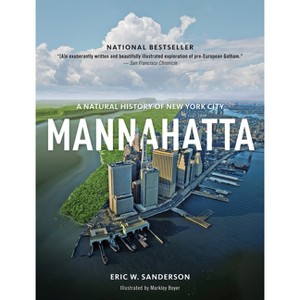
Mannahatta - by  Eric W Sanderson (Paperback) - 1 of 1

Mannahatta - by Eric W Sanderson (Paperback)

$32.15Save $12.85 (29% off)

In Stock

Free & easy returns

Free & easy returns

Return this item by mail or in store within 90 days for a full refund.
Eligible for registries and wish lists

About this item

Highlights

  • More than a history, Mannahatta: A Natural History of New York City is a book of science, natural history, and imagination, a call for us to stretch our thoughts back to 1609 when Henry Hudson first set foot on the island that would become Manhattan and ahead to 2409 to cities and a world where people and wildlife might thrive together.
  • About the Author: Eric W. Sanderson is a senior conservation ecologist in the Global Conservation Programs of the Wildlife Conservation Society.
  • 352 Pages
  • Science, Natural History

Description


About the Book


Filled with 120 full-color illustrations that show what Manhattan looked like 400 years ago, this natural history of New York City is a groundbreaking work that offers a window into the past and inspiration for green cities and wild places of the future.


Book Synopsis


More than a history, Mannahatta: A Natural History of New York City is a book of science, natural history, and imagination, a call for us to stretch our thoughts back to 1609 when Henry Hudson first set foot on the island that would become Manhattan and ahead to 2409 to cities and a world where people and wildlife might thrive together.

"See the salt marsh that is now Delancey Street, the grassy plains of Harlem, the water moving slowly through what is now Times Square to the forests along the banks of the Upper West Side. . . . The fact-intense charts, maps and tables offered in abundance here are fascinating, and even kind of sexy." --New York Times

What did Henry Hudson see when he first walked through the forests that would become the heart of one of the world's greatest, most iconic cities? It's difficult for us to imagine that world, but for more than a decade, landscape ecologist Eric W. Sanderson has been working to bring that world back to us.

In 1609, the island that is now Manhattan had more ecological communities per acre than Yellowstone, more native plant species per acre than Yosemite, more birds than the Great Smoky Mountains National Park. Manhattan was home to wolves, black bears, mountain lions, mink, and river otters. Whales, porpoises, seals, and the occasional sea turtle visited its harbor. Millions of birds of more than 150 different species flew over the island on their annual migration. Millions of fish--shad, herring, trout, sturgeon, and eel--swam past the island up the Hudson River and its stream as a rite of spring.

Sanderson's book is the astounding result of his efforts at reconstructing in words and images the wild island that millions now call home. By geographically matching an 18th-century map with one of modern New York City, examining volumes of historic documents, and collecting and analyzing scientific data, Sanderson re-creates the forests of Times Square, the meadows of Harlem, and the wetlands of downtown. His lively text guides readers through this abundant landscape, while Markley Boyer's breathtaking illustrations transport them back in time.

Mannahatta is a groundbreaking work that provides not only a window into the past but also inspiration for the future.


About the Author


Eric W. Sanderson is a senior conservation ecologist in the Global Conservation Programs of the Wildlife Conservation Society. He is adjunct faculty member at Columbia University and New York University and has lectured at Princeton, Harvard, and Oxford universities, and at TED.
Dimensions (Overall): 9.8 Inches (H) x 7.6 Inches (W) x 1.8 Inches (D)
Weight: 3.15 Pounds
Suggested Age: 22 Years and Up
Sub-Genre: Natural History
Genre: Science
Number of Pages: 352
Publisher: Abrams Books
Format: Paperback
Author: Eric W Sanderson
Language: English
Street Date: May 28, 2013
TCIN: 92765590
UPC: 9781419707483
Item Number (DPCI): 247-15-1223
Origin: Made in the USA or Imported
If the item details aren’t accurate or complete, we want to know about it.

Shipping details

Estimated ship dimensions: 1.8 inches length x 7.6 inches width x 9.8 inches height
Estimated ship weight: 3.15 pounds
We regret that this item cannot be shipped to PO Boxes.
This item cannot be shipped to the following locations: American Samoa (see also separate entry under AS), Guam (see also separate entry under GU), Northern Mariana Islands, Puerto Rico (see also separate entry under PR), United States Minor Outlying Islands, Virgin Islands, U.S., APO/FPO, Alaska, Hawaii

Return details

This item can be returned to any Target store or Target.com.
This item must be returned within 90 days of the date it was purchased in store, delivered to the guest, delivered by a Shipt shopper, or picked up by the guest.
See the return policy for complete information.

Q: Who is the author of Mannahatta and his background?

submitted by AI Shopping Assistant - 3 days ago
  • A: Eric W. Sanderson is a senior conservation ecologist and an adjunct faculty member at Columbia University.

    submitted byAI Shopping Assistant - 3 days ago
    Ai generated

Q: What methods did Sanderson use for his research?

submitted by AI Shopping Assistant - 3 days ago
  • A: He matched historical maps with modern geography, analyzed scientific data, and examined various historic documents.

    submitted byAI Shopping Assistant - 3 days ago
    Ai generated

Q: What unique ecological aspects does Manhattan have according to the author?

submitted by AI Shopping Assistant - 3 days ago
  • A: Manhattan had more ecological communities per acre than Yellowstone, and diverse wildlife, including wolves and black bears.

    submitted byAI Shopping Assistant - 3 days ago
    Ai generated

Q: How many illustrations are included in the book?

submitted by AI Shopping Assistant - 3 days ago
  • A: The book includes 120 full-color illustrations depicting Manhattan's ecological history from 400 years ago.

    submitted byAI Shopping Assistant - 3 days ago
    Ai generated

Q: What is the main focus of this book about New York City?

submitted by AI Shopping Assistant - 3 days ago
  • A: The book explores the natural history of New York City, emphasizing its ecological past and potential future.

    submitted byAI Shopping Assistant - 3 days ago
    Ai generated

Additional product information and recommendations

Get top deals, latest trends, and more.

Privacy policy

Footer

About Us

About TargetCareersNews & BlogTarget BrandsBullseye ShopSustainability & GovernancePress CenterAdvertise with UsInvestorsAffiliates & PartnersSuppliersTargetPlus

Help

Target HelpReturnsTrack OrdersRecallsContact UsFeedbackAccessibilitySecurity & FraudTeam Member ServicesLegal & Privacy

Stores

Find a StoreClinicPharmacyTarget OpticalMore In-Store Services

Services

Target Circle™Target Circle™ CardTarget Circle 360™Target AppRegistrySame Day DeliveryOrder PickupDrive UpFree 2-Day ShippingShipping & DeliveryMore Services
PinterestFacebookInstagramXYoutubeTiktokTermsCA Supply ChainPrivacy PolicyCA Privacy RightsYour Privacy ChoicesInterest Based AdsHealth Privacy Policy