Amounts vary widely. Many softgels list about 1,200 mg or 2,400 mg per serving; some powders use larger tablespoon servings (about 7,000 mg). Certain formulations report active phospholipid amounts, for example ~800 mg total phospholipids or ~150 mg phosphatidylserine per capsule.
Common claims include production in cGMP-certified facilities, laboratory testing (in-house or third-party), and non-GMO verification or Non‑GMO Project certification as part of product quality statements.
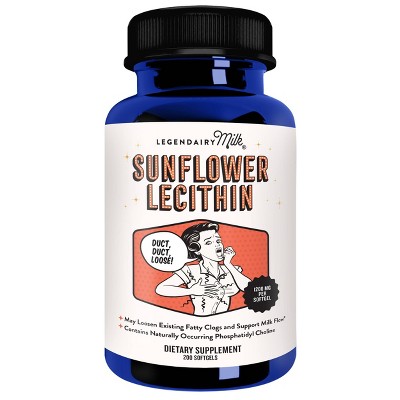
Sunflower lecithin is sold as powders (including bulk powder), capsules and softgels, gummies and chewable tablets, and in some specialty forms such as tea.
Common components include phospholipids (e.g., phosphatidylcholine, phosphatidylinositol, phosphatidylethanolamine), choline and inositol, omega‑6 fatty acids, and sometimes antioxidants and phosphatidylserine.
Lactation-focused listings often give specific softgel dosing—for example, 1 softgel 3–4 times daily for plugged ducts and 1 softgel twice daily for maintenance. Labels also commonly advise taking with food, staying hydrated, and include pregnancy/use warnings and instructions to consult a healthcare provider.