Target New ArrivalsFourth of JulyBack to SchoolCollegeClothing, Shoes & AccessoriesHome & DecorKitchen & DiningOutdoor Living & GardenGroceryHousehold EssentialsBabyBeautyPersonal CareSports & OutdoorsHealthWellnessSchool & Office SuppliesToys & GamesElectronicsVideo GamesMovies, Music & BooksParty SuppliesGift IdeasGift CardsPetsUlta Beauty at TargetShop by CommunityTarget OpticalDealsClearanceNew ArrivalsBack to SchoolCollegeTop DealsTarget Circle DealsWeekly AdShop Order PickupShop Same Day DeliveryRegistryRedCardTarget CircleFind Stores
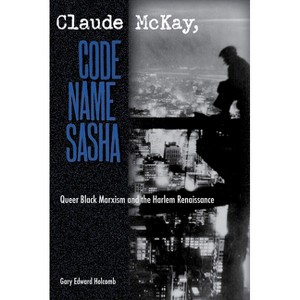
Claude McKay, Code Name Sasha - by  Gary Edward Holcomb (Paperback) - 1 of 1

Claude McKay, Code Name Sasha - by Gary Edward Holcomb (Paperback)

$29.99

In Stock

Free & easy returns
Free & easy returns
Return this item by mail or in store within 90 days for a full refund.
Eligible for registries and wish lists

About this item

Highlights

  • "An original book on a neglected figure of the Harlem Renaissance . . . Holcomb is the first scholar to offer a coherent account of the different aspects of McKay's career and life without treating them as contradictions.
  • About the Author: Gary Edward Holcomb is associate professor of African American literature in the Americas at Ohio University.
  • 288 Pages
  • Literary Criticism,

Description


Book Synopsis


"An original book on a neglected figure of the Harlem Renaissance . . . Holcomb is the first scholar to offer a coherent account of the different aspects of McKay's career and life without treating them as contradictions."--John Carlos Rowe, University of Southern California

"This project of intellectual, cultural, aesthetic history is a major undertaking . . . sure to become an indispensable point of reference for students and scholars in American, African American, Caribbean, diaspora, colonial and postcolonial studies, race, and gender studies."--Sandra Pouchet Paquet, University of Miami

"Sasha" was the code name adopted by Harlem Renaissance writer Claude McKay (1889-1948) to foil investigations of his life and work. Over a period of two decades, the FBI, U.S. State Department, British police and intelligence, and French law enforcement and colonial authorities took turns harassing McKay, an openly gay, Marxist, Jamaican expatriate who had left the United States and was living in Europe. In this study of four of McKay's texts--the first literary, cultural, and historical analysis to address the multilayered "queer black anarchism" in McKay's writings--Holcomb argues that McKay's "fringe" perspective not only targeted him for investigation but also contributed to a declining literary reputation. Perceived as mystifying and unacceptable because of his dedication to communism, McKay is perplexing and difficult to classify within the traditional constructs of the Harlem Renaissance. The problem that McKay's transnational, aesthetically itinerant writing inevitably has posed is where to locate him.

In recent years, access into McKay's work has been transformed by new methods of interpreting the politics of literary texts, the growing significance of transnationality in literary and cultural analysis, and the impact of "queer theory." Holcomb analyzes three of the most important works in McKay's career--the Jazz Age bestseller Home to Harlem, the négritude manifesto Banjo, and the unpublished Romance in Marseille. Holcomb uncovers ways in which Home to Harlem assembles a homefront queer black anarchism, and treats Banjo as a novel that portrays Marxist internationalist sexual dissidence. Among the most notable contributions to black modernist study, Holcomb's scholarship is the first to assess the consequence of McKay's landmark Romance in Marseille, a text that is, despite its absence from broad public access for nearly 80 years, conceivably the most significant early black diaspora text. Finally, he examines McKay's extensive FBI file and his late-1930s autobiography, A Long Way from Home, in which McKay disguises his past as a means of eluding his harassers. The memoir is essential to understanding McKay's first three novels. Relying on queer theory and related language-oriented approaches, moreover, this study emphasizes that the key to McKay's queer black Marxism lies as much in confronting his textual absence as it does in rereading the author historically.


Review Quotes


"An original book on a neglected figure of the Harlem Renaissance ... Holcomb is the first scholar to offer a coherent account of the different aspects of McKay's career and life without treating them as contradictions." -- John Carlos Rowe


About the Author


Gary Edward Holcomb is associate professor of African American literature in the Americas at Ohio University.
Dimensions (Overall): 9.0 Inches (H) x 6.0 Inches (W) x .65 Inches (D)
Weight: .94 Pounds
Suggested Age: 22 Years and Up
Number of Pages: 288
Genre: Literary Criticism
Publisher: University Press of Florida
Format: Paperback
Author: Gary Edward Holcomb
Language: English
Street Date: September 25, 2009
TCIN: 91573210
UPC: 9780813034508
Item Number (DPCI): 247-34-4763
Origin: Made in the USA or Imported
If the item details aren’t accurate or complete, we want to know about it.

Shipping details

Estimated ship dimensions: 0.65 inches length x 6 inches width x 9 inches height
Estimated ship weight: 0.94 pounds
We regret that this item cannot be shipped to PO Boxes.
This item cannot be shipped to the following locations: American Samoa (see also separate entry under AS), Guam (see also separate entry under GU), Northern Mariana Islands, Puerto Rico (see also separate entry under PR), United States Minor Outlying Islands, Virgin Islands, U.S., APO/FPO, Alaska, Hawaii

Return details

This item can be returned to any Target store or Target.com.
This item must be returned within 90 days of the date it was purchased in store, delivered to the guest, delivered by a Shipt shopper, or picked up by the guest.
See the return policy for complete information.

Q: Who is the author of this book?

submitted by AI Shopping Assistant - 4 days ago
  • A: The author is Gary Edward Holcomb, an associate professor of African American literature at Ohio University.

    submitted byAI Shopping Assistant - 4 days ago
    Ai generated

Q: What significant themes are explored in McKay's writings?

submitted by AI Shopping Assistant - 4 days ago
  • A: The book explores themes of queer black anarchism, Marxist internationalism, and the complexities of McKay's identity.

    submitted byAI Shopping Assistant - 4 days ago
    Ai generated

Q: What is the main focus of this book?

submitted by AI Shopping Assistant - 4 days ago
  • A: The book provides a coherent account of Claude McKay's life and career, highlighting his contributions to the Harlem Renaissance.

    submitted byAI Shopping Assistant - 4 days ago
    Ai generated

Q: How does the book contribute to McKay's literary reputation?

submitted by AI Shopping Assistant - 4 days ago
  • A: It reassesses McKay's work through new interpretive methods, enhancing understanding of his significance in literary studies.

    submitted byAI Shopping Assistant - 4 days ago
    Ai generated

Q: What genre does this book belong to?

submitted by AI Shopping Assistant - 4 days ago
  • A: This book is categorized under literary criticism, focusing on the works of Claude McKay.

    submitted byAI Shopping Assistant - 4 days ago
    Ai generated

Additional product information and recommendations

Discover more options

Best-selling Paperback Books

Get top deals, latest trends, and more.