Target New ArrivalsGift Ideas for DadClothing, Shoes & AccessoriesHome & DecorKitchen & DiningOutdoor Living & GardenGroceryHousehold EssentialsBabyBeautyPersonal CareSports & OutdoorsHealthWellnessLuggageSchool & Office SuppliesToysElectronicsVideo GamesMovies, Music & BooksParty SuppliesGift IdeasGift CardsPetsUlta Beauty at TargetShop by CommunityTarget OpticalDealsClearanceNew ArrivalsGift Ideas for DadBack to SchoolCollegeTop DealsTarget Circle DealsWeekly AdShop Order PickupShop Same Day DeliveryRegistryRedCardTarget CircleFind Stores
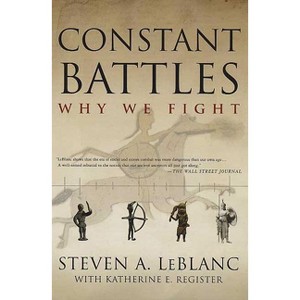
Constant Battles - by  Steven a LeBlanc & Katherine E Register (Paperback) - 1 of 1

Constant Battles - by Steven a LeBlanc & Katherine E Register (Paperback)

$11.15Save $8.84 (44% off)

In Stock

Free & easy returns

Free & easy returns

Return this item by mail or in store within 90 days for a full refund.
Eligible for registries and wish lists

About this item

Highlights

  • With armed conflict in the Persian Gulf now upon us, Harvard archaeologist Steven LeBlanc takes a long-term view of the nature and roots of war, presenting a controversial thesis: The notion of the "noble savage" living in peace with one another and in harmony with nature is a fantasy.
  • About the Author: Steven A. LeBlanc, an archaeologist at Harvard, is the director of collections at the Peabody Museum of Archaeology and Ethnology.
  • 271 Pages
  • Social Science, Anthropology

Description


Book Synopsis


With armed conflict in the Persian Gulf now upon us, Harvard archaeologist Steven LeBlanc takes a long-term view of the nature and roots of war, presenting a controversial thesis: The notion of the "noble savage" living in peace with one another and in harmony with nature is a fantasy. In Constant Battles: The Myth of the Peaceful, Noble Savage, LeBlanc contends that warfare and violent conflict have existed throughout human history, and that humans have never lived in ecological balance with nature.

The start of the second major U.S. military action in the Persian Gulf, combined with regular headlines about spiraling environmental destruction, would tempt anyone to conclude that humankind is fast approaching a catastrophic end. But as LeBlanc brilliantly argues, the archaeological record shows that the warfare and ecological destruction we find today fit into patterns of human behavior that have gone on for millions of years.

Constant Battles surveys human history in terms of social organization-from hunter gatherers, to tribal agriculturalists, to more complex societies. LeBlanc takes the reader on his own digs around the world -- from New Guinea to the Southwestern U.S. to Turkey -- to show how he has come to discover warfare everywhere at every time. His own fieldwork combined with his archaeological, ethnographic, and historical research, presents a riveting account of how, throughout human history, people always have outgrown the carrying capacity of their environment, which has led to war.

Ultimately, though, LeBlanc's point of view is reassuring and optimistic. As he explains the roots of warfare in human history, he also demonstrates that warfare today has far less impact than it did in the past. He also argues that, as awareness of these patterns and the advantages of modern technology increase, so does our ability to avoid war in the future.


About the Author


Steven A. LeBlanc, an archaeologist at Harvard, is the director of collections at the Peabody Museum of Archaeology and Ethnology. He is the author of Prehistoric Warfare in the American Southwest. Katherine E. Register is a writer working in the Boston area.

Dimensions (Overall): 6.0 Inches (H) x 8.9 Inches (W) x .8 Inches (D)
Weight: .95 Pounds
Suggested Age: 22 Years and Up
Number of Pages: 271
Genre: Social Science
Sub-Genre: Anthropology
Publisher: St. Martins Press-3PL
Theme: Cultural & Social
Format: Paperback
Author: Steven a LeBlanc
Language: English
Street Date: August 1, 2004
TCIN: 90812560
UPC: 9780312310905
Item Number (DPCI): 247-45-9068
Origin: Made in the USA or Imported
If the item details aren’t accurate or complete, we want to know about it.

Shipping details

Estimated ship dimensions: 0.8 inches length x 8.9 inches width x 6 inches height
Estimated ship weight: 0.95 pounds
We regret that this item cannot be shipped to PO Boxes.
This item cannot be shipped to the following locations: American Samoa (see also separate entry under AS), Guam (see also separate entry under GU), Northern Mariana Islands, Puerto Rico (see also separate entry under PR), United States Minor Outlying Islands, Virgin Islands, U.S., APO/FPO, Alaska, Hawaii

Return details

This item can be returned to any Target store or Target.com.
This item must be returned within 90 days of the date it was purchased in store, delivered to the guest, delivered by a Shipt shopper, or picked up by the guest.
See the return policy for complete information.

Q: What academic fields does the book explore?

submitted by AI Shopping Assistant - 2 months ago
  • A: The book intersects social science and anthropology, examining the roots and nature of warfare across history.

    submitted byAI Shopping Assistant - 2 months ago
    Ai generated

Q: Who is the author of the book?

submitted by AI Shopping Assistant - 2 months ago
  • A: The author is Steven A. LeBlanc, an archaeologist affiliated with Harvard University.

    submitted byAI Shopping Assistant - 2 months ago
    Ai generated

Q: What is the intended audience age for this book?

submitted by AI Shopping Assistant - 2 months ago
  • A: The book is suggested for readers aged 22 years and up due to its complex themes.

    submitted byAI Shopping Assistant - 2 months ago
    Ai generated

Q: What is the main argument presented in the book?

submitted by AI Shopping Assistant - 2 months ago
  • A: The book argues that the idea of the noble savage living peacefully is a fantasy, highlighting historical warfare throughout human existence.

    submitted byAI Shopping Assistant - 2 months ago
    Ai generated

Q: How does the author relate warfare to ecological balance?

submitted by AI Shopping Assistant - 2 months ago
  • A: LeBlanc contends that humans have historically outgrown their environments, leading to conflict rather than ecological harmony.

    submitted byAI Shopping Assistant - 2 months ago
    Ai generated

Additional product information and recommendations

Discover more options

Frequently bought together

Get top deals, latest trends, and more.

Privacy policy