Target New ArrivalsFourth of JulyBack to SchoolCollegeClothing, Shoes & AccessoriesHome & DecorKitchen & DiningOutdoor Living & GardenGroceryHousehold EssentialsBabyBeautyPersonal CareSports & OutdoorsHealthWellnessSchool & Office SuppliesToys & GamesElectronicsVideo GamesMovies, Music & BooksParty SuppliesGift IdeasGift CardsPetsUlta Beauty at TargetShop by CommunityTarget OpticalDealsClearanceNew ArrivalsBack to SchoolCollegeTop DealsTarget Circle DealsWeekly AdShop Order PickupShop Same Day DeliveryRegistryRedCardTarget CircleFind Stores
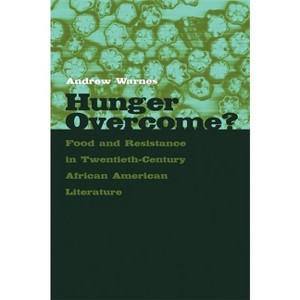
Hunger Overcome? - by  Andrew Warnes (Paperback) - 1 of 1

Hunger Overcome? - by Andrew Warnes (Paperback)

$38.99

In Stock

Free & easy returns
Free & easy returns
Return this item by mail or in store within 90 days for a full refund.
Eligible for registries and wish lists

About this item

Highlights

  • Ever since slaves in America labored to produce food surfeit while enduring personal food shortage, says Andrew Warnes, African American writers have consistently drawn connections between hunger and illiteracy, and by extension between food and reading.
  • About the Author: Andrew Warnes is Lecturer in American Literature and Culture at Leeds University.
  • 232 Pages
  • Literary Criticism,

Description


About the Book


This book investigates the juxtaposition of malnutrition and spectacular food abundance as a key trope of African American writing. Warnes focuses on works by Zora Neale Hurston, Richard Wright, and Toni Morrison, and considers how black characters respond to whites' attempts at regulating access to nourishment, whether physical or intellectual.


Book Synopsis


Ever since slaves in America labored to produce food surfeit while enduring personal food shortage, says Andrew Warnes, African American writers have consistently drawn connections between hunger and illiteracy, and by extension between food and reading. This book investigates the juxtaposition of malnutrition and spectacular food abundance as a key trope of African American writing. Focusing on works by Zora Neale Hurston, Richard Wright, and Toni Morrison, Warnes considers how black characters respond with a wide variety of countermaneuvers to whites' attempts at regulating access to nourishment, whether physical or intellectual.

What makes this trope so powerful, Warnes argues, is that it implicitly politicizes hunger, revealing it to be an avoidable, imposed condition. In Hurston's scenes of feasting and plenty in the utopian, all-black community of Eatonville; in Wright's refusal of stale bread and spoiled molasses from his white employer; and in Morrison's depiction of her characters' strategies of pilfering and foraging, we witness the implications of a kind of hunger that could be abolished were it not useful as a means of enforcing acquiescence, dependency, and docility. Throughout Hunger Overcome? Warnes relates his readings to the wider culture by drawing on such diverse sources as the slave autobiography Narrative of the Life of Frederick Douglass, Ntozake Shange's cookbook If I Can Cook / You Know God Can, Horace Cayton and St. Clair Drake's sociological study Black Metropolis, and Stanley Kramer's film Guess Who's Coming to Dinner?


Review Quotes


Hunger Overcome? is marvelously astute in its attention to textual detail and offers a wealth of new approaches to three canonical writers of the African American literary tradition. It is a valuable addition to the fields of literary criticism and food studies.

--Doris Witt "author of Black Hunger: Food and the Politics of U.S. Identity"

I relish the idea, more than two hundred years after Phillis Wheatley first published verses linking American liberty and black freedom, that the black pen can ultimately serve to liberate. In that, Warnes and I are truly in concert.

--Rafia Zafar "Gastronomica"

This book is an important text for literary scholars, as well as historians, interested in gaining a better understanding of the complex and varied depictions of food and hunger in African American literature. . . . The topics examined not only illuminate the human condition, but the literary and symbolic relationship between food and the written word.

--Journal of African American History


About the Author


Andrew Warnes is Lecturer in American Literature and Culture at Leeds University. He is the author of "Hunger Overcome?," "Savage Barbecue," (both Georgia), and "Richard Wright's Native Son."
Dimensions (Overall): 9.0 Inches (H) x 6.44 Inches (W) x .69 Inches (D)
Weight: .78 Pounds
Suggested Age: 22 Years and Up
Number of Pages: 232
Genre: Literary Criticism
Publisher: University of Georgia Press
Format: Paperback
Author: Andrew Warnes
Language: English
Street Date: February 1, 2003
TCIN: 1011113596
UPC: 9780820325620
Item Number (DPCI): 247-11-2220
Origin: Made in the USA or Imported
If the item details aren’t accurate or complete, we want to know about it.

Shipping details

Estimated ship dimensions: 0.69 inches length x 6.44 inches width x 9 inches height
Estimated ship weight: 0.78 pounds
We regret that this item cannot be shipped to PO Boxes.
This item cannot be shipped to the following locations: American Samoa (see also separate entry under AS), Guam (see also separate entry under GU), Northern Mariana Islands, Puerto Rico (see also separate entry under PR), United States Minor Outlying Islands, Virgin Islands, U.S., APO/FPO, Alaska, Hawaii

Return details

This item can be returned to any Target store or Target.com.
This item must be returned within 90 days of the date it was purchased in store, delivered to the guest, delivered by a Shipt shopper, or picked up by the guest.
See the return policy for complete information.

Q: What themes does the book explore in African American literature?

submitted by AI Shopping Assistant - 4 days ago
  • A: The book explores the connections between hunger, illiteracy, and the regulation of nourishment in African American writing.

    submitted byAI Shopping Assistant - 4 days ago
    Ai generated

Q: How does the author relate literature to wider culture?

submitted by AI Shopping Assistant - 4 days ago
  • A: The author draws connections between literary texts and diverse cultural sources, including autobiographies and sociological studies.

    submitted byAI Shopping Assistant - 4 days ago
    Ai generated

Q: Which authors' works are analyzed in this book?

submitted by AI Shopping Assistant - 4 days ago
  • A: The book focuses on the works of Zora Neale Hurston, Richard Wright, and Toni Morrison.

    submitted byAI Shopping Assistant - 4 days ago
    Ai generated

Q: What is the significance of hunger in the book's context?

submitted by AI Shopping Assistant - 4 days ago
  • A: Hunger is politicized, revealing it as an avoidable condition imposed on individuals, particularly in African American communities.

    submitted byAI Shopping Assistant - 4 days ago
    Ai generated

Q: What is Andrew Warnes' academic background?

submitted by AI Shopping Assistant - 4 days ago
  • A: Andrew Warnes is a Lecturer in American Literature and Culture at Leeds University.

    submitted byAI Shopping Assistant - 4 days ago
    Ai generated

Additional product information and recommendations

Discover more options

Best-selling Paperback Books

Get top deals, latest trends, and more.