Target New ArrivalsFourth of JulyClothing, Shoes & AccessoriesHome & DecorKitchen & DiningOutdoor Living & GardenGroceryHousehold EssentialsBabyBeautyPersonal CareSports & OutdoorsHealthWellnessLuggageSchool & Office SuppliesToys & GamesElectronicsVideo GamesMovies, Music & BooksParty SuppliesGift IdeasGift CardsPetsUlta Beauty at TargetShop by CommunityTarget OpticalDealsClearanceNew ArrivalsBack to SchoolCollegeTop DealsTarget Circle DealsWeekly AdShop Order PickupShop Same Day DeliveryRegistryRedCardTarget CircleFind Stores
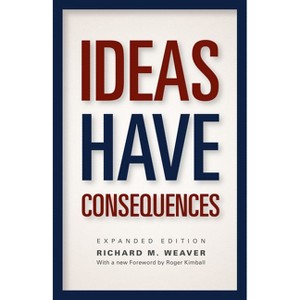
Ideas Have Consequences - by  Richard M Weaver (Paperback) - 1 of 1

Ideas Have Consequences - by Richard M Weaver (Paperback)

$21.48Save $0.52 (2% off)

In Stock

Free & easy returns

Free & easy returns

Return this item by mail or in store within 90 days for a full refund.
Eligible for registries and wish lists

About this item

Highlights

  • A classic argument for conservative values and the risks of relativism Originally published in 1948, at the height of post-World War II optimism and confidence in collective security, Ideas Have Consequences uses "words hard as cannonballs" to present an unsparing diagnosis of the ills of the modern age.
  • About the Author: Richard M. Weaver (1910-63) was an American scholar, revered twentieth-century conservative, and professor of English and rhetoric at the University of Chicago.
  • 224 Pages
  • Philosophy, History & Surveys

Description


Book Synopsis


A classic argument for conservative values and the risks of relativism Originally published in 1948, at the height of post-World War II optimism and confidence in collective security, Ideas Have Consequences uses "words hard as cannonballs" to present an unsparing diagnosis of the ills of the modern age. Widely read and debated at the time of its first publication, the book is now seen as one of the foundational texts of the modern conservative movement.

In its pages, Richard M. Weaver argues that the decline of Western civilization resulted from the rising acceptance of relativism over absolute reality. In spite of increased knowledge, this retreat from the realist intellectual tradition has weakened the Western capacity to reason, with catastrophic consequences for social order and individual rights. But Weaver also offers a realistic remedy. These difficulties are the product not of necessity, but of intelligent choice. And, today, as decades ago, the remedy lies in the renewed acceptance of absolute reality and the recognition that ideas--like actions--have consequences.

This expanded edition of the classic work contains a foreword by New Criterion editor Roger Kimball that offers insight into the rich intellectual and historical contexts of Weaver and his work and an afterword by Ted J. Smith III that relates the remarkable story of the book's writing and publication.


Review Quotes


"Brilliantly written, daring, and radical. . . . it will shock, and philosophical shock is the beginning of wisdom."

--Paul Tillich

"A profound diagnosis of the sickness of our culture."
--Reinhold Niebuhr

"Richard M. Weaver's book is important; his explanation of the breakdown of modern man is the best in years."
--John Crowe Ransom

"This deeply prophetic book not only launched the renaissance of philosophical conservatism in this country, but in the process gave us an armory of insights into the diseases besetting the national community that is as timely today as when it first appeared. Ideas Have Consequences is one of the few authentic classics in the American political tradition."
--Robert Nisbet


About the Author


Richard M. Weaver (1910-63) was an American scholar, revered twentieth-century conservative, and professor of English and rhetoric at the University of Chicago. He is the author of several books, including The Ethics of Rhetoric and Visions of Order: The Cultural Crisis of Our Time.
Dimensions (Overall): 8.46 Inches (H) x 5.61 Inches (W) x .64 Inches (D)
Weight: .66 Pounds
Suggested Age: 22 Years and Up
Number of Pages: 224
Genre: Philosophy
Sub-Genre: History & Surveys
Publisher: University of Chicago Press
Theme: Modern
Format: Paperback
Author: Richard M Weaver
Language: English
Street Date: November 4, 2013
TCIN: 1006092721
UPC: 9780226090061
Item Number (DPCI): 247-30-6468
Origin: Made in the USA or Imported
If the item details aren’t accurate or complete, we want to know about it.

Shipping details

Estimated ship dimensions: 0.64 inches length x 5.61 inches width x 8.46 inches height
Estimated ship weight: 0.66 pounds
We regret that this item cannot be shipped to PO Boxes.
This item cannot be shipped to the following locations: American Samoa (see also separate entry under AS), Guam (see also separate entry under GU), Northern Mariana Islands, Puerto Rico (see also separate entry under PR), United States Minor Outlying Islands, Virgin Islands, U.S., APO/FPO, Alaska, Hawaii

Return details

This item can be returned to any Target store or Target.com.
This item must be returned within 90 days of the date it was purchased in store, delivered to the guest, delivered by a Shipt shopper, or picked up by the guest.
See the return policy for complete information.

Q: What is the main argument of the book?

submitted by AI Shopping Assistant - 3 months ago
  • A: The book argues against relativism and highlights the importance of absolute reality in preserving social order and individual rights.

    submitted byAI Shopping Assistant - 3 months ago
    Ai generated

Q: Who is the author of the book?

submitted by AI Shopping Assistant - 3 months ago
  • A: The author is Richard M. Weaver, a renowned scholar and professor of English and rhetoric.

    submitted byAI Shopping Assistant - 3 months ago
    Ai generated

Q: How many pages does the book have?

submitted by AI Shopping Assistant - 3 months ago
  • A: The book contains a total of 224 pages, offering an in-depth exploration of its themes.

    submitted byAI Shopping Assistant - 3 months ago
    Ai generated

Q: What genre does this book belong to?

submitted by AI Shopping Assistant - 3 months ago
  • A: The book falls under the genre of philosophy, specifically focusing on history and surveys.

    submitted byAI Shopping Assistant - 3 months ago
    Ai generated

Q: What historical context influenced this book?

submitted by AI Shopping Assistant - 3 months ago
  • A: Published in 1948, the book responds to post-World War II optimism and warns against the rising acceptance of relativism.

    submitted byAI Shopping Assistant - 3 months ago
    Ai generated

Additional product information and recommendations

Discover more options

Best-selling Philosophy

Get top deals, latest trends, and more.

Privacy policy