New ArrivalsEasterClothing, Shoes & AccessoriesHomeKitchen & DiningOutdoor Living & GardenFurnitureGroceryHousehold EssentialsBabyBeautyPersonal CareHealthWellnessBackpacks & LuggageSports & OutdoorsToysElectronicsVideo GamesMovies, Music & BooksSchool & Office SuppliesParty SuppliesGift IdeasGift CardsPetsUlta Beauty at TargetShop by CommunityTarget OpticalDealsClearanceTarget New ArrivalsRoller Rabbit x TargetEasterHome Decor Ideas & TrendsTop DealsTarget Circle DealsWeekly AdShop Order PickupShop Same Day DeliveryRegistryRedCardTarget CircleFind Stores
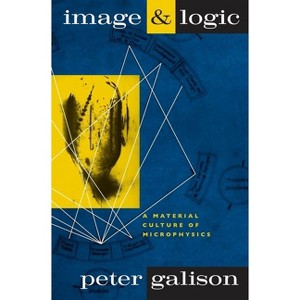
Image and Logic - by  Peter Galison (Paperback) - 1 of 1

Image and Logic - by Peter Galison (Paperback)

$72.99Save $1.01 (1% off)

In Stock

Free & easy returns

Free & easy returns

Return this item by mail or in store within 90 days for a full refund.
Eligible for registries and wish lists

About this item

Highlights

  • "I want to get at the blown glass of the early cloud chambers and the oozing noodles of wet nuclear emulsion; to the resounding crack of a high-voltage spark arcing across a high-tension chamber and leaving the lab stinking of ozone; to the silent, darkened room, with row after row of scanners sliding trackballs across projected bubble-chamber images.
  • About the Author: Peter Galison is Mallinckrodt Professor of the History of Science and of Physics at Harvard University.
  • 982 Pages
  • Science, Physics

Description


Book Synopsis


"I want to get at the blown glass of the early cloud chambers and the oozing noodles of wet nuclear emulsion; to the resounding crack of a high-voltage spark arcing across a high-tension chamber and leaving the lab stinking of ozone; to the silent, darkened room, with row after row of scanners sliding trackballs across projected bubble-chamber images. Pictures and pulses--I want to know where they came from, how pictures and counts got to be the bottom-line data of physics." (from the preface)

Image and Logic is the most detailed engagement to date with the impact of modern technology on what it means to "do" physics and to be a physicist. At the beginning of this century, physics was usually done by a lone researcher who put together experimental apparatus on a benchtop. Now experiments frequently are larger than a city block, and experimental physicists live very different lives: programming computers, working with industry, coordinating vast teams of scientists and engineers, and playing politics.

Peter L. Galison probes the material culture of experimental microphysics to reveal how the ever-increasing scale and complexity of apparatus have distanced physicists from the very science that drew them into experimenting, and have fragmented microphysics into different technical traditions much as apparatus have fragmented atoms to get at the fundamental building blocks of matter. At the same time, the necessity for teamwork in operating multimillion-dollar machines has created dynamic "trading zones," where instrument makers, theorists, and experimentalists meet, share knowledge, and coordinate the extraordinarily diverse pieces of the culture of modern microphysics: work, machines, evidence, and argument.


About the Author


Peter Galison is Mallinckrodt Professor of the History of Science and of Physics at Harvard University. He is author of How Experiments End, published by the University of Chicago Press, and coeditor of The Disunity of Science: Contexts, Boundaries, and Power.
Dimensions (Overall): 9.06 Inches (H) x 5.96 Inches (W) x 1.73 Inches (D)
Weight: 2.8 Pounds
Suggested Age: 22 Years and Up
Number of Pages: 982
Genre: Science
Sub-Genre: Physics
Publisher: University of Chicago Press
Theme: Atomic & Molecular
Format: Paperback
Author: Peter Galison
Language: English
Street Date: October 1, 1997
TCIN: 1006088950
UPC: 9780226279176
Item Number (DPCI): 247-04-7440
Origin: Made in the USA or Imported
If the item details aren’t accurate or complete, we want to know about it.

Shipping details

Estimated ship dimensions: 1.73 inches length x 5.96 inches width x 9.06 inches height
Estimated ship weight: 2.8 pounds
We regret that this item cannot be shipped to PO Boxes.
This item cannot be shipped to the following locations: American Samoa (see also separate entry under AS), Guam (see also separate entry under GU), Northern Mariana Islands, Puerto Rico (see also separate entry under PR), United States Minor Outlying Islands, Virgin Islands, U.S., APO/FPO, Alaska, Hawaii

Return details

This item can be returned to any Target store or Target.com.
This item must be returned within 90 days of the date it was purchased in store, delivered to the guest, delivered by a Shipt shopper, or picked up by the guest.
See the return policy for complete information.

Q: What are the main themes explored in the book?

submitted by AI Shopping Assistant - 12 days ago
  • A: The book explores the impact of modern technology on physics practices and the evolving role of physicists in large-scale experiments.

    submitted byAI Shopping Assistant - 12 days ago
    Ai generated

Q: What type of language does Peter Galison use in the book?

submitted by AI Shopping Assistant - 12 days ago
  • A: Galison utilizes vivid and descriptive language to convey the physical and emotional experiences within the world of experimental physics.

    submitted byAI Shopping Assistant - 12 days ago
    Ai generated

Q: What is the book's primary focus regarding experiments?

submitted by AI Shopping Assistant - 12 days ago
  • A: The primary focus is on how technology and large-scale collaborations have changed the nature of scientific inquiry in microphysics.

    submitted byAI Shopping Assistant - 12 days ago
    Ai generated

Q: What background does Peter Galison have relevant to this book?

submitted by AI Shopping Assistant - 12 days ago
  • A: Peter Galison is a prominent historian of science and physics, holding a professorship at Harvard University.

    submitted byAI Shopping Assistant - 12 days ago
    Ai generated

Q: How does the author describe the evolution of physics experimentation?

submitted by AI Shopping Assistant - 12 days ago
  • A: The author highlights the shift from individual researchers to large teams operating complex, multimillion-dollar experiments in modern physics.

    submitted byAI Shopping Assistant - 12 days ago
    Ai generated

Additional product information and recommendations

Get top deals, latest trends, and more.

Privacy policy

Footer

About Us

About TargetCareersNews & BlogTarget BrandsBullseye ShopSustainability & GovernancePress CenterAdvertise with UsInvestorsAffiliates & PartnersSuppliersTargetPlus

Help

Target HelpReturnsTrack OrdersRecallsContact UsFeedbackAccessibilitySecurity & FraudTeam Member ServicesLegal & Privacy

Stores

Find a StoreClinicPharmacyTarget OpticalMore In-Store Services

Services

Target Circle™Target Circle™ CardTarget Circle 360™Target AppRegistrySame Day DeliveryOrder PickupDrive UpFree 2-Day ShippingShipping & DeliveryMore Services
PinterestFacebookInstagramXYoutubeTiktokTermsCA Supply ChainPrivacy PolicyCA Privacy RightsYour Privacy ChoicesInterest Based AdsHealth Privacy Policy