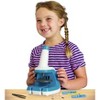
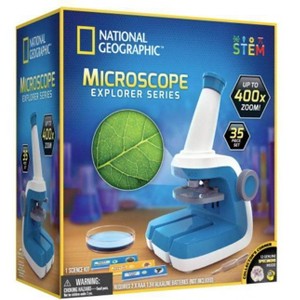
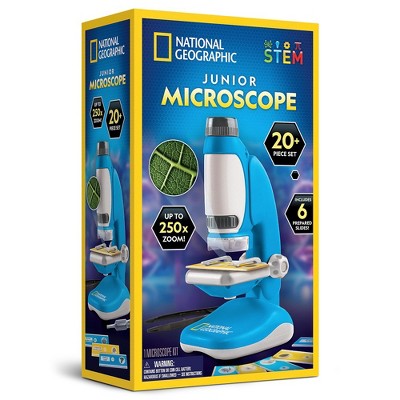
Beginner microscope designed especially for kids, with soft touch knobs and fixed eyepiece.
Slide platform moves up and down to focus for a more stable view, and the microscope offers 40X, 100X and 400x magnification.
Internal mirror provides a true view of the specimen, unlike other microscopes which display a reversed view of the sample.
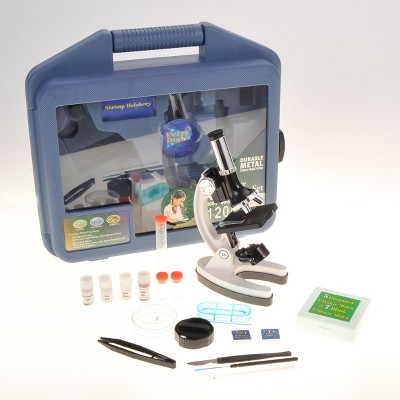
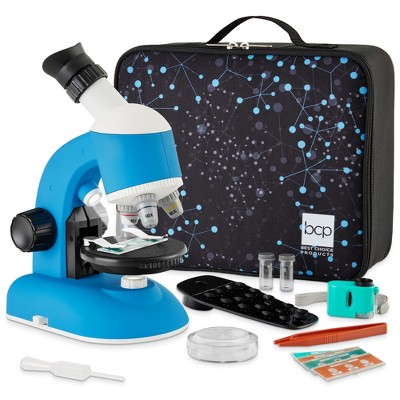
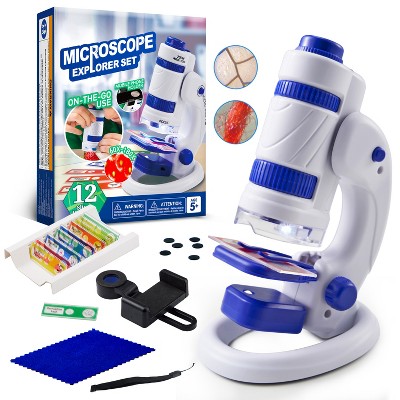
Accessories such as prepared slides, blank slides, tweezers, and a detailed learning guide make this an unforgettable beginner science kit!
Description
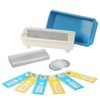
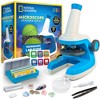
The National Geographic Microscope Starter Kit is one of the most thoughtfully designed beginner microscopes you’ll find. It’s built specially for younger kids, with a fixed eyepiece and a slide platform that moves up and down as you adjust the focus. The microscope offers 40X, 100X and 400x magnification and is equipped with an internal mirror system that provides a true view of your samples. A convenient slide storage container is integrated into the base of the microscope and the microscope operates using 3 AAA batteries. You’ll get a range of accessories including prepared slides, blank slides, tweezers, and more! This is a fantastic starter science set that unlocks the wonders of the microscopic world!
Suggested Age: 6 Years and Up
Educational Focus: Science, Biology
Includes: Activity Guide
Battery: 3 AAA Alkaline, Required, Not Included
TCIN: 86463264
UPC: 816448029851
Item Number (DPCI): 086-00-1745
Origin: Imported
If the item details aren’t accurate or complete, we want to know about it.
Shipping details
Estimated ship dimensions: 7.22 inches length x 11.05 inches width x 12 inches height
Estimated ship weight: 2.14 pounds
Return details
This item can be returned to any Target store or Target.com.
This item must be returned within 90 days of the date it was purchased in store, delivered to the guest, delivered by a Shipt shopper, or picked up by the guest.
A: Thank you for your question! This microscope is plastic.
submitted byNational Geographic - 2 months ago
Brand expert
Q: Does it have a light for a brighter view of the slides? Thank you!
submitted by DeerParkMomma - 9 months ago
A: Thank you for your question. Yes! The microscope has two lights for optimal viewing. The top light shines down onto the surface of your sample, which is great for small solid objects. The bottom light illuminates translucent objects and slides from below, giving a brighter view of what’s on the slide. You can use one or both lights depending on the type of sample you’re observing.
submitted byNational Geographic - 9 months ago
Brand expert
Q: Is the mictoscope made out of metal or plastic?
submitted by shopping grandmother - 10 months ago
A: Thank you for your question. This National Geographic Microscope is made out of plastic.
submitted byNational Geographic - 9 months ago
Brand expert
Q: can you see plankton in water
submitted by Picky grandma - 1 year ago
A: Thank you for your question.
Yes, you can see plankton with this microscope — especially at 100x or 400x magnification — but there are a few things to keep in mind:
Here's what to expect at each magnification:
• 40x: You might be able to see larger plankton, like some copepods or daphnia, but they may appear small and lack detail.
• 100x: Better! You can see more defined shapes and some internal structures of larger plankton.
• 400x: Ideal for seeing smaller plankton like single-celled algae, protozoa, or tiny zooplankton. You'll get much more detail here.
Tips for success:
• Use a clear water sample from a pond, lake, or bird bath (not tap water).
• Let the sample settle in a jar for a few hours, then use a pipette to draw from the cloudy layer just above the bottom — that’s where the plankton are!
• Place a drop on a slide with a cover slip — too much water can make it hard to focus.
• Look in a well-lit area or near a window if your microscope doesn't have built-in light.
submitted byNational Geographic - 1 year ago
Brand expert
Q: Can I see dna with it
submitted by Milo - 2 years ago
A: Thank you for your question. No, you would not be able to see DNA with this microscope.
submitted byNational Geographic - 2 years ago
Brand expert
Q: Is this product good for a 12 year old?
submitted by Bellabell - 2 years ago
A: Thank you for your question. The National Geographic Microscope Explorer Series Kit is suitable for anyone over 6 years of age.
submitted byNational Geographic - 2 years ago
Brand expert
Q: What ages are suggested for this microscope?
submitted by JZ - 3 years ago
A: Thank you for your question. This microscope is suitable for ages 6 years and older.
submitted byNational Geographic - 3 years ago
Brand expert
Q: How much magnification does this produce?
submitted by AMP - 4 years ago
A: Hi! This microscope has a magnification of up to 400x. Thank you.
This microscope set is designed as a fun and educational tool for young explorers, providing a great introduction to the microscopic world. It includes prepared and blank slides, making it easy for kids to start their scientific journey. While some guests noted issues with visibility and zoom quality, many appreciated the sturdy design and engaging accessories that encourage curiosity and hands-on learning. Overall, it serves as a delightful starter kit for budding scientists.
Summary created by AI from text of reviews reflecting recent feedback provided across different star ratings (includes incentivized reviews)
4.0
4 out of 5 stars
60 star ratings
4.0 out of 5 stars with 60 reviews
broad age appeal
3.9 out of 5
broad age appeal: 3.86 out of 5
ease of use
2.8 out of 5
ease of use: 2.83 out of 5
length of play
2.4 out of 5
length of play: 2.4 out of 5
quality
2.9 out of 5
quality: 2.86 out of 5
value
2.9 out of 5
value: 2.86 out of 5
88% would recommend
26 recommendations
4 out of 5 stars
14 January, 2026
Not a hit with a six year old
My son was gifted this microscope for Christmas. He is six years old and while this microscope works perfectly it did not really pique his interest. Zooming in on a dollar bill just looks gray. So we are putting away the microscope and maybe pulling it out when he’s a little older.
Missg
broad age appeal
3.0 out of 5
broad age appeal: 3 out of 5
ease of use
4.0 out of 5
ease of use: 4 out of 5
length of play
3.0 out of 5
length of play: 3 out of 5
quality
5.0 out of 5
quality: 5 out of 5
value
4.0 out of 5
value: 4 out of 5
1 guest found this review helpful. Did you?
1 out of 5 stars
14 November, 2025Verified purchase
Not worth your money
Doesn’t really work. Zoom is terrible. Slides poorly done. Will be returning. Usually National Geographic has better quality than this
Bh
5 guests found this review helpful. Did you?
1 out of 5 stars
Thumbs down graphic, would not recommendWould not recommend
19 February, 2025Verified purchase
Very poor quality
Terrible product. Seemed like a great idea for a kid but you can’t see anything in the microscope
SR
broad age appeal
4.0 out of 5
broad age appeal: 4 out of 5
ease of use
1.0 out of 5
ease of use: 1 out of 5
length of play
1.0 out of 5
length of play: 1 out of 5
quality
1.0 out of 5
quality: 1 out of 5
value
1.0 out of 5
value: 1 out of 5
9 guests found this review helpful. Did you?
5 out of 5 stars
Thumbs up graphic, would recommendWould recommend
24 December, 2024Verified purchase
Sturdy
I love it please buy
Spatula
quality
5.0 out of 5
quality: 5 out of 5
ease of use
5.0 out of 5
ease of use: 5 out of 5
broad age appeal
5.0 out of 5
broad age appeal: 5 out of 5
length of play
5.0 out of 5
length of play: 5 out of 5
value
5.0 out of 5
value: 5 out of 5
2 guests found this review helpful. Did you?
5 out of 5 stars
Thumbs up graphic, would recommendWould recommend
14 November, 2024Verified purchase
Curious Kids
Perfect set for just starting out in science. My grandson will spend n be six and I know he needed something durable before going to a more powerful scope as he grows. Includes accessories I.e., slides, tweezers, petri dish and more.
NanaJ
broad age appeal
4.0 out of 5
broad age appeal: 4 out of 5
quality
4.0 out of 5
quality: 4 out of 5
value
5.0 out of 5
value: 5 out of 5
3 guests found this review helpful. Did you?
4 out of 5 stars
3 December, 2023Verified purchase
microscope
National Geographic Kids Microsope bought for Christmas present
Dissatisfied shopper
broad age appeal
5.0 out of 5
broad age appeal: 5 out of 5
ease of use
5.0 out of 5
ease of use: 5 out of 5
quality
3.0 out of 5
quality: 3 out of 5
value
3.0 out of 5
value: 3 out of 5
3 guests found this review helpful. Did you?
1 out of 5 stars
Thumbs down graphic, would not recommendWould not recommend
17 May, 2023
Not worth the money!
This was purchaced for my grand daughter who is a science nut. This has been such a disappointment, you can't see anything . like another person said the lighting is terrible. I want my money back !
Good lady Greene
ease of use
1.0 out of 5
ease of use: 1 out of 5
broad age appeal
5.0 out of 5
broad age appeal: 5 out of 5
length of play
2.0 out of 5
length of play: 2 out of 5
quality
1.0 out of 5
quality: 1 out of 5
value
1.0 out of 5
value: 1 out of 5
16 guests found this review helpful. Did you?
1 out of 5 stars
Thumbs down graphic, would not recommendWould not recommend
18 February, 2023Verified purchase
Bad- Save your money
The light that comes with the microscope is not the best.. actually its really bad which makes it very hard to see anything
My little future scientist loves her National Geographic Microscope. It comes with all you need to study anything up close and personal. The already made slides are super fun to look at as are the fancy rocks. I love that the slides are plastic and wont break even with a rough 6 year old. We have already looked at feathers, leaves and dirt and pretty much anything else you can think of. We love seeing the microscopic things you cant with the naked eye.
Great quality. Love that it includes different items for the kids to get going. My kids really loved this and were so interested in seeing things up close under the microscope. Definitely a fun learning experience for the kiddos!
This microscope kit has provided hours of fun for my daughter and got her more interested in science! I love that it comes with prepared slides and blank slides as well! We loved the rocks and minerals that it comes with too!
I always loved using a microscope as a kid so I was really excited for my daughter to have one. This kit is super cute and has everything needed to get started. I love that there are prepared slides to look at right away. Plus blank slides to find your own stuff to observe.
My daughter has been having lots of fun using this microscope to learn new things. She loves learning about the items in the included slides and finding items of her own to use in the blank slides. When the slides aren’t in use, they store perfectly under the microscope. The lab guide is helpful because it guides her through how to use the microscope.
This National Geographic Explorer Series Microscope is a great starter microscope for young kids! My 8 year old daughter loved this set and really enjoyed viewing the included slides, as well as having the chance to make her own! This set is easy to use and since all the pieces are plastic, you don't need to worry about fragile or sharp glass slides. It has 3 magnification settings: 40x, 100x, & 400x and two different light settings. The images are clear enough for what would be expected for a child's toy microscope, but don't expect professional quality. The only downside I found to this microscope was that you can only move the slides up and down, but it doesn't include a knob to move them side to side, which is disappointing. Overall though, it's a fun beginner set!
I feel like it’s safe to say that this would keep younger children like 7 and under occupied for a little bit, but it’s really more like a glorified magnifying glass and not really a microscope. The microscope itself is made all from plastic and if your looking for something to really show you small particles, this is not going to be the best choice. It will magnify things and show you smaller details but it doesn’t focus very well and is only 400x magnification which is ideal for younger kids but not for extremely detailed microscopy. I think if there was a brighter light and better zooming options it would be more fun. The slides are really a one time use thing, if you plan to reuse them you will want to be extremely careful when cleaning or they easily scratch altering vision on seeing further specimens.
This cute little microscope is so stinkin cute and fun! I love that it comes with plenty to get you started, right out of the box! But, it also comes with a few blank slides, making the possibilities endless, honestly! You have rocks that you can study and a few prefilled slides that you can study! It also comes with a little tube, tweezers and container that you can use to put something in from outside, inside, etc! And a little secret, it comes with a little plastic container to store your slides in! If you remove the rectangular piece that is on the base, you will be presented with the storage box! It is a little hard to get out the first time, but after that it seemed to be fairly easier! You will need batteries for this set, for the light. Also, the holder is adjustable and you have a few different zoom options! My daughter had such a blast studying some leaves from outside! She decided to see if she could study her fingerprint, too! It worked pretty well! I have a feeling she'll find a lot of things to use this for!
This is such a good little starter science set for kids. It has a bunch of slides, some quartz and geodes, and even fool's gold inside. They also give you tweezers, a pipette, and labels with blank slides so you can make your own. Oh and of course the microscope! If I have one complaint, it's that the light isn't always bright enough but most of the time it's sufficient. Speaking of the light, it has two modes depending on what you're looking at. It has three magnification settings as well. My kids are learning so much about the unseen world around them!
This National Geographic Microscope kit has lead to hours of exploration and learning for my son. My son is 9 and has been able to use the well written Lab Guide to work at his own pace exploring the included slides and specimens as well as finding and making his own slides and investigating other small objects. The controls for focusing the microscope were easy for him to understand, but a younger child might need some adult assistance. The included slides and minerals were fascinating for him, and I cannot even begin to describe his excitement when he discovered he could make his own slides. His fascination with exploring the microscopic world around him has gone well beyond what I expected and he continues to explore well beyond the included samples and examples. I was initially a little worried he might lose the slides, but he quickly discovered the microscope has its own little storage container for them (instead of the cardboard box they came in) and has been able to keep track of all the parts and pieces. If you have a child interested in science I highly recommend this kit, just make sure you have a couple AAA batteries on hand before you give this kit to them!
This National Geographic Microscope Explorer Series Kit is simply amazing! It really exceeded my expectations. It comes with some prepared plant slides, blank slides, some rocks and minerals and others. It’s a great set for kids! My kids got so excited and so happy when they began seeing the samples in the microscope in three different magnifications: 40x, 100x and 400x. It’s very easy to manipulate. You can move the slide up and down, left and right. There are also some light effects to choose from in order to view the sample clearly. I like how it captured my kid’s attention and develop their imagination, thinking and curiosity. I highly recommend it!
Easy to use microscope for kids, made sturdy, good beginners microscope,comes with slides/ already set with plants,and some rocks & crystals, and tools to make your own slides. Really safe for young scientists in the making!