New ArrivalsGift Ideas for MomClothing, Shoes & AccessoriesHomeKitchen & DiningOutdoor Living & GardenFurnitureGroceryHousehold EssentialsBabyBeautyPersonal CareHealthWellnessBackpacks & LuggageSports & OutdoorsToysElectronicsVideo GamesMovies, Music & BooksSchool & Office SuppliesParty SuppliesGift IdeasGift CardsPetsUlta Beauty at TargetShop by CommunityTarget OpticalDealsClearanceTarget New ArrivalsHome Decor Ideas & TrendsTop DealsTarget Circle DealsWeekly AdShop Order PickupShop Same Day DeliveryRegistryRedCardTarget CircleFind Stores
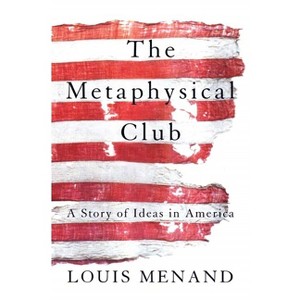
The Metaphysical Club - by  Louis Menand (Paperback) - 1 of 1

The Metaphysical Club - by Louis Menand (Paperback)

$11.05Save $15.95 (59% off)

In Stock

Eligible for registries and wish lists

About this item

Highlights

  • The New Yorker staff writer Louis Menand's The Metaphysical Club is the winner of the Pulitzer Prize for History.A national bestseller and "hugely ambitious, unmistakably brilliant" (Janet Maslin, New York Times) book about the creation of modern American thought.
  • Pulitzer Prize (History) 2002 1st Winner
  • About the Author: Louis Menand is professor of English at Harvard University and a staff writer at The New Yorker.
  • 576 Pages
  • History, United States

Description


About the Book


In an absorbing narrative about personalities and social history, Menand discusses the Metaphysical Club, an informal group that met in Cambridge, Massachusetts, in 1872, to talk about ideas. Members included Oliver Wendell Holmes, Jr., William James, and Charles Sanders Peirce. 21 photos.


Book Synopsis


The New Yorker staff writer Louis Menand's The Metaphysical Club is the winner of the Pulitzer Prize for History.

A national bestseller and "hugely ambitious, unmistakably brilliant" (Janet Maslin, New York Times) book about the creation of modern American thought.

The Metaphysical Club was an informal group that met in Cambridge, Massachusetts, in 1872, to talk about ideas. Its members included Oliver Wendell Holmes Jr., future associate justice of the United States Supreme Court; William James, the father of modern American psychology; and Charles Sanders Peirce, logician, scientist, and the founder of semiotics. The Club was probably in existence for about nine months. No records were kept. The one thing we know that came out of it was an idea--an idea about ideas. This book is the story of that idea.

Holmes, James, and Peirce all believed that ideas are not things "out there" waiting to be discovered but are tools people invent--like knives and forks and microchips--to make their way in the world. They thought that ideas are produced not by individuals, but by groups of individuals--that ideas are social. They do not develop according to some inner logic of their own but are entirely dependent, like germs, on their human carriers and environment. And they thought that the survival of any idea depends not on its immutability but on its adaptability.

The Metaphysical Club is written in the spirit of this idea about ideas. It is not a history of philosophy but an absorbing narrative about personalities and social history, a story about America. It begins with the Civil War and ends in 1919 with Justice Holmes's dissenting opinion in the case of U.S. v. Abrams--the basis for the constitutional law of free speech. The first four sections of the book focus on Holmes, James, Peirce, and their intellectual heir, John Dewey. The last section discusses some of the fundamental twentieth-century ideas they are associated with. This is a book about a way of thinking that changed American life."


Review Quotes


"The Metaphysical Club is dramatic and persuasive ... something very like a history of the American mind at work." --Alan Ryan, The New York Review of Books


About the Author


Louis Menand is professor of English at Harvard University and a staff writer at The New Yorker. His books include The Free World and The Metaphysical Club, which won the Pulitzer Prize in history and the Francis Parkman Prize from the Society of American Historians. In 2016, he was awarded the National Humanities Medal by President Barack Obama.
Dimensions (Overall): 8.2 Inches (H) x 5.4 Inches (W) x 1.6 Inches (D)
Weight: 1.1 Pounds
Suggested Age: 22 Years and Up
Number of Pages: 576
Genre: History
Sub-Genre: United States
Publisher: Farrar, Straus and Giroux
Format: Paperback
Author: Louis Menand
Language: English
Street Date: April 10, 2002
TCIN: 77025611
UPC: 9780374528492
Item Number (DPCI): 247-27-3862
Origin: Made in the USA or Imported
If the item details aren’t accurate or complete, we want to know about it.

Shipping details

Estimated ship dimensions: 1.6 inches length x 5.4 inches width x 8.2 inches height
Estimated ship weight: 1.1 pounds
We regret that this item cannot be shipped to PO Boxes.
This item cannot be shipped to the following locations: American Samoa (see also separate entry under AS), Guam (see also separate entry under GU), Northern Mariana Islands, Puerto Rico (see also separate entry under PR), United States Minor Outlying Islands, Virgin Islands, U.S., APO/FPO, Alaska, Hawaii

Return details

This item can be returned to any Target store or Target.com.
This item must be returned within 90 days of the date it was purchased in store, delivered to the guest, delivered by a Shipt shopper, or picked up by the guest.
See the return policy for complete information.

Q: What time period does the book cover?

submitted by AI Shopping Assistant - 18 days ago
  • A: The narrative spans from the Civil War to 1919, highlighting significant cultural shifts.

    submitted byAI Shopping Assistant - 18 days ago
    Ai generated

Q: What is the main theme of the book?

submitted by AI Shopping Assistant - 18 days ago
  • A: The main theme revolves around the evolution of modern American thought as shaped by influential intellectuals.

    submitted byAI Shopping Assistant - 18 days ago
    Ai generated

Q: How is the book structured in terms of content?

submitted by AI Shopping Assistant - 18 days ago
  • A: The book is structured into sections focusing on key figures and their intellectual legacy.

    submitted byAI Shopping Assistant - 18 days ago
    Ai generated

Q: Who were the notable members of the Metaphysical Club?

submitted by AI Shopping Assistant - 18 days ago
  • A: Notable members included Oliver Wendell Holmes Jr., William James, and Charles Sanders Peirce.

    submitted byAI Shopping Assistant - 18 days ago
    Ai generated

Q: What is the writing style of The Metaphysical Club?

submitted by AI Shopping Assistant - 18 days ago
  • A: The writing style is narrative-driven, blending history with personalities and social context.

    submitted byAI Shopping Assistant - 18 days ago
    Ai generated

Additional product information and recommendations

Discover more options

Waging a Good War - by Thomas E Ricks

$11.71 - $26.99
MSRP $20.00 - $30.00

Only Sing - by John Berryman

$20.00 - $20.79
MSRP $20.00 - $28.00

Daring to Be Free - by Sudhir Hazareesingh

$21.04 - $22.00
MSRP $22.00 - $33.00

The Ballad of the Last Guest - by Peter Handke

$17.99 - $20.03
MSRP $18.00 - $26.00

Get top deals, latest trends, and more.

Privacy policy

Footer

About Us

About TargetCareersNews & BlogTarget BrandsBullseye ShopSustainability & GovernancePress CenterAdvertise with UsInvestorsAffiliates & PartnersSuppliersTargetPlus

Help

Target HelpReturnsTrack OrdersRecallsContact UsFeedbackAccessibilitySecurity & FraudTeam Member ServicesLegal & Privacy

Stores

Find a StoreClinicPharmacyTarget OpticalMore In-Store Services

Services

Target Circle™Target Circle™ CardTarget Circle 360™Target AppRegistrySame Day DeliveryOrder PickupDrive UpFree 2-Day ShippingShipping & DeliveryMore Services
PinterestFacebookInstagramXYoutubeTiktokTermsCA Supply ChainPrivacy PolicyCA Privacy RightsYour Privacy ChoicesInterest Based AdsHealth Privacy Policy