Target New ArrivalsGift Ideas for DadClothing, Shoes & AccessoriesHome & DecorKitchen & DiningOutdoor Living & GardenGroceryHousehold EssentialsBabyBeautyPersonal CareSports & OutdoorsHealthWellnessLuggageSchool & Office SuppliesToysElectronicsVideo GamesMovies, Music & BooksParty SuppliesGift IdeasGift CardsPetsUlta Beauty at TargetShop by CommunityTarget OpticalDealsClearanceNew ArrivalsGift Ideas for DadBack to SchoolCollegeTop DealsTarget Circle DealsWeekly AdShop Order PickupShop Same Day DeliveryRegistryRedCardTarget CircleFind Stores
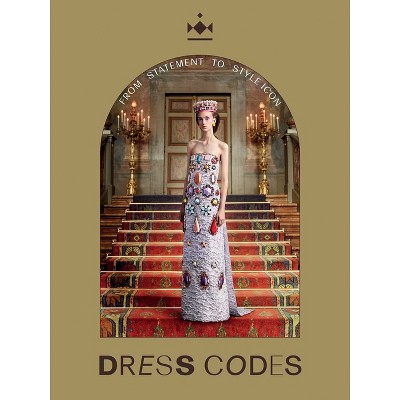
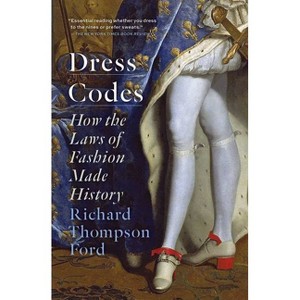
Dress Codes - by  Richard Thompson Ford (Paperback) - 1 of 1

Dress Codes - by Richard Thompson Ford (Paperback)

$11.90 was $14.00
New lower price save $2.10 (15% reduction)

In Stock

Free & easy returns

Free & easy returns

Return this item by mail or in store within 90 days for a full refund.
Eligible for registries and wish lists

About this item

Highlights

  • A "sharp and entertaining" (The Wall Street Journal) exploration of fashion through the ages that asks what our clothing reveals about ourselves and our society.
  • Author(s): Richard Thompson Ford
  • 464 Pages
  • History, Social History

Description


Book Synopsis


A "sharp and entertaining" (The Wall Street Journal) exploration of fashion through the ages that asks what our clothing reveals about ourselves and our society.

Dress codes are as old as clothing itself. For centuries, clothing has been a wearable status symbol; fashion, a weapon in struggles for social change; and dress codes, a way to maintain political control. Merchants dressing like princes and butchers' wives wearing gem-encrusted crowns were public enemies in medieval societies structured by social hierarchy and defined by spectacle. In Tudor England, silk, velvet, and fur were reserved for the nobility, and ballooning pants called "trunk hose" could be considered a menace to good order. The Renaissance-era Florentine patriarch Cosimo de Medici captured the power of fashion and dress codes when he remarked, "One can make a gentleman from two yards of red cloth." Dress codes evolved along with the social and political ideals of the day, but they always reflected struggles for power and status. In the 1700s, South Carolina's "Negro Act" made it illegal for Black people to dress "above their condition." In the 1920s, the bobbed hair and form-fitting dresses worn by free-spirited flappers were banned in workplaces throughout the United States, and in the 1940s, the baggy zoot suits favored by Black and Latino men caused riots in cities from coast to coast.

Even in today's more informal world, dress codes still determine what we wear, when we wear it--and what our clothing means. People lose their jobs for wearing braided hair, long fingernails, large earrings, beards, and tattoos or refusing to wear a suit and tie or make-up and high heels. In some cities, wearing sagging pants is a crime. And even when there are no written rules, implicit dress codes still influence opportunities and social mobility. Silicon Valley CEOs wear t-shirts and flip-flops, setting the tone for an entire industry: women wearing fashionable dresses or high heels face ridicule in the tech world, and some venture capitalists refuse to invest in any company run by someone wearing a suit.

In Dress Codes, law professor and cultural critic Richard Thompson Ford presents a "deeply informative and entertaining" (The New York Times Book Review) history of the laws of fashion from the middle ages to the present day, a walk down history's red carpet to uncover and examine the canons, mores, and customs of clothing--rules that we often take for granted. After reading Dress Codes, you'll never think of fashion as superficial again--and getting dressed will never be the same.


Review Quotes


"Dress Codes explores how for centuries fashion has marked a pathway for personal liberation and social critique even when it sought to reinforce class, race, and gender hierarchies. From nuns' habits to flappers' fringe to burkinis and hijabs, from Joan of Arc's armor to Martin Luther King's Sunday best, Richard Thompson Ford reveals a history of individual imagination capable of outwitting and recasting even the strictest rules. Ford's writing is sharp, witty, and brilliant, with the elegance and craft of a bespoke suit."
Dimensions (Overall): 8.3 Inches (H) x 5.4 Inches (W) x 1.3 Inches (D)
Weight: .85 Pounds
Suggested Age: 22 Years and Up
Number of Pages: 464
Genre: History
Sub-Genre: Social History
Publisher: Simon & Schuster
Format: Paperback
Author: Richard Thompson Ford
Language: English
Street Date: January 18, 2022
TCIN: 85008363
UPC: 9781501180088
Item Number (DPCI): 247-27-5971
Origin: Made in the USA or Imported
If the item details aren’t accurate or complete, we want to know about it.

Shipping details

Estimated ship dimensions: 1.3 inches length x 5.4 inches width x 8.3 inches height
Estimated ship weight: 0.85 pounds
We regret that this item cannot be shipped to PO Boxes.
This item cannot be shipped to the following locations: American Samoa (see also separate entry under AS), Guam (see also separate entry under GU), Northern Mariana Islands, Puerto Rico (see also separate entry under PR), United States Minor Outlying Islands, Virgin Islands, U.S., APO/FPO, Alaska, Hawaii

Return details

This item can be returned to any Target store or Target.com.
This item must be returned within 90 days of the date it was purchased in store, delivered to the guest, delivered by a Shipt shopper, or picked up by the guest.
See the return policy for complete information.

Q: What themes are explored in the book?

submitted by AI Shopping Assistant - 12 days ago
  • A: The book explores themes of fashion, social hierarchy, personal liberation, and the impact of dress codes on society.

    submitted byAI Shopping Assistant - 12 days ago
    Ai generated

Q: Who is the author of this book?

submitted by AI Shopping Assistant - 12 days ago
  • A: The author of the book is Richard Thompson Ford, a law professor and cultural critic.

    submitted byAI Shopping Assistant - 12 days ago
    Ai generated

Q: What is the significance of dress codes according to the book?

submitted by AI Shopping Assistant - 12 days ago
  • A: Dress codes reflect struggles for power and status, influencing social mobility and personal expression throughout history.

    submitted byAI Shopping Assistant - 12 days ago
    Ai generated

Q: What writing style is used in the book?

submitted by AI Shopping Assistant - 12 days ago
  • A: The writing style is described as sharp, witty, and brilliant, akin to the elegance of a bespoke suit.

    submitted byAI Shopping Assistant - 12 days ago
    Ai generated

Q: What historical periods does the book cover?

submitted by AI Shopping Assistant - 12 days ago
  • A: The book covers fashion history from the middle ages to the present day, highlighting significant social changes.

    submitted byAI Shopping Assistant - 12 days ago
    Ai generated

Additional product information and recommendations

Discover more options

Frequently bought together

Guests also viewed

Get top deals, latest trends, and more.

Privacy policy