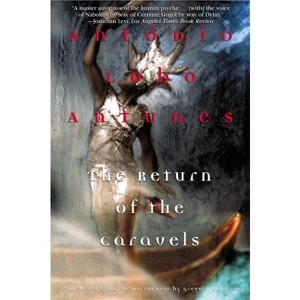
A powerful indictment of Portuguese colonialism and another literary tour de force from the pen of Antonio Lobo Antunes, "a master navigator of the human psyche . . . [with] the voice of Nabokov by way of Cortazar, Gogol by way of Dylan" (Los Angeles Times)Called "hallucinatory and lyrical" (Publishers Weekly), The Return of the Caravels unfolds in Lisbon as Portugal's African colonies gain their independence in the mid-1970s.
About the Author: António Lobo Antunes, "one of Portugal's pre-eminent writers" (New York Times), was born in Lisbon in 1942.
224 Pages
Fiction + Literature Genres, Historical
Series Name: Antunes, Antonio Lobo
Description
About the Book
"It is set in Lisbon as Portugal's African colonies gain their independence in the mid-1970s. In a contemporary response to Camoes's conquest epic The Lusiads, Antunes imagines Vasco da Gama and other heroes of Portuguese explorations beached amid the detritus of the empire's collapse. Or is it the modern colonials -- with their mixed-race heritage and uneasy place in the fatherland -- who have somehow ended up in sixteenth-century Lisbon? As da Gama begins winning back ownership of Lisbon piece by piece in crooked card games, four hundred years of Portuguese history mingle -- the caravels dock next to Iraqi oil tankers, and the slave trade rubs shoulders with the duty-free shops. The Return of the Caravels is a startling and uncompromising look at one of Europe's great colonial powers, and how the era of conquest reshaped not just Portugal but the world."--Publisher markting.
Book Synopsis
A powerful indictment of Portuguese colonialism and another literary tour de force from the pen of Antonio Lobo Antunes, "a master navigator of the human psyche . . . [with] the voice of Nabokov by way of Cortazar, Gogol by way of Dylan" (Los Angeles Times)
Called "hallucinatory and lyrical" (Publishers Weekly), The Return of the Caravels unfolds in Lisbon as Portugal's African colonies gain their independence in the mid-1970s. In a contemporary response to Camões conquest epic The Lusiads, Antunes imagines Vasco da Gama and other heroes of Portuguese explorations beached amid the detritus of the empire's collapse. Or is it the modern colonials-with their mixed-race heritage and uneasy place in the "fatherland"--who have somehow ended up in sixteenth-century Lisbon? As da Gama begins winning back ownership of Lisbon piece by piece in crooked card games, four hundred years of Portuguese history mingle--the caravels dock next to Iraqi oil tankers, and the slave trade rubs shoulders with the duty-free shops.
The Return of the Caravels is a startling and uncompromising look at one of Europe's great colonial powers, and how the era of conquest reshaped not just Portugal but the world.
Review Quotes
Praise for The Return of the Caravels:
A New York Times Notable Book
"A master navigator of the human psyche . . . [with] the voice of Nabokov by way of Cortazar, Gogol by way of Dylan."-Jonathan Levi, Los Angeles Times
"Antunes has empathy for the contradictions of human feeling . . . a perfect introduction to the dirty, glittering world that [Antunes] makes so painfully real."--Michael Pye, New York Times Book Review
"A twenty-first-century modernist heir to the narrative collage technique championed by such masters as Louise-Ferdinand Céeacute;line, William Faulkner, Gabriel Garcíiacute;a Máaacute;rquez, James Joyce, Vladimir Nabokov, Thomas Pynchon, and Italo Calvino . . . [The Return of the Caravels] is the writing of a genius."--Alan Kaufman, San Francisco Chronicle Book Review
"[Antunes] deserves a wide audience of discerning readers."--Michael Mewshaw, The Washington Post Book World
"One of [Antunes's] most ambitious and most distinctly Portuguese [books]. . . One can, and should, read The Return of the Caravels for its depiction of a crumbling empire--where the heroic actions of the colonists have been replaced by the monopolistic tendencies of the businessman--its sarcastic bursts of humor and its depressing yet touching scenes that combine in such deft fashion as to reaffirm Antunes's reputation as one of the great contemporary writers."--Chad W. Post, Review of Contemporary Fiction
"Opens a fascinating view into Portuguese history and literature. . . . The prose carries the reader along with its energy, irony, and vibrant imagery."--Phillip McDermott, Magill's Literary Annual
"It is not the glorious flow of history that interests Antonio Lobo Antunes, but its wrong-way, disenchanted ebbs. . . . [He] taps the creation myths of his country and indicts the distance between the dream and reality. . . . A truly great writer in any language."--Le Figaro (France)
"A swan-song, powerful and expressive, which in no way judges or moralizes, but which has a moral: that of great art, of bearing witness to the tragedy of the individual in history."--Tages-Anzeiger (Germany)
"Lobo Antunes is the cantor of the defeat which follows the victory, the painter of the last tableau, of an absurd Portugal but one which draws from this same absurdity a new, tragic dignity. . . . One cannot decide whether to shout with the masterpiece or to denounce its ease, to give oneself up to these screamingly funny pages or to delve into their more deep marrow."--La Quinzaine Litteraire (France)
Praise for Antóoacute;nio Lobo Antunes
"A master navigator or the human psyche . . . [with] the voice of Nabokov by way of Cortazar, Gogol by way of Dylan."--Jonathan Levi, Los Angeles Times Book Review
"Perhaps Portugal's greatest living author . . . A genius."--Alan Kaufman, San Francisco Chronicle Book Review
About the Author
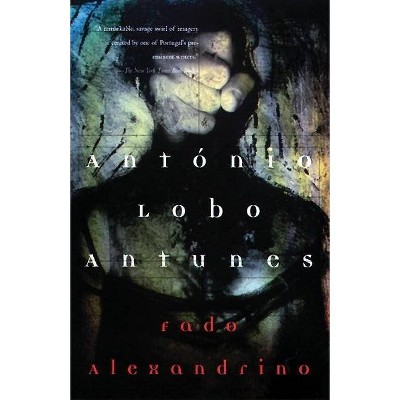
António Lobo Antunes, "one of Portugal's pre-eminent writers" (New York Times), was born in Lisbon in 1942. The son of a physician, he too became a doctor and then spent four years in the Portuguese army during the Angolan war. His fictional "memoir" of that war, South of Nowhere, was internationally praised and followed by other widely translated and much-honored novels, including Act of the Damned, Fado Alexandrino, Explanation of the Birds, and The Natural Order of Things.
Dimensions (Overall): 8.28 Inches (H) x 5.5 Inches (W) x .56 Inches (D)
Weight: .56 Pounds
Suggested Age: 22 Years and Up
Number of Pages: 224
Genre: Fiction + Literature Genres
Sub-Genre: Historical
Series Title: Antunes, Antonio Lobo
Publisher: Grove Press
Format: Paperback
Author: António Lobo Antunes
Language: English
Street Date: January 6, 2003
TCIN: 86444160
UPC: 9780802139559
Item Number (DPCI): 247-36-3398
Origin: Made in the USA or Imported
If the item details aren’t accurate or complete, we want to know about it.
Shipping details
Estimated ship dimensions: 0.56 inches length x 5.5 inches width x 8.28 inches height
Estimated ship weight: 0.56 pounds
We regret that this item cannot be shipped to PO Boxes.
This item cannot be shipped to the following locations: American Samoa (see also separate entry under AS), Guam (see also separate entry under GU), Northern Mariana Islands, Puerto Rico (see also separate entry under PR), United States Minor Outlying Islands, Virgin Islands, U.S., APO/FPO, Alaska, Hawaii
Return details
This item can be returned to any Target store or Target.com.
This item must be returned within 90 days of the date it was purchased in store, delivered to the guest, delivered by a Shipt shopper, or picked up by the guest.